I have quite a few postcards, mostly sent to me from holidaying friends and family, that I have collected through the 80s, 90s and 00s. It is a shame that the most recent one I have is dated 2003; it seems that people post their own holiday photographs online instead by traditional mail since the advent of social media. The small selection below are displayed in chronological order.
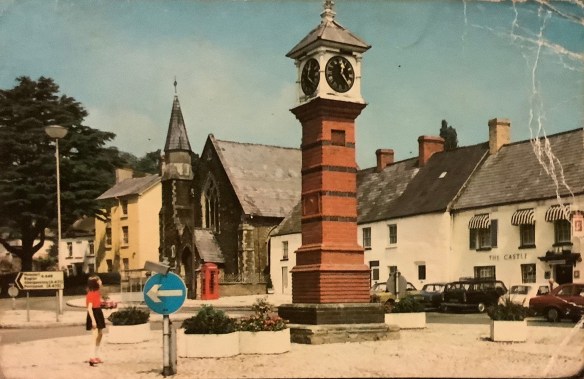
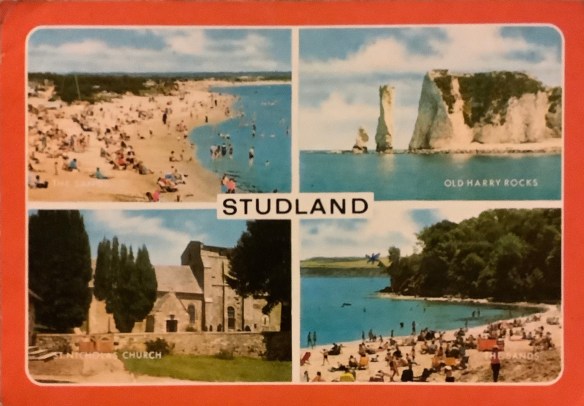
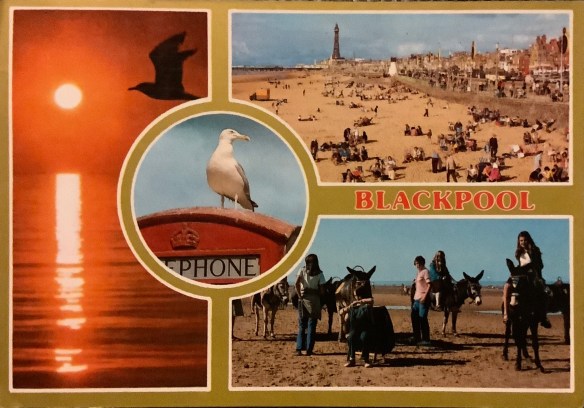
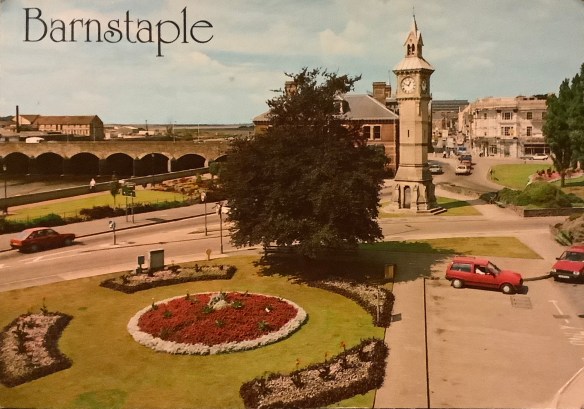
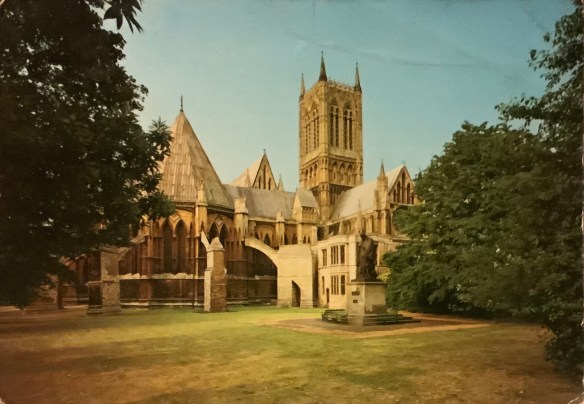
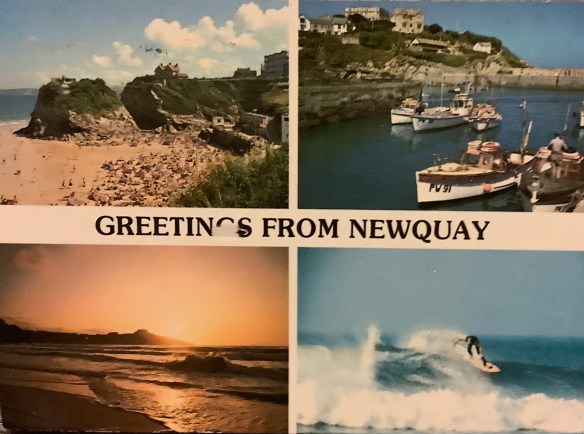
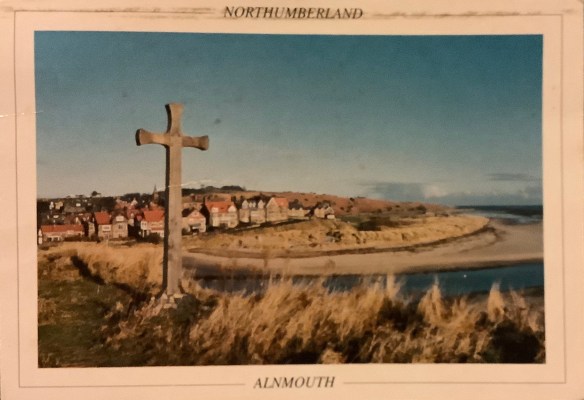
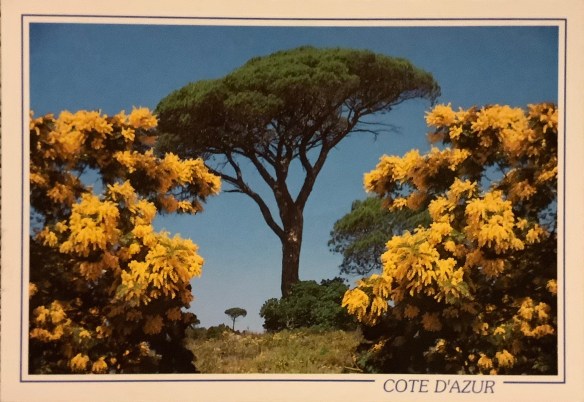
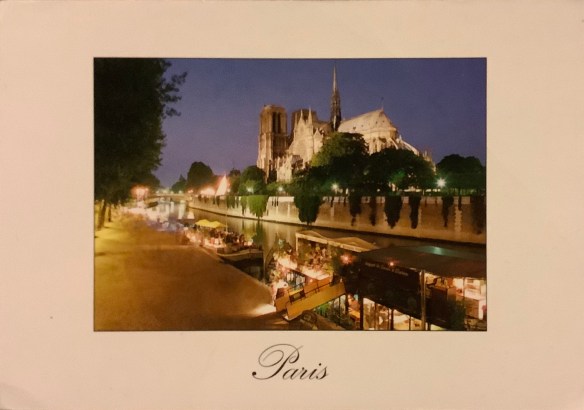
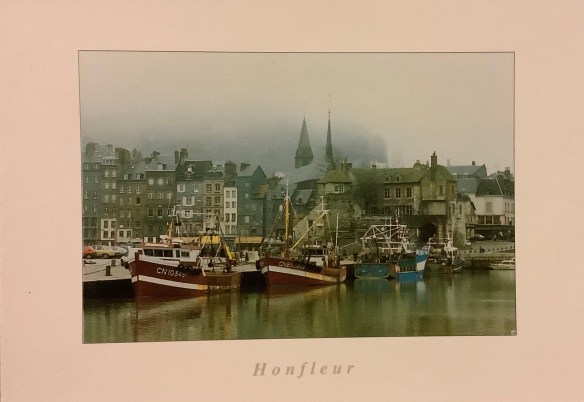
Whilst there are some exceptions, the vast majority follow picture postcard stereotypes. Skies are overwhelmingly blue and bad weather seems to never occur in the land of postcards. Streets must always be empty but beaches must be crowded. Only one postcard in my wider collection is in portrait format. The exceptions are interesting. Alnmouth is permitted a deserted beach because it enhances the air of rugged, historic mystery created by the ancient stone cross and the wild grass in the foreground. Honfleur is shrouded in heavy mist, a curious choice as the town is known for being picturesque and is worthy of a traditional picture postcard viewpoint. Both of these cards are in the later part of my collection and it would appear that some differing styles have crept into the postcard genre over more recent years with a little more freedom for the photographer to create an alternative atmosphere.
Though styles may have diversified over the decades, I would agree with Fay Godwin that the postcards mostly bear no relation to the actual experience of visiting the places depicted, mostly because of the lack of human presence. I have never seen Lincoln Cathedral’s lawns empty, and the empty lunchtime streets of Usk in the first image and Barnstaple (as signified by the times on the clock towers) create an unintended sense of the uncanny that would put any prospective visitor off. The only honest depictions are those of the crowded beaches.
Graham Clark wrote “… the landscape photograph implies the act of looking as a privileged observer so that, in one sense, the photographer of landscapes is always the tourist, and invariably the outsider. Francis Frith’s images of Egypt, for example, for all their concern with foreign lands, retain the perspective/ of an Englishman looking out over the land. Above all, landscape photography insists on the land as spectacle ad involves an element of pleasure.”
The issue of insider versus outsider has been raised by several photography theorists, including Susan Sontag, Martha Rosler and Abigail Solomon-Godeau. It is perhaps easier to see how a portrait photograph made by an ‘outsider’ can be seen to be as detached from the subject, perhaps even exploitative, versus that of an ‘insider’ which displays a more intimate version of the subject. This translates to landscape in examples such as Ed Ruscha’s Every Building on the Sunset Strip (1966), which spends a detached ‘outsider’ view devoid of emotion and embracing the banal. In contrast, Paul Seawright’s 1988 series Sectarian Murder is a poignant ‘insider’ perspective revisiting the sites of 1970s sectarian violence in the area close to where he grew up.
I think both approaches are fine as long as the photographer is mindful of what they are trying to achieve and is not simply doing so out of ignorance. I think most serious landscape photographers today do research their chosen location, even if they are not from the area compared to the days of early landscape photography where research of unchartered lands was often impossible when each new landscape was a curiosity, a spectacle to be paraded to viewers who had never seen such scenery before.
References:
la Grange, A. (2005) Basic Critical Theory for Photographers. Oxford: Focal Press
blogs.getty.edu/pacificstandardtime/explore-the-era/worksofart/every-building-on-the-sunset-strip/ [Accessed 8 May 2020]
www.paulseawright.com/sectarian [Accessed 8 May 2020]
 Rhonda's Landscape blog