Assignment 4: Critical Review (Revised Version)

Assignment 4: Critical Review

Posted on 

Contemporary discourse surrounding Landscape photography considers how landscape photographers can move beyond mere observation of the land and become more deeply immersed in what surrounds them. In his book Camera Lucida, Roland Barthes questions whether landscape is ‘itself only a kind of loan made by the owner of the terrain’, thus suggesting ownership of the photographic subject. If Barthes’ statement is true, can we establish a greater and more direct connection with the land; to remove that level of distance that he suggests?

Land Art moves beyond representation as the artists strive to work with the land, often nature, rather than being a step further removed, looking at the land. A stone is not a representation of a stone in the form of a drawing, or a human-crafted sculpture made from representative materials; it is an actual stone, thus the land becomes the artwork. If, as John Ruskin states in Modern Painters: Of Mountain Beauty, ‘a stone, when it is examined, will be found a mountain in miniature’, then the scope for Land Artists is immense. However, if the land is the artwork, what does the viewer who visits a gallery see when they look at photographs of the artwork? Are they merely viewing reproductions, like visiting the Louvre to see a poster of the Mona Lisa rather than the painting itself? What does the photograph bring to Land Art? And what can Land Art bring to landscape photography?

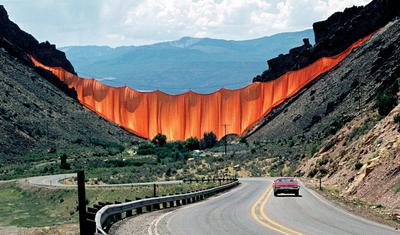
At first glance, photography’s role in Land Art is straightforward; unable to bring a piece of work that spans several miles to the gallery, Land Artists rely heavily on photography to bring their work to a wider audience and engage with the art market. For example, the large-scale works of Christo and Jeanne-Claude rely heavily on photography to be brought to a wider audience: works such as Valley Curtain in Coloarado; a 381m wide gigantic orange-red coloured curtain in the Rocky Mountains.

item.title

With nothing physically to sell, the land artist subverts the art market by preventing the traditional big money sales of objects to be displayed in a multi-millionaire collector’s home. The Christos’ hugely expensive projects are largely self-funded by the sale of drawings with the occasional top up from grants.

Bringing these works into the gallery setting in some way is also necessary for some of the Land Artists who work in remote and inaccessible places to get their work seen,. Without a viewer, the art is arguably an expression of the artist’s ideas that no-one else sees; akin to a diary, or an artist’s sketchbook piece, a private musing for the protagonist’s own artistic progress (of course this is only one point of view as the discourse around ‘what is art’ is varied and lengthy). Thus, the photograph also serves as a tool for the communication and conveyance of the artist’s idea, a means of engaging the viewer, a method of transforming the work from sketchbook piece to ‘art’. The gallery in such instances becomes the artists’ forum for communication; the photograph the medium of that communication. Thus the photograph becomes the replacement for the original art piece, that is to say its tangible or visible form, an extension of the original. In his book In Land, Ben Tufnel defines Land Art as ‘a form of Conceptual art that engaged with earth and landscape’. Tate.org.uk describes Conceptual Art as ‘art for which the idea (or concept) behind the work is more important than the finished art object’. Thus the idea is key; the format (or existence) of the physical artwork itself is secondary. Gombrich in A World History of Art reinforces this perspective by stating that the photograph in Conceptual Art was ‘not thought of as another category of art to be placed alongside painting and sculpture, it was a carrier of ideas and cultural messages’. Gombrich goes on to state that the photograph of Conceptual Art was not an ‘art object’ in itself ‘to be appreciated for its formal, expressive or other aesthetic qualities’.

However, Nancy Holt’s view of the photograph’s role in Land Art is in contrast with that of Gombrich as discussed during a conversation about Robert Smithson’s mirror work Mirror Displacement at Chesil Beach Dorset in a 2019 interview with Simon Grant for Tate Etc: ‘It is interesting to think about the fact that an artist takes his material with him into the landscape, sets it up, makes a sculpture and then photographs it, and the photograph becomes the art. The landscape and the art can shrink to the size of something you can put in your pocket – the size of a slide’.

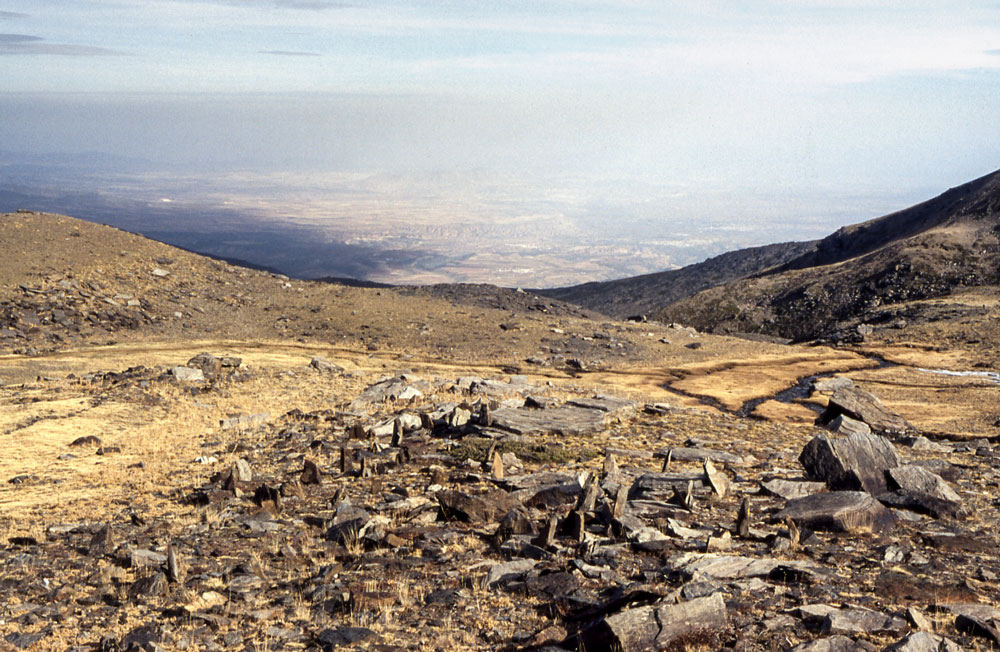
Robert Smithson's Mirror Displacement constructed on Chesil Beach, Dorset and photographed by the artist (1969)

Holt’s view that the photograph becomes the art is reinforced further when considering how artists have photographed the works. The composition is often carefully considered; in the example above, the image has been captured to show the mirrors reflecting the stones arranged in a line that meanders from side to side and ultimately leads the eye through the full depth of the image. The sky is included but featureless and pale grey; similarly there are no landmarks such as the concrete walls that flank Chesil Beach to be seen. The image is cropped so that the beach appears to be a wilderness; there is nothing to give a sense of scale to the viewer and one imagines the furthest mirror to be far in the distance. There is no hint of the nearby sea. By careful composition and omission of unwanted elements, the artist can construct a landscape that they want the viewer to see and create a photograph that goes beyond simple reproduction and can become an artwork in itself.

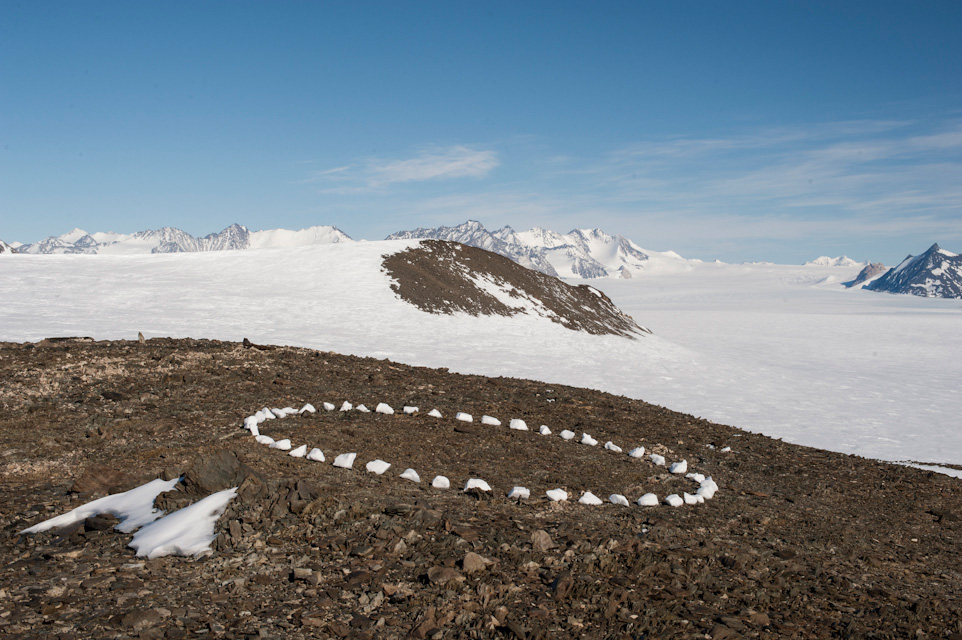
Similarly, in his book Land Art and Land Artists, William Malpas notes that ‘Andy Goldsworthy photographs his sculptures often looking down on them, so the surrounding landscape is not seen. He edits out unsightly buildings or roads’. The Land Art photograph is sometimes not merely a reproduction, then, but, on a simplistic level, a work in its own right that has been edited in some way by the artist or their collaborator. I think the full truth lies somewhere between Holt’s view that the photograph becomes the art and Gombrich’s that it is merely a carrier of messages; that the photograph is a bridge to the real artwork for the viewer and that an element of participation and imagination is required from the viewer to connect and complete the whole artwork. Indeed, Malpas reports that Goldsworthy himself has said ‘that it is important for the viewer of his art to fill in the gap between the photograph of the sculpture and the real sculpture that he made someplace else.’ Thus a level of interpretation and interaction is required by the viewer.

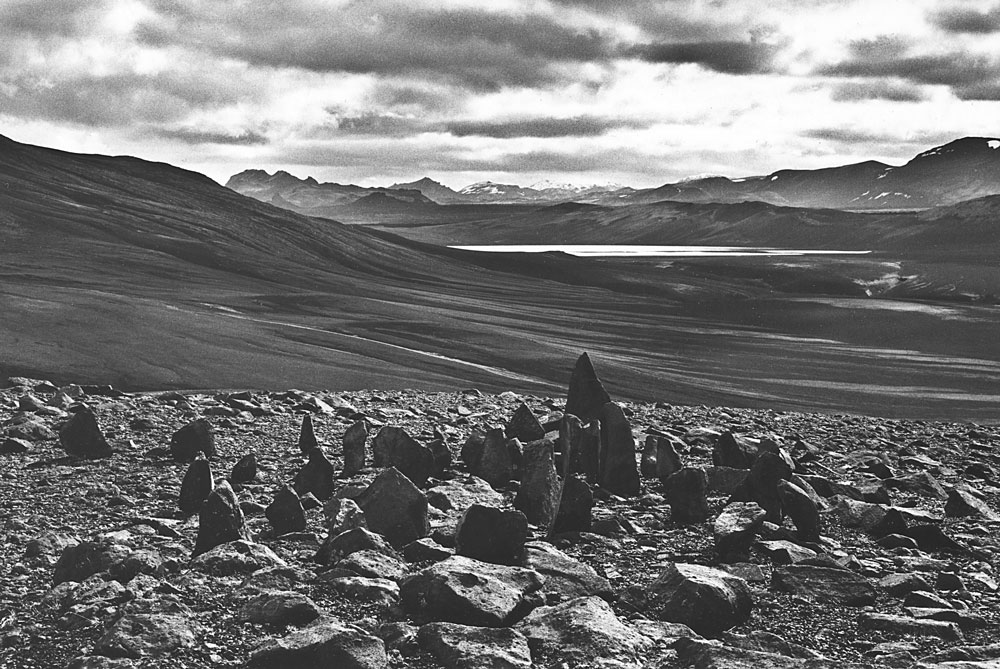
In contrast, walking artist Richard Long claims to want to make photographs of his work as simple and straightforward as possible. In Michael Lailach’s book Land Art, he quotes Long as having said ‘the photograph should be as simple as possible…because my art is very simple and straightforward, I think the photographs have got to be fairly simple and straightforward.’ Long’s locations are often anonymous, his walks solitary; the viewer is never expected to be able to view the work in the traditional sense but can only know his work through photographs, text and maps. What the viewer experiences is his memory, what he saw whilst making the walk. As Liz Wells states in her book Land Matters, ‘they record something of that which was experienced … for the audience this is a story recounted, in word and image, … an account that testifies to the experience of the walker but cannot replicate it.’ Long’s photographs bring to the viewer’s mind their own recollections of similar walks and thus the viewer’s own reaction to Long’s images is influenced by their own experiences and preconceptions of walking. In a way, this is linked to the family holiday photograph; upon seeing someone else’s family album we can recognise and identify with their experiences and, on examining our own thoughts further, can imagine events and settings beyond the actual image itself. in the same way, the viewer must metaphorically place themselves in the shoes of the artist walker to fully gain an affinity with the ‘art’, that is the experience of walking itself.

For all of Land Art’s revolutionary nature, the eschewing of the traditional arts markets and materials, and Long’s claims that his photographs are purely documentary, a look on Long’s website at photographs of his ‘sculptures’ reveals a reasonably traditional, picturesque approach to landscape photography. With a penchant for dramatic landscapes, his images carry a touch of the sublime and follow conventional rules on composition, horizon lines, leading lines, depth of field and so on.

Of course, once many of Long’s walks are complete, the photographs are the only thing that remains as evidence that they actually happened. There can never truly be proof that events such as Long’s solitary walk actually did happen; he could be making it up. As Malpas states: ‘How does one know something is ‘the real thing’, when all one knows of it is through images’. And yet, throughout the history of photography we see images repeatedly trusted as document to an incontrovertible truth. In Land Art, stones may get moved or be so arranged that they do not register with a passerby as a deliberate act; lines in the grass are even more ephemeral, lasting mere hours. This is the case with the work of many Land Artists and indeed some works lasted only minutes or even seconds: Hans Haacke’s Sky Line, for instance, was a performance staged in Central Park, New York whereby he released a number of white balloons affixed to fishing wire into the sky, to be taken up and away by wind energy. As the Phaidon-published book Hans Hacke states, ‘Hacke’s works with air relied totally on the artwork’s functioning in time.’ Photography thus becomes the essential medium for recording the event, Roland Barthes’ That-has-been’; documentary evidence that it really happened.

Transition and transformation are key attributes of Land Art; after all its media, the land and landscape are in a continual state of flux. Robert Smithson’s Partially Buried Woodshed had twenty truckloads of earth loaded onto it until its central roof beam cracked. The work was designed to slowly break up under the weight of the earth and be gradually taken over by nature. On land owned by Kent State University, Ohio, the work was graffitied upon with an anti-war slogan by protesting students, before being mysteriously cleared away over a decade later. The photograph becomes evidence of the changes in such artworks, where even the artist cannot witness every subtle development without living on site and the viewer may only see it once in person, if at all. The photograph becomes a marker of history, capturing a moment in time. In a way the photograph becomes the opposite of the Land Art, recording, preserving, freezing while the art is constantly evolving, unfixed, changing, impermanent. The photograph becomes the supplementary story of the work’s development over time.

One of the enduring attractions of photography is its ability to perform so many different functions in a succinct form and its use in Land Art is a prime example of this. The photograph as document, a piece of history, record, conduit for ideas, autobiographical statement, evidence of existence, or a piece of art in its own right; photography and Land Art form a symbiotic relationship where each feeds and enhances the other. Photography is a vehicle which traverses the barriers to bring Land Art to the majority of its viewers: those who cannot view it in situ. And perhaps Land Art, particularly that by the more subtle practitioners like Richard Long and Andy Goldsworthy, can act as a guide to the landscape photographer, for if we take the cue of artists like Long who consider the process to be of more importance than a physical object, maybe landscape photographers could alter their mindset to incorporate the process of making images as part of the work itself rather than solely concentrating on the end result, and thus can surely become closer to the land by engaging more holistically than merely viewing and photographing.

References:

Barthes, R. (1982) Camera Lucida: reflections of photography. London: Jonathan Cape

christojeanneclaude.net [Accessed 10 January 2021]

http://www.tate.org.uk [Accessed 10 January 2021]

Nancy Holt and Robert Smithson in England, 1969: Notes from an ancient island – Tate Etc | Tate

Lost Art: Robert Smithson – Essay | Tate [Accessed 28 January 2021]

Tufnel, B. (2019) In Land: Writings Around Land Art and its Legacies. Alresford: John HUnt Publishing

Malpas, W. (2013) Land Art in Great Britain (3rd ed.). Maidstone: Crescent Moon Publishing

Lailach, M. (2007) Land Art. Köln: Taschen GmbH

Ruskin, J (2018) Modern Painters, Vol. 4 of 5: Mountain Beauty (Classic Reprint). London: Forgotten Books

Grasskamp, W. Nesbit, M. Bird, J (2004) Hans Haacke. New York: Phaidon

Wells, L. (2011) Land Matters. New York: I.B.Tauris & Co Ltd

Assignment 3 (Revised Version)

Assignment Three: Spaces to Places

Lockdown 2020 on Vimeo

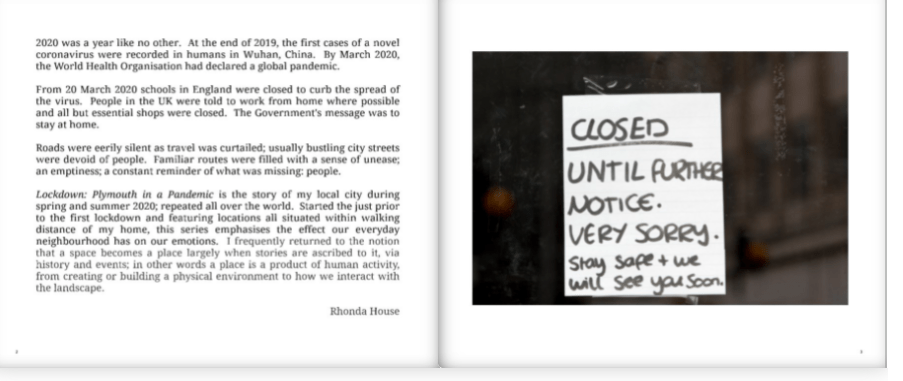
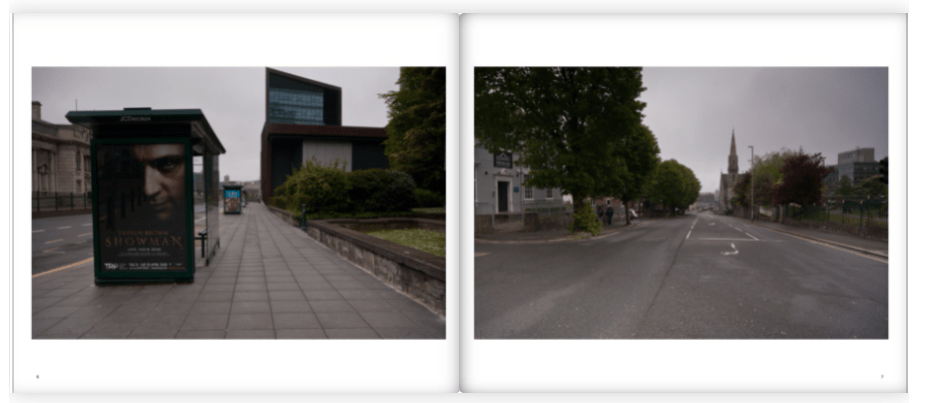
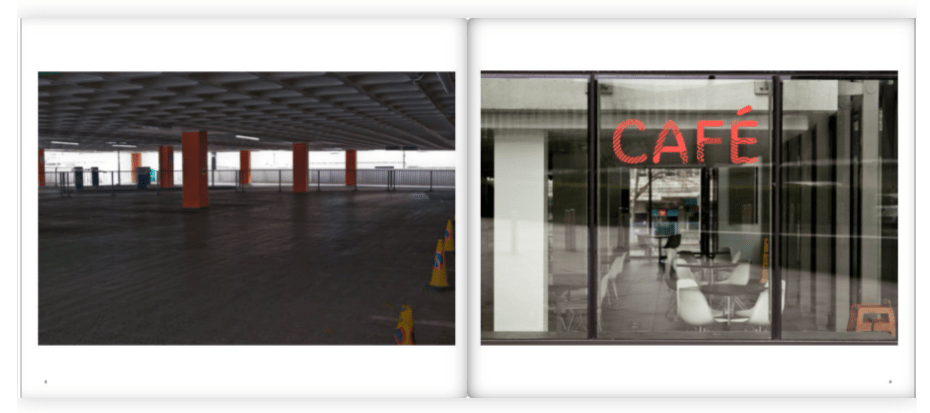
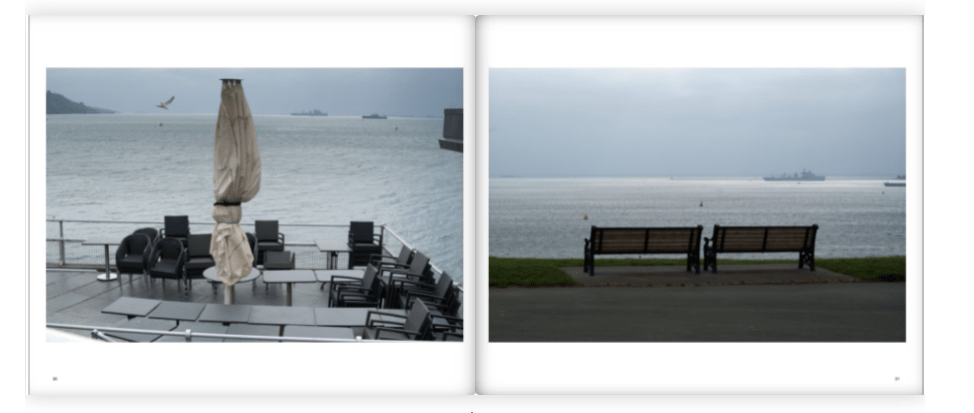
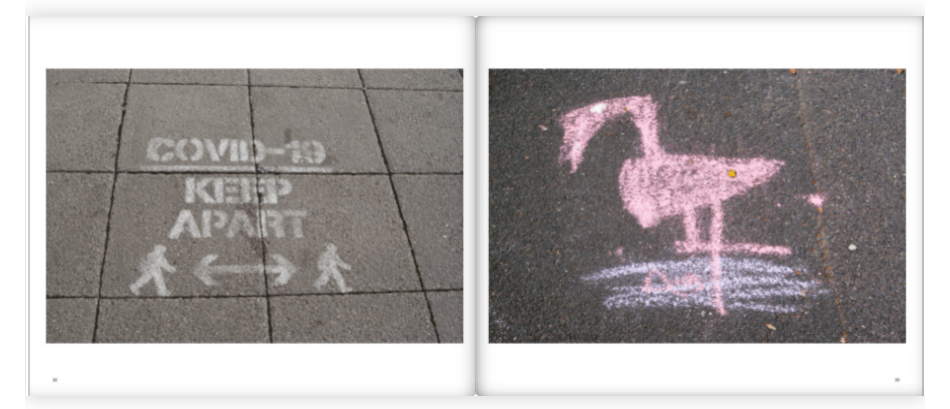
One November’s day few years ago, we took our then toddler daughter to her favourite local theme park.  In contrast to the usual summer throng of visitors with their picnics and ice creams, and long queues for rides whilst under attack from children and wasps fuelled by a combination of sugar and sun, the park in the week before its annual winter shutdown was virtually empty, with just a scattering of families wandering between rides.  No jostling, no hubbub, no frayed tempers, no children giddy with pent-up excitement; just an eerie silence punctuated by occasional subdued conversation.  In theory,  the thought of a theme park to oneself seems inviting, even preferable: more ride time; somewhere to sit down; no excess noise.  However, the visit was not a success.  The operator of my daughter’s favourite carousel had to stop the ride when she, the lone participant, became distressed at being repeatedly flung around in circles in silence.  With barely anyone else there, the theme park had become an empty space, lost of its context and association with fun.

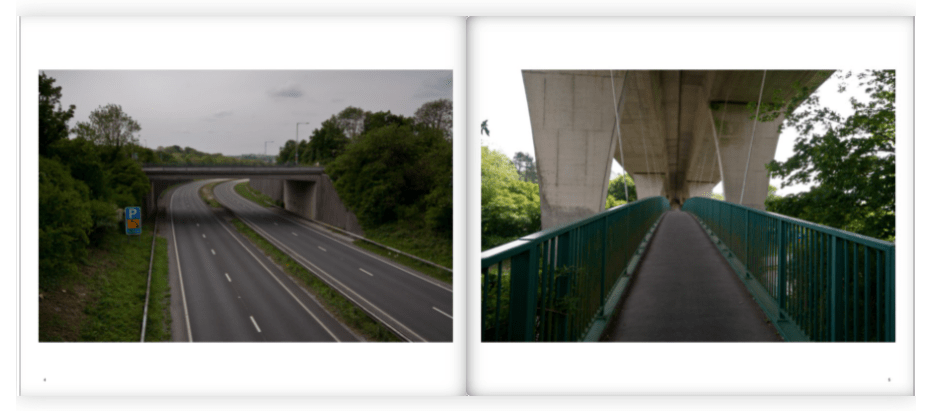
This scenario perhaps helps to explain, in 2020, the sense of unease experienced in cities all over the world at the height of lockdown restrictions imposed by governments in response to the Coronavirus pandemic.  In considering this assignment, I frequently returned to the notion that a space becomes a place largely when stories are ascribed to it, via history and events; in other words a place is a product of human activity, from creating or building a physical environment to how we interact with the landscape.  In the theme park example above, when normal human activity ceases to occur, the sense of place is lost.

In his book Places of the Heart: The Phsychogeography of Everyday Life, cognitive neuro-scientist Colin Ellard describes a 2012 study he conducted in New York.  He took visitors to two sites and recorded their reactions, both physical and emotional: one site was a ‘long, blank façade’ of a supermarket; the other a lively area with restaurants, shops with open doors and windows and a ‘pleasantly meandering mob of pedestrians’.  The results were, perhaps with hindsight, predictable: those people stood in front of the blank supermarket recorded low states of arousal and happiness; those at the lively site themselves felt engaged and positive and recorded high levels of arousal.  Returning to the 2020 lockdown scenarios across the globe, this evidence raises concerns about what effect taking our daily exercise in an empty urban area is having on the collective mental health of city dwellers and is a subject that has been ignored in the media during the pandemic.  Media reports of near-empty city centres focus entirely on the economic impact and make no mention of the psychological impact on those who are still frequenting the city streets; shop and hospitality workers, for instance.

I also looked at the work of Mat Hennek in my research for this assignment.  Although not depicting lockdown but in fact representing the finding of pockets of quietness in otherwise bustling urban areas, his series Silent Cities shows beauty in stillness and gives a sense of holding one’s breath, waiting for the action to begin again.

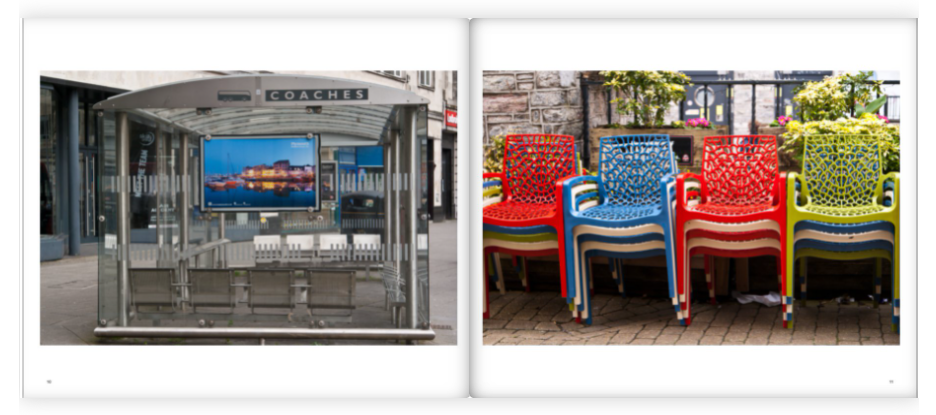
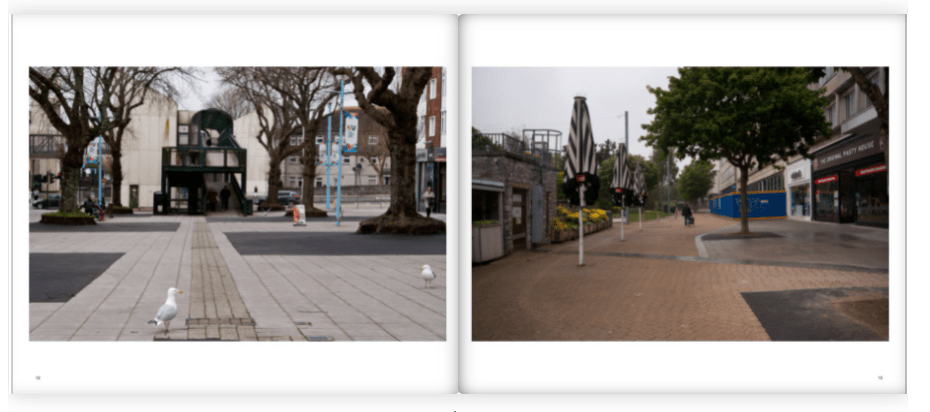
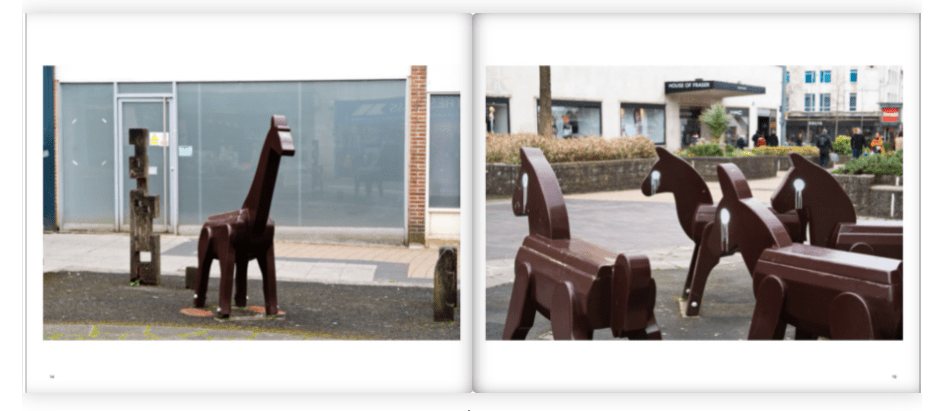
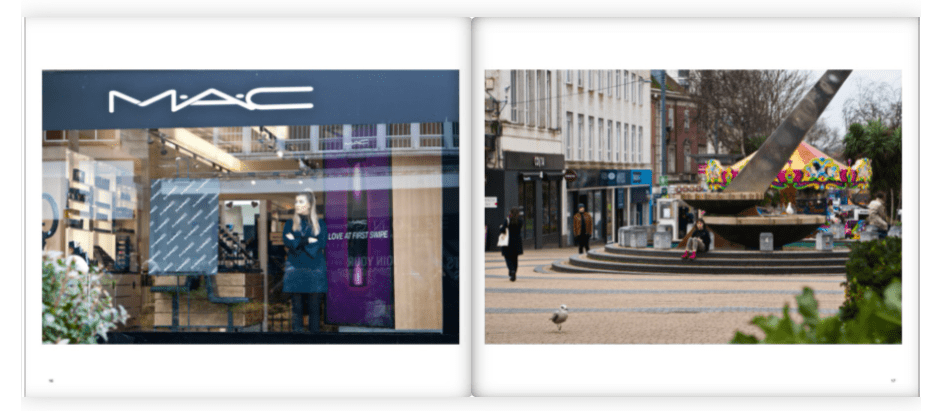
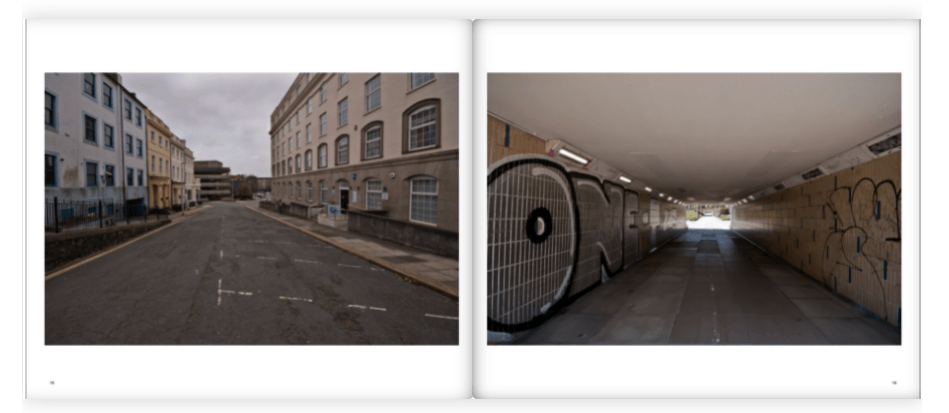
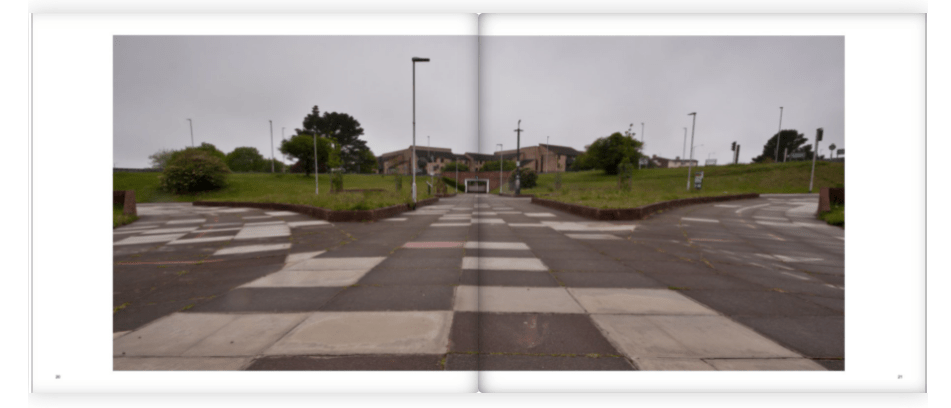
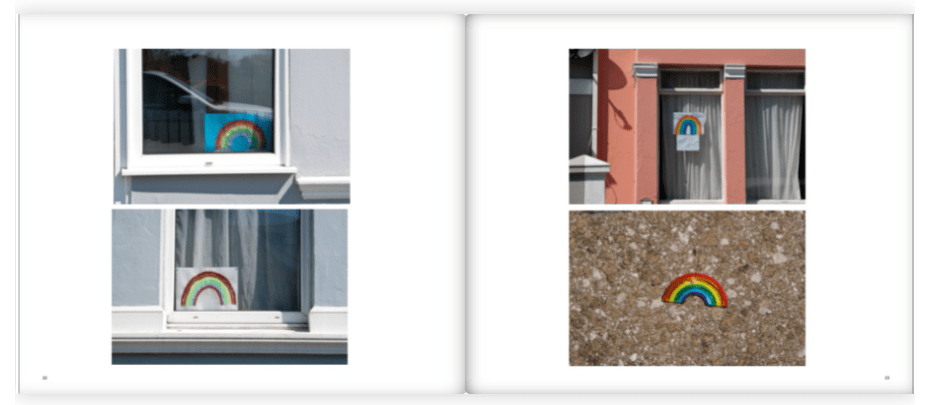
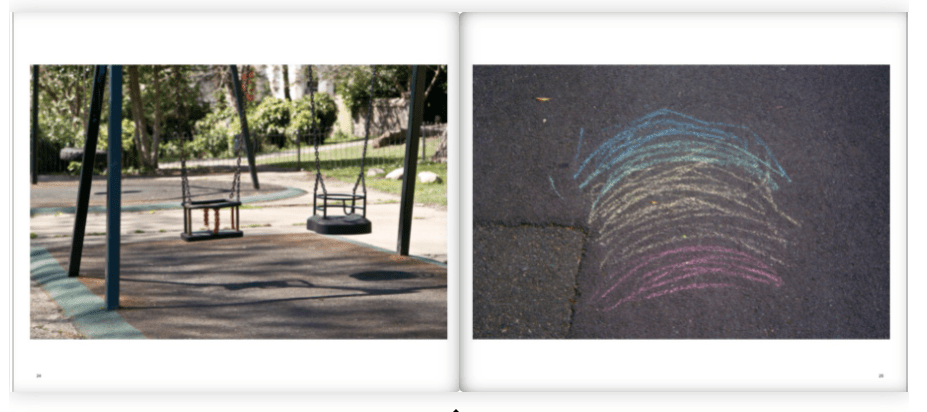
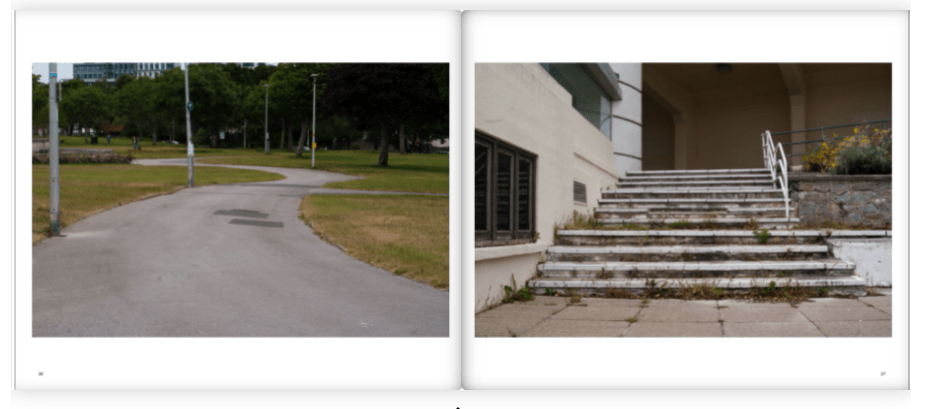
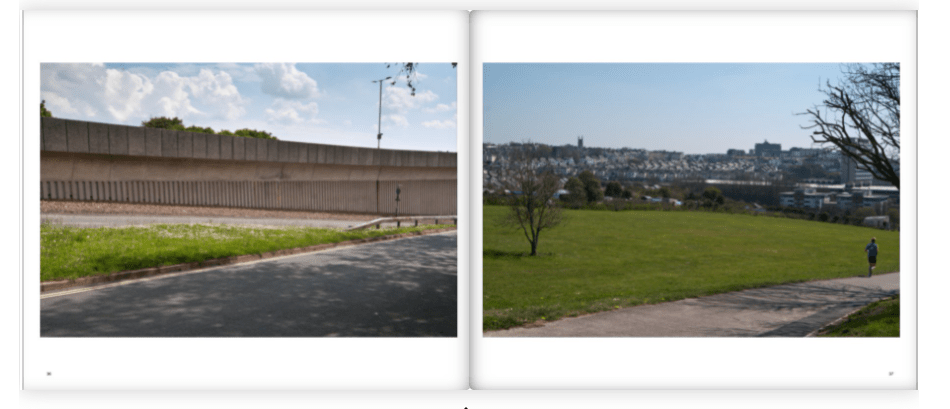
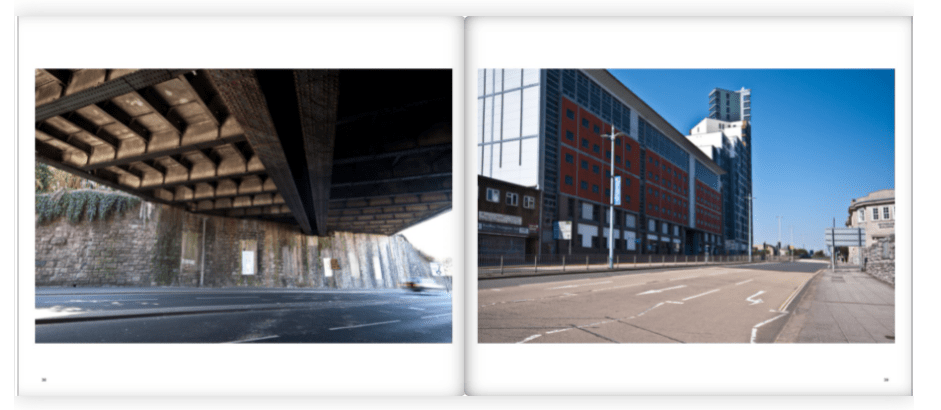
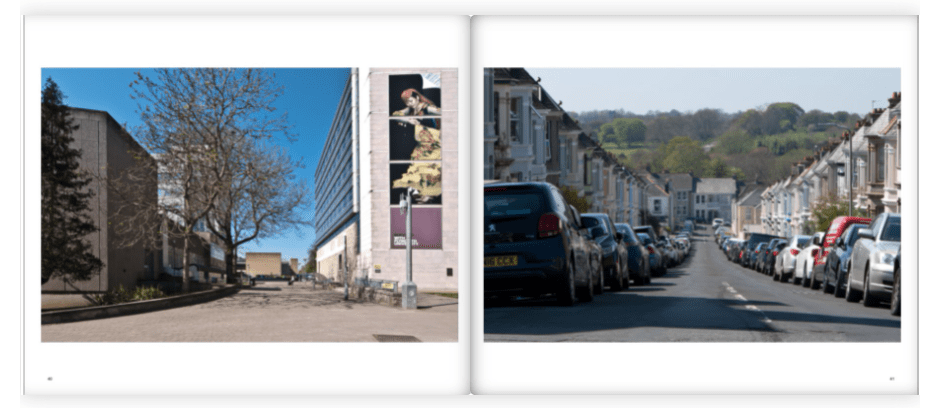
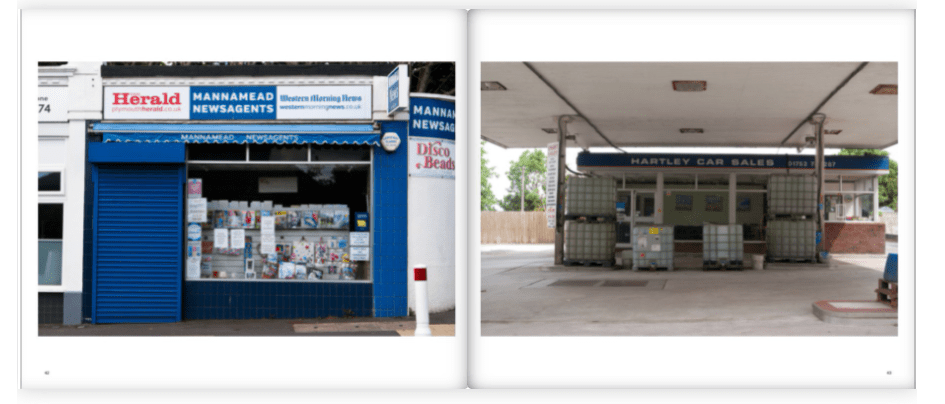
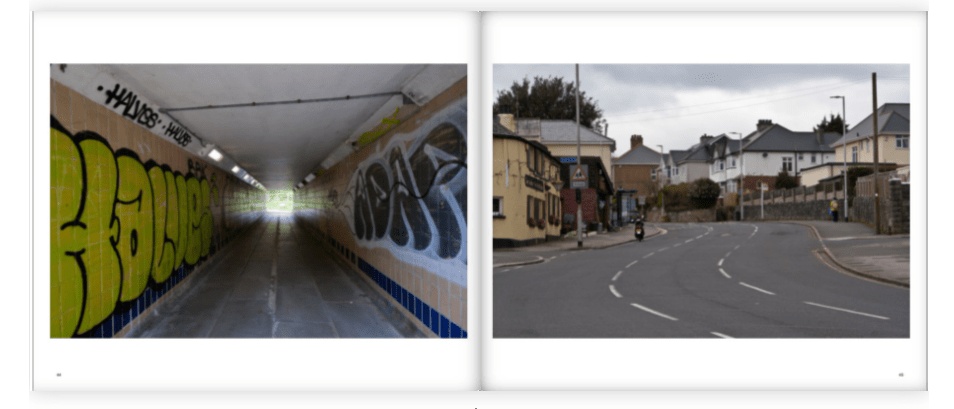
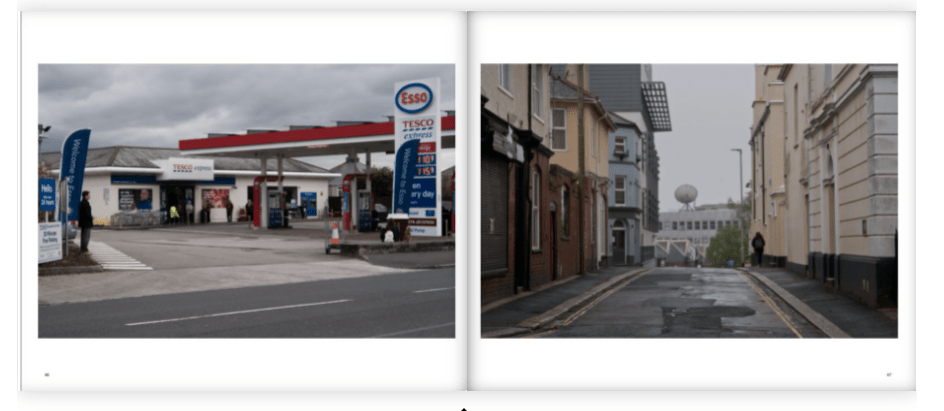
I decided to make my final shortlist of images into a slideshow as this is an unexplored area for me and I felt that adding accompanying music would enhance the atmosphere.  I also created a book of the full series of images in response to tutor feedback as he felt that there were also strong images on my contact sheets.

The finished piece is intended to convey a sense of the melancholy coupled with a touch of the uncanny – but also a small injection of humour created by the birds that have entered some of the images.

References:

Hennek, M. (2020) Silent Cities. Göttingen: Steidl

mathennek.com/works/silent-cities/ [Accessed 15 August 2020]

Ellard, C. (2015) Places of the Heart: The Phsychogeography of Everyday Life. New York: Bellevue Literary Press

Music: https://www.bensound.com/royalty-free-music

Assignment Four: Tutor Feedback and Reflection

I had laboured somewhat over Assignment 4, finding it difficult to pull together the various threads and concepts required to construct a major essay whilst job hunting through necessity and still working full time pending my imminent redundancy. However, I think I overcame the challenges to create a piece of writing that successfully conveys my ponderings around the crossovers between Land Art and photography.

My tutor feedback via Zoom was that the essay could stand as it is, should I choose to submit it unaltered. However, he also returned an annotated version of my essay with suggestions for my consideration. I had written in the first person for a personal perspective and he has suggested that I change to the third person. I can see that this makes for a more ‘academic’ piece of writing and intend to take up this suggestion. There are also suggestions on a couple of the opinions I raised, giving a different perspective. I will definitely review these and incorporate other viewpoints and considerations as well as looking at some of the suggested texts.

Assignment 3: Response to Tutor Feedback

Due to an unforeseen change of tutor part-way through the module, some months passed between completion of Assignment 3 and receiving feedback for it. However, I am pleased with the positive feedback I have received, and my tutor’s assurance that the video I produced worked well and the music I chose was appropriate to the content and did help to evoke an emotive atmosphere as I had intended. I had considered the slideshow content and the music very carefully and spent some time deliberating over its composition as it was the first I have created so I am happy that the tutor has recognised what I was trying to achieve.

The tutor also recognised that I spent some time researching this assignment, reading two books on phsychogeography, in my bid to understand and elucidate the feelings of unease experienced when walking around my home city, Plymouth, during national lockdown in the COVID|-19 pandemic during 2020. He also noted that my learning log is progressing well.

During our video chat, he also commented on the strength of the remaining images on my contact sheet, and indeed this formed part of the dilemma I had in choosing the ‘right’ images for the slideshow; there were at least two different contextual directions I could have taken in the presentation. He therefore suggested that I produce a book containing the full, wider project that I conducted and this is something I intend to do as part of the final submission for assessment.

Overall, I am very pleased with the feedback for this Assignment.

Assignment 6: Transitions

This assignment requires a series of images that responds to the idea of ‘transitions’ within the landscape and that records the changes that a part of the landscape undergoes over an extended period of time.

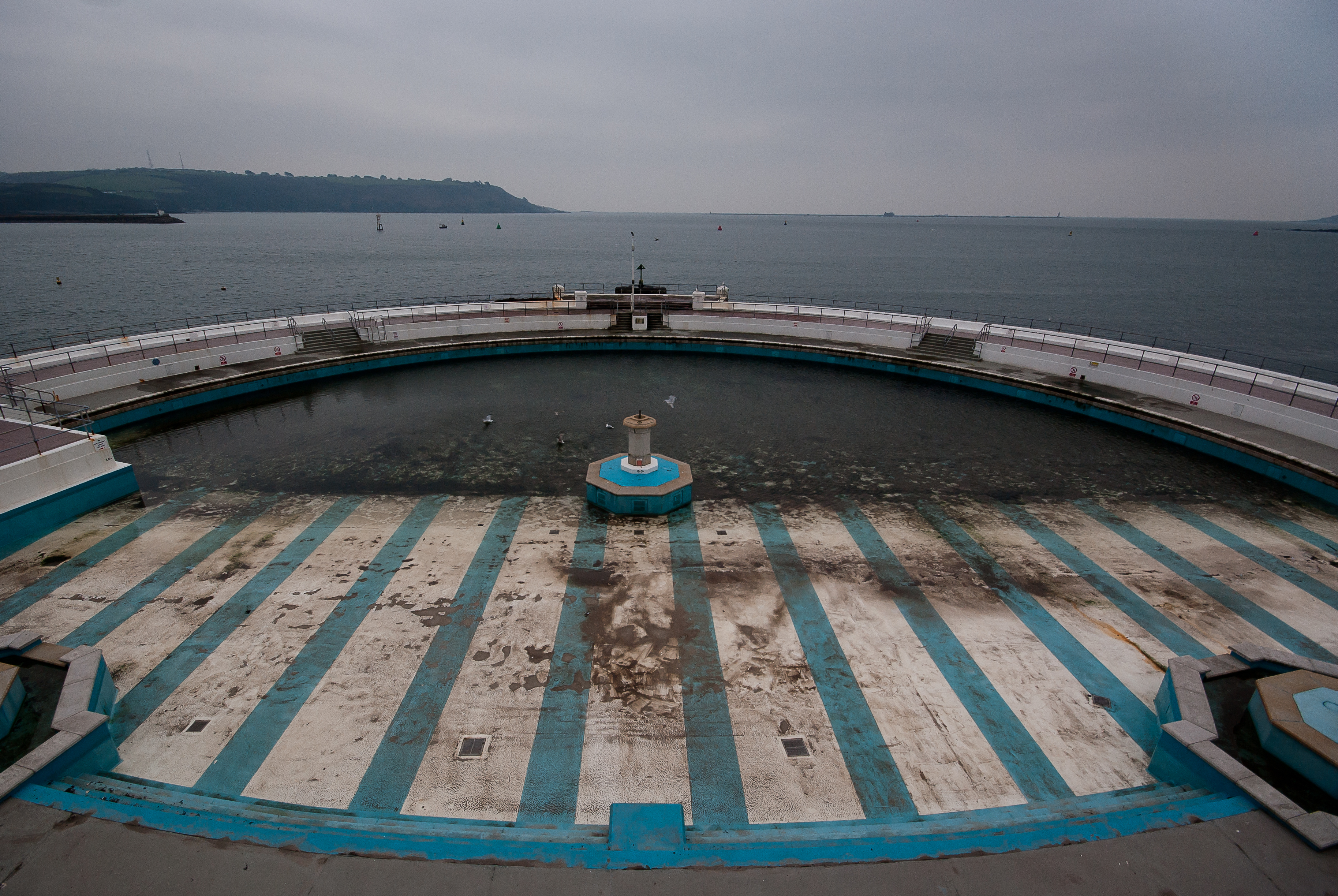
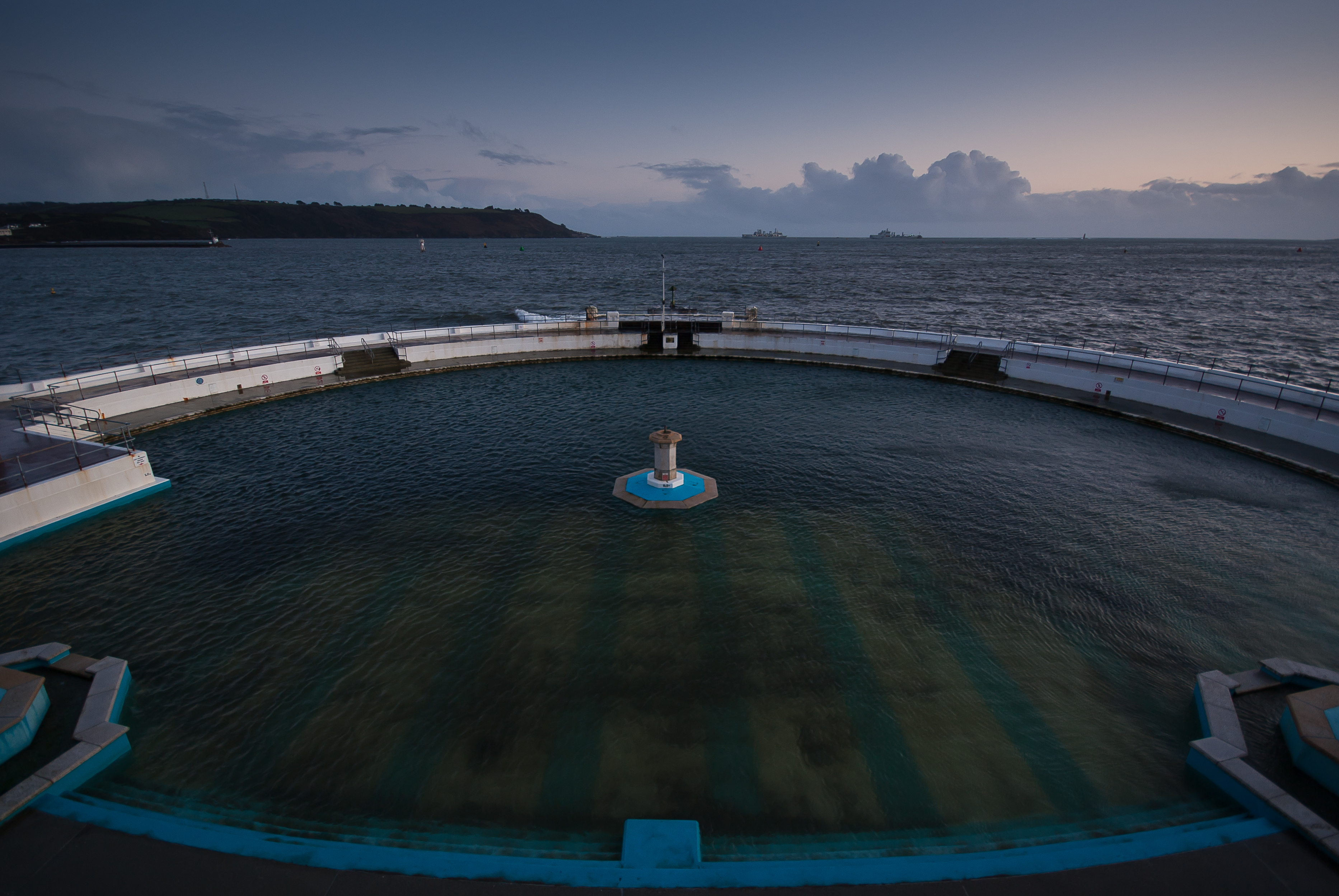
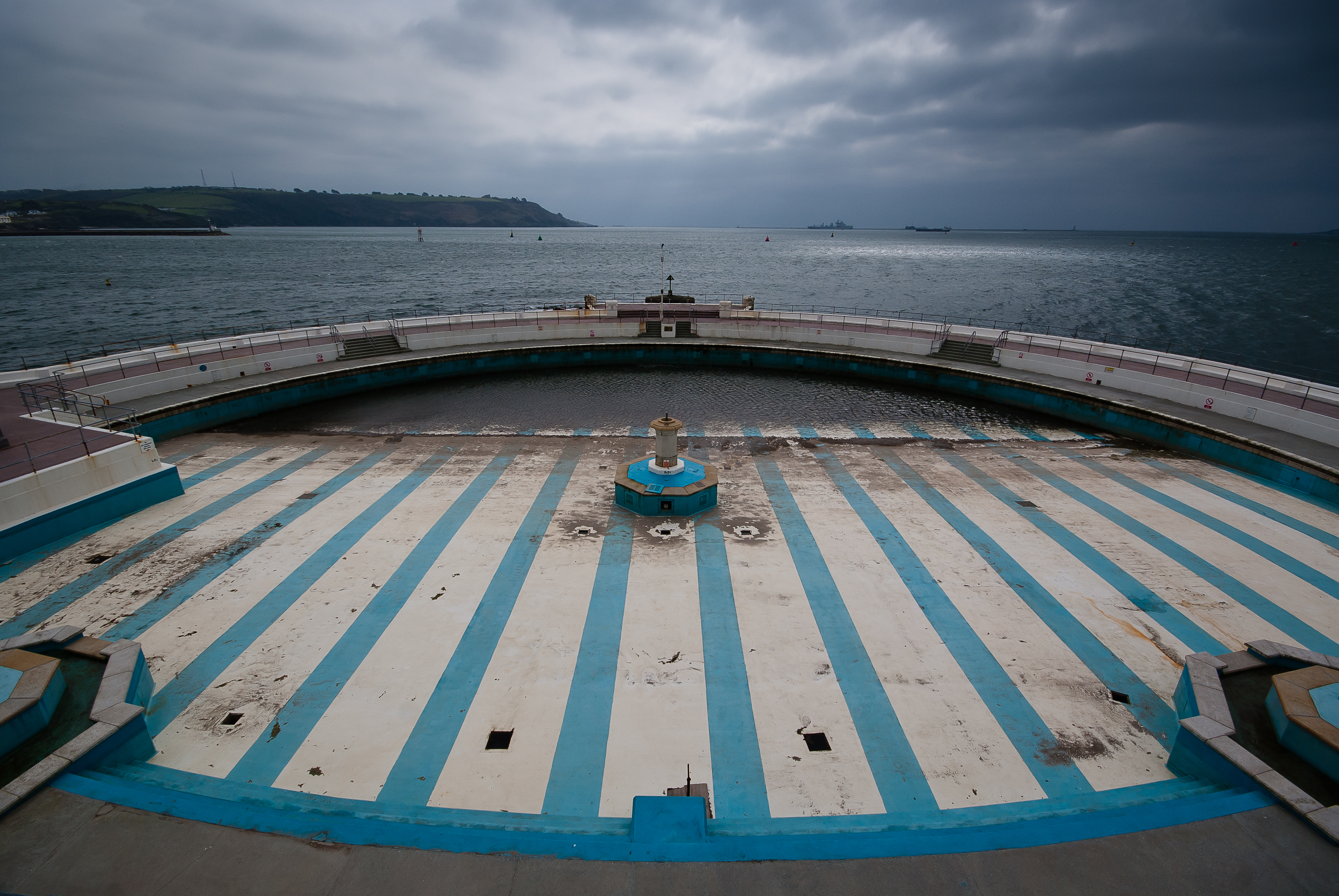
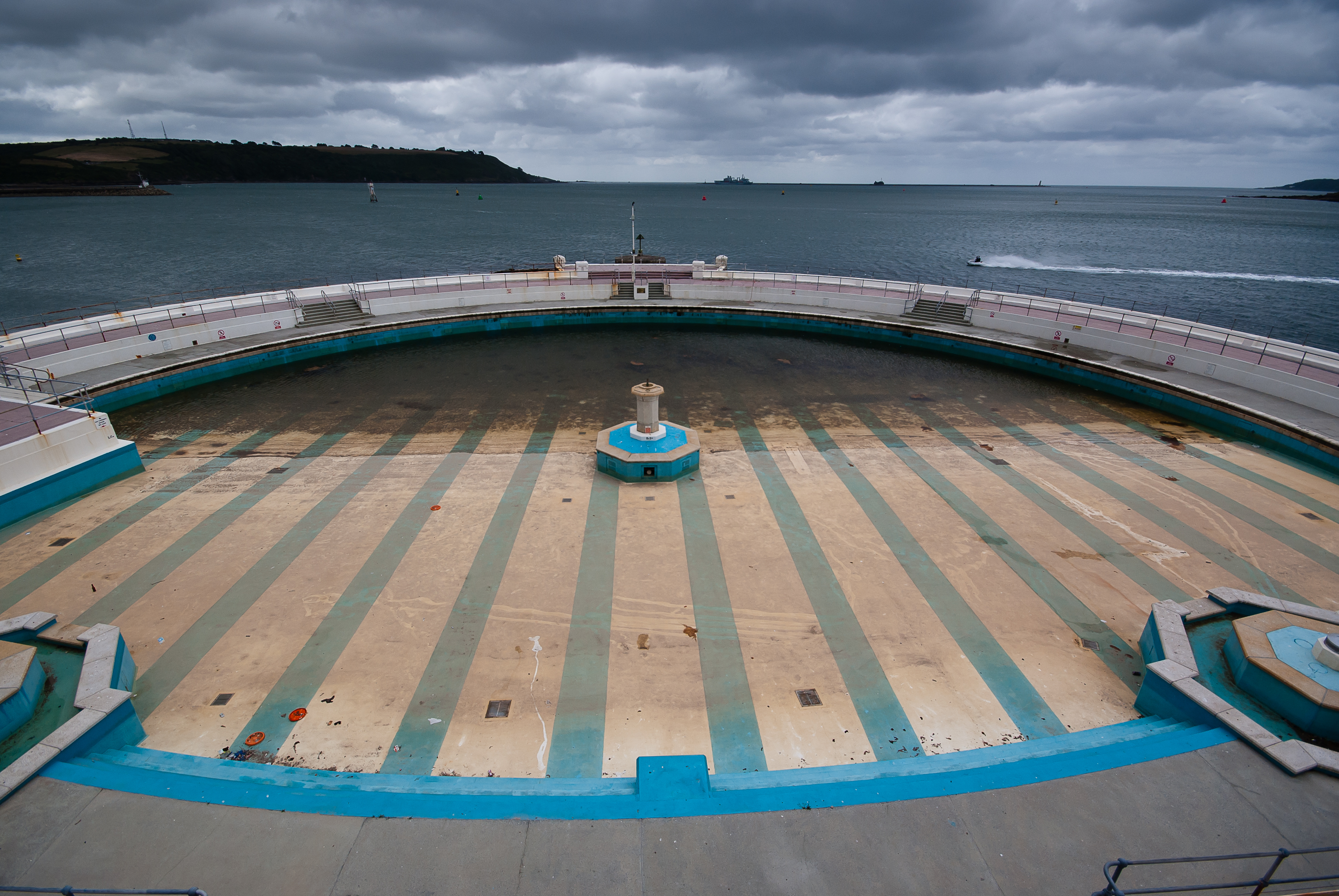
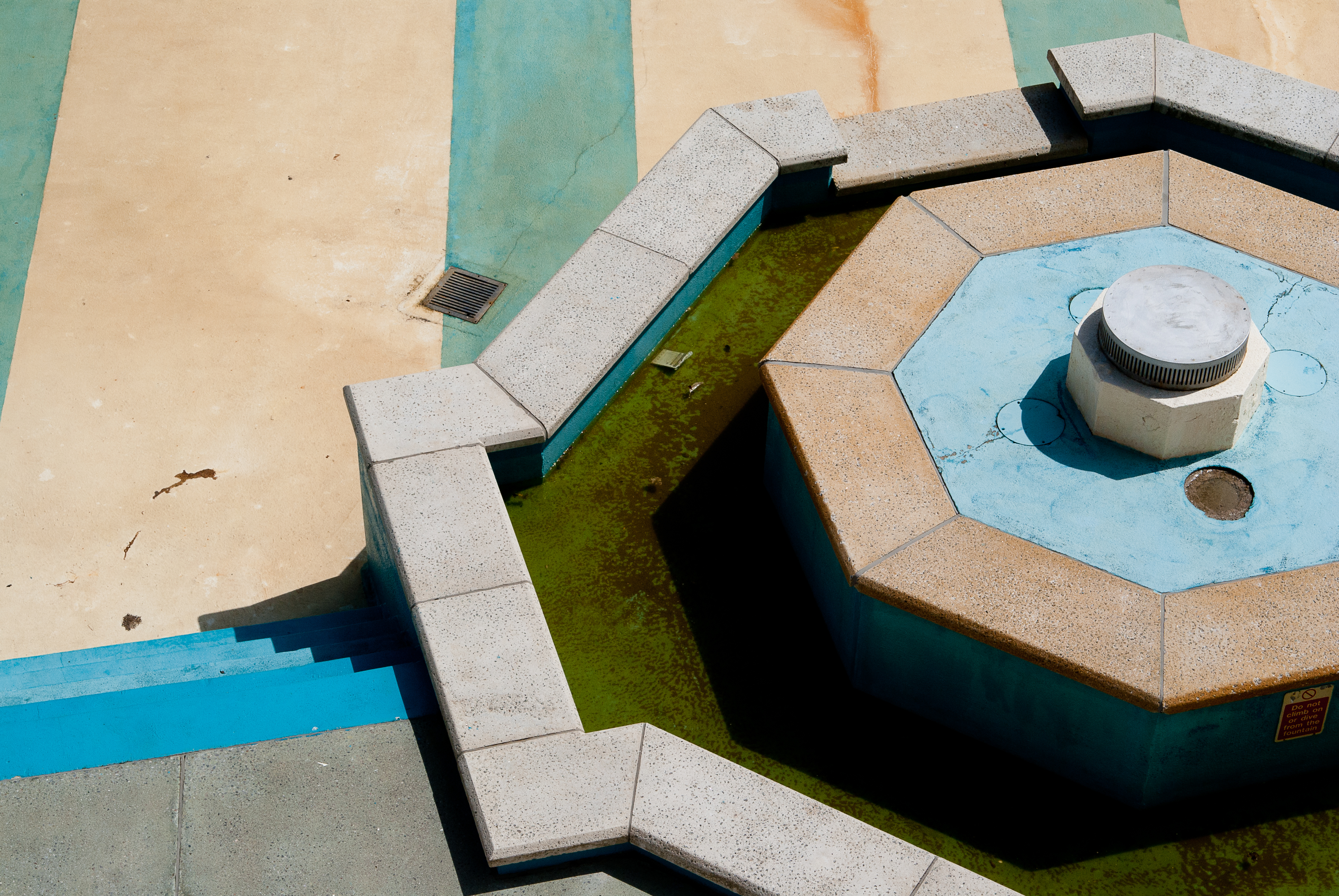
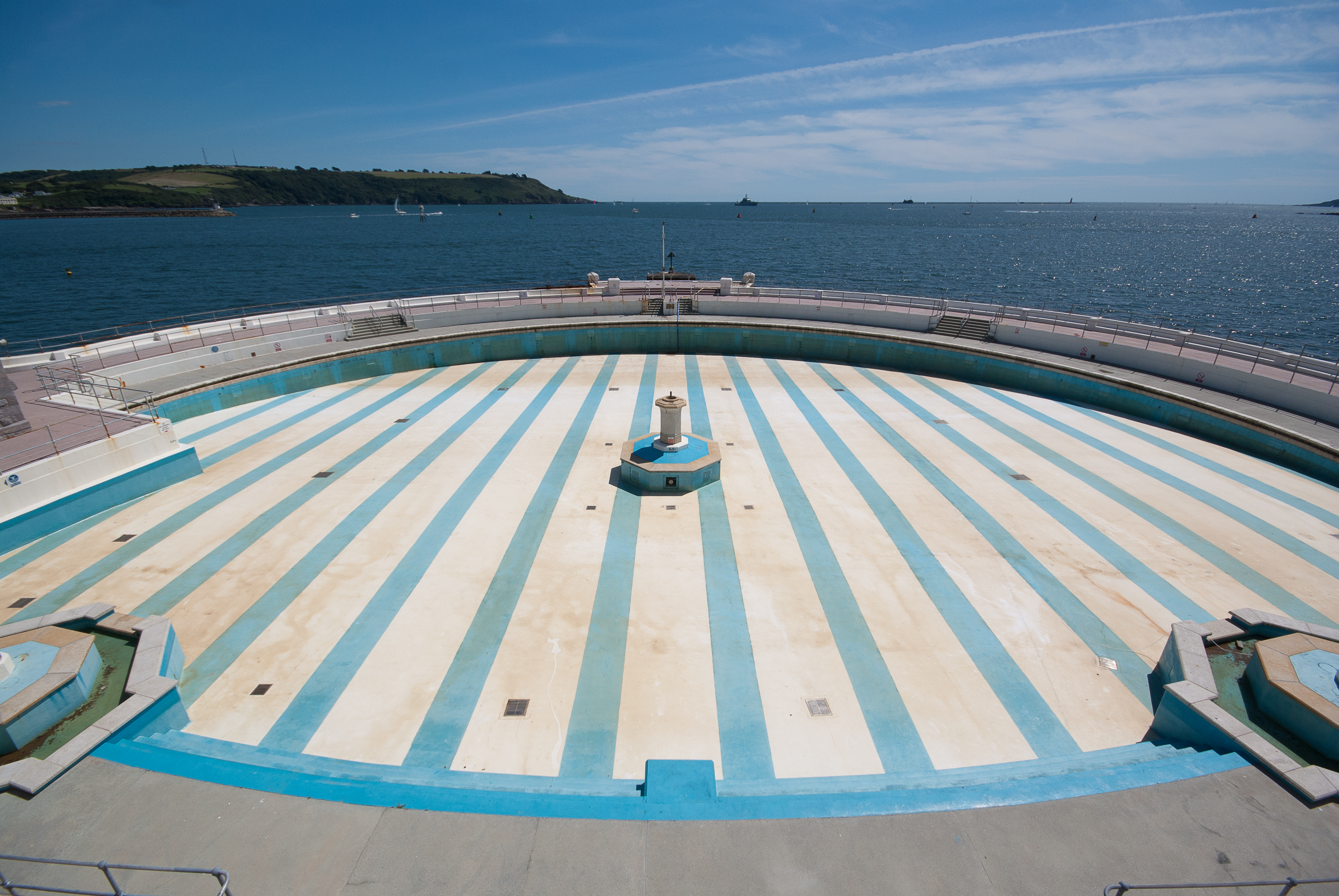
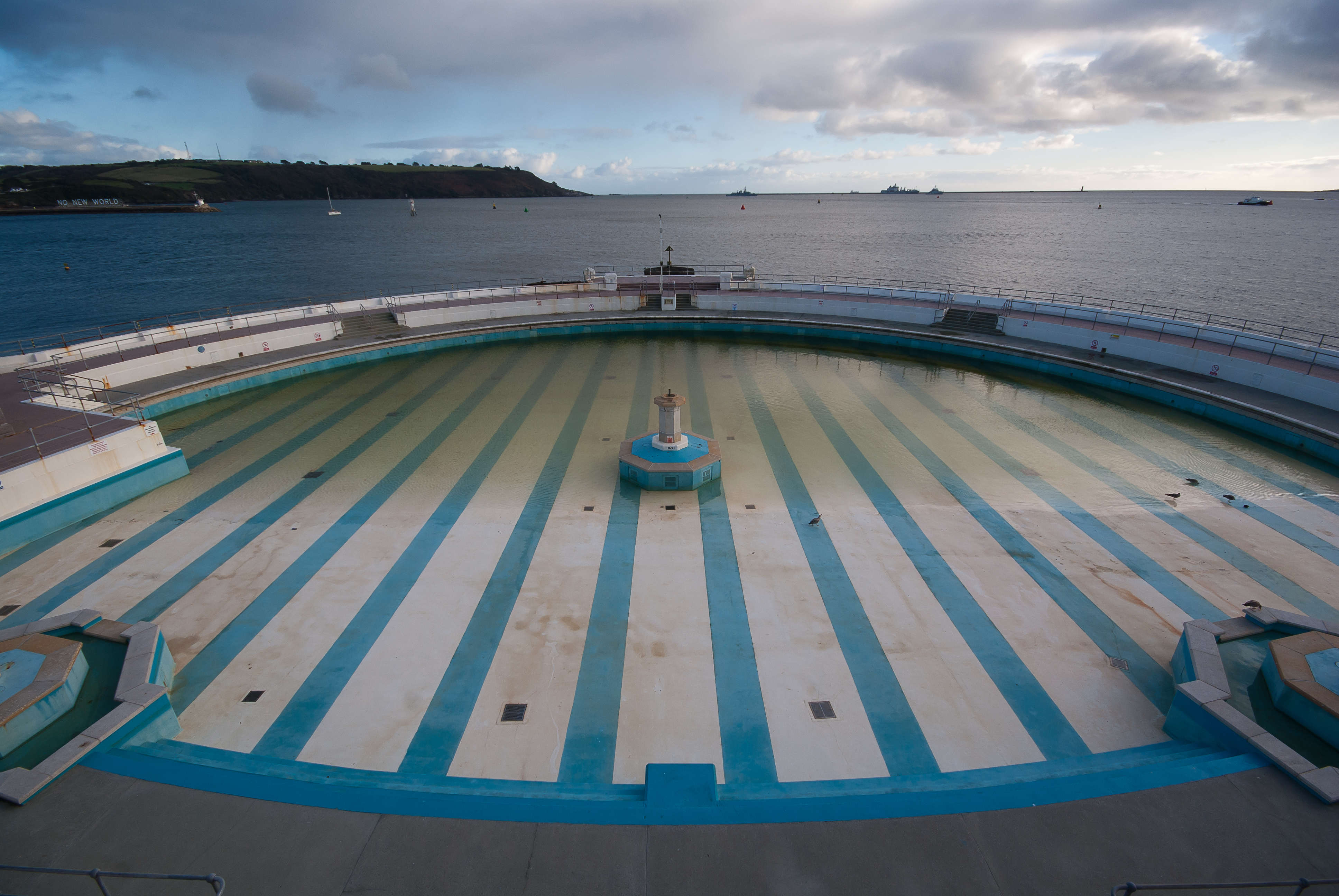
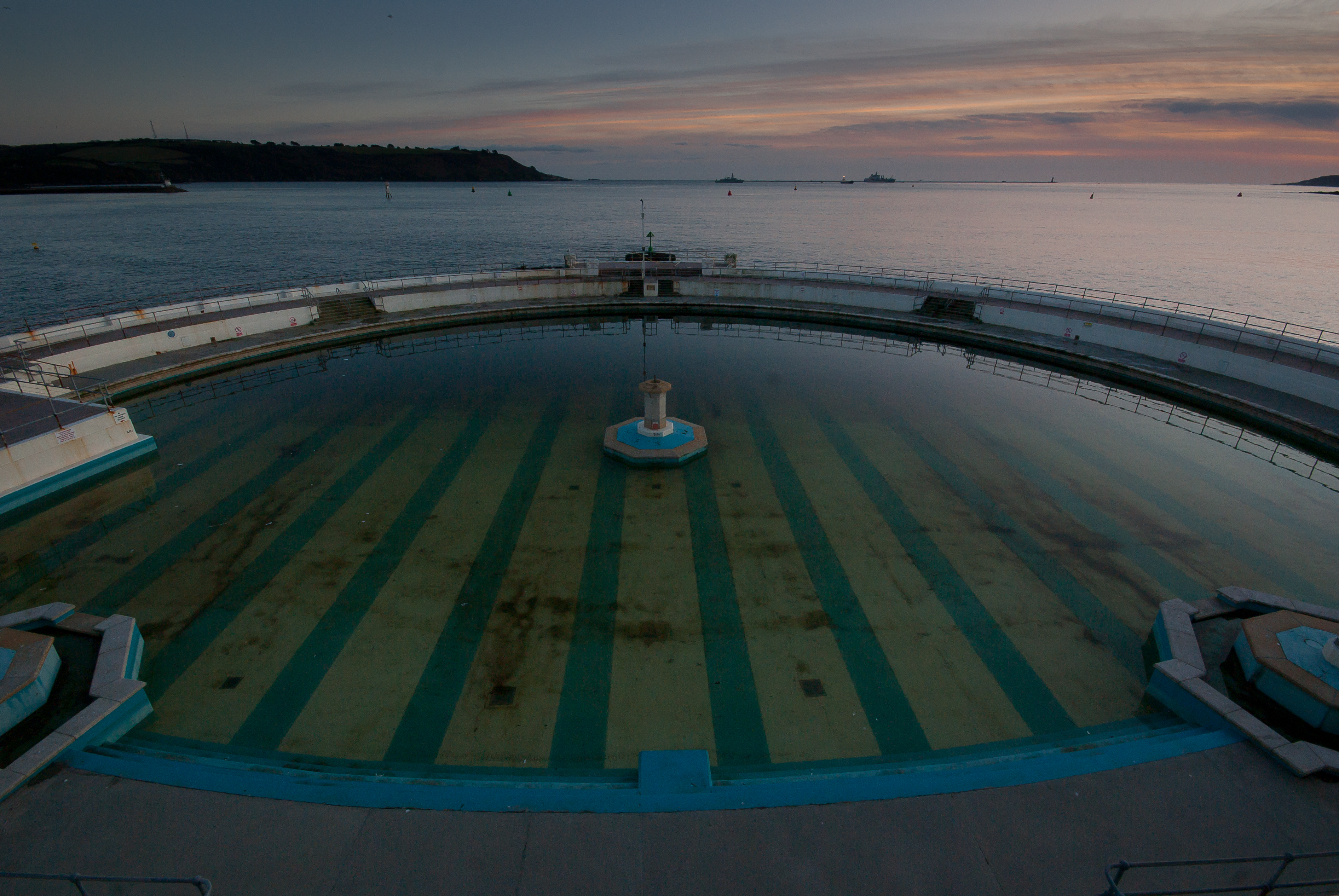
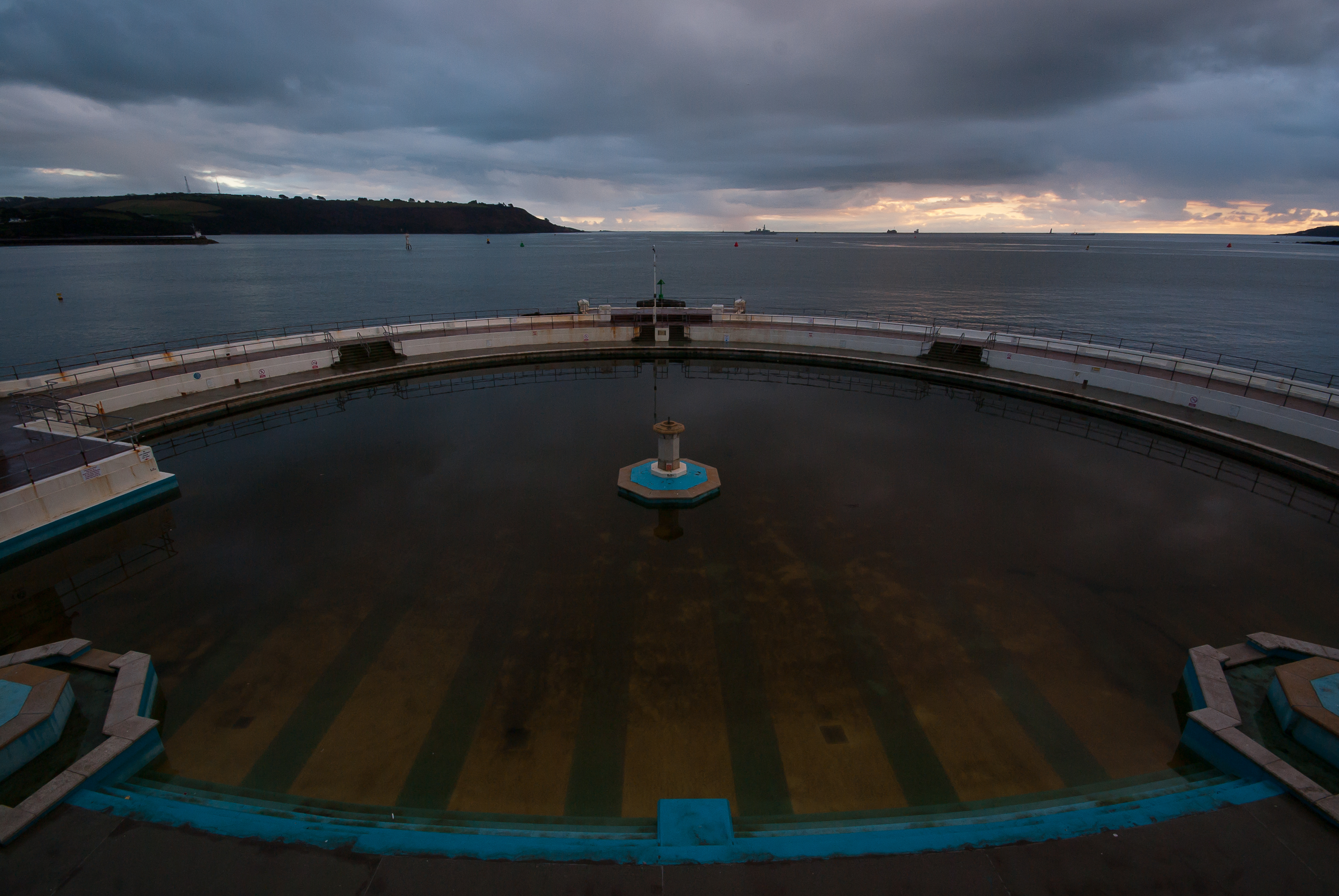
Living in Devon, a holiday destination, I am very conscious of the region where I live being considered an area of beauty, and of visitors thinking of the South West in terms of picture postcard, typically picturesque images. Landscape photographers are increasingly aware of the other ‘side’ of holiday destinations; for example, human poverty existing in close proximity to a much-visited attraction. However, the reality is often not as clear cut. Visitors do not often think about the existence of the attractions themselves outside of the holiday season, many of which will struggle financially if the season is beset by inclement weather or a rise in popularity of a different destination.

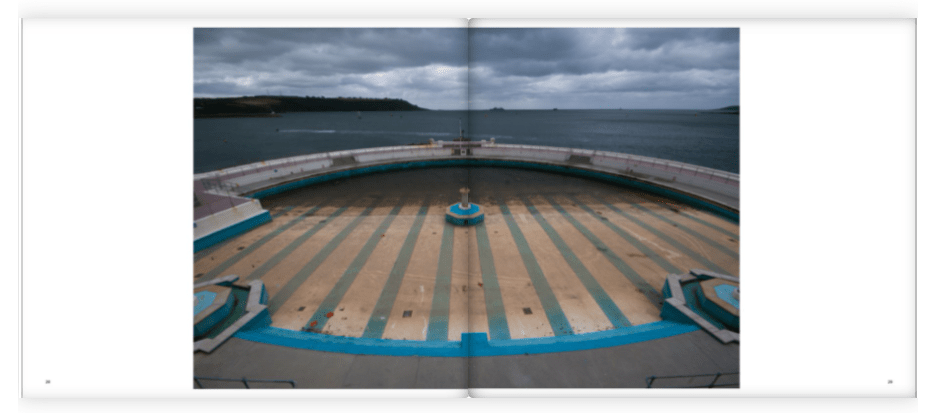
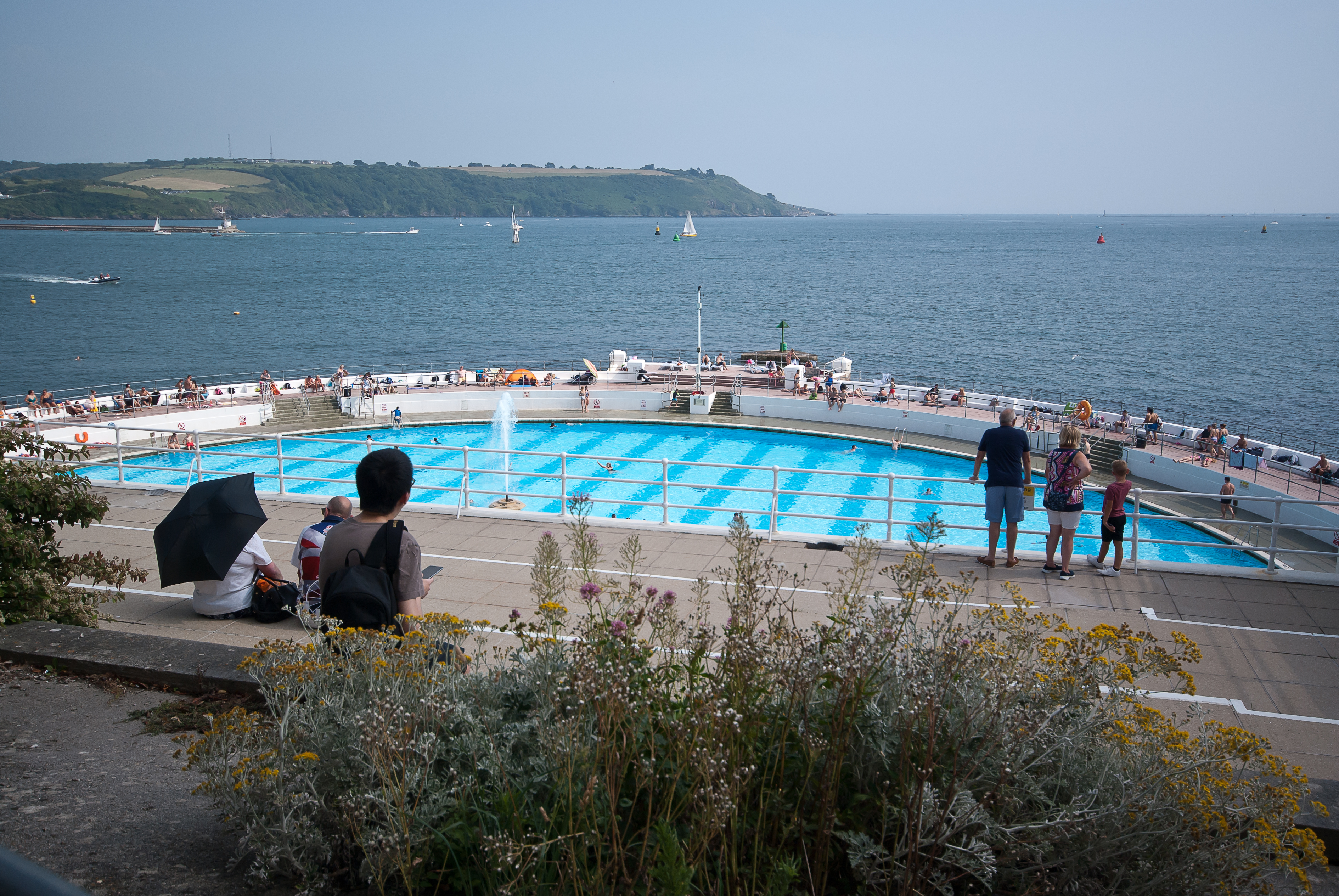
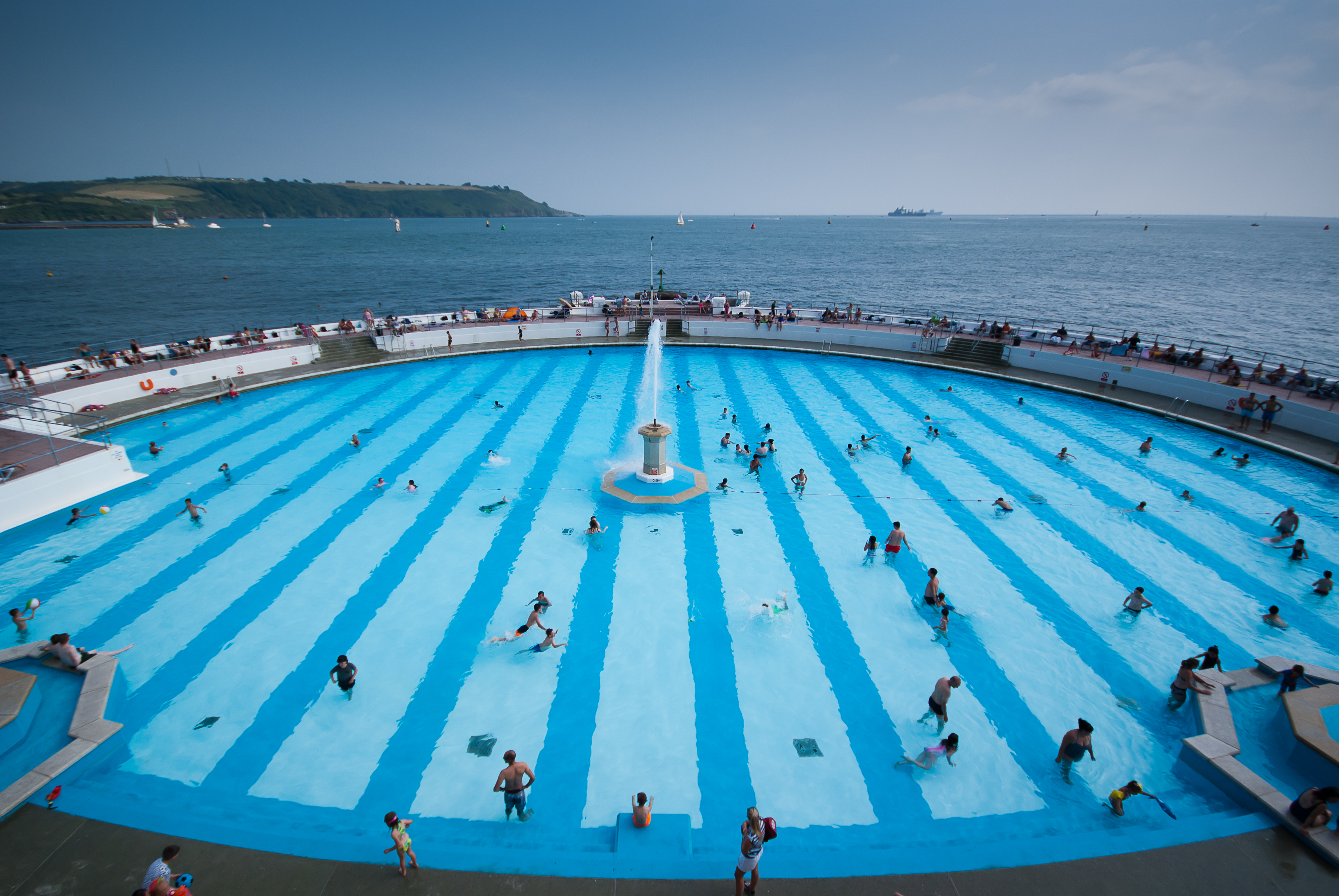
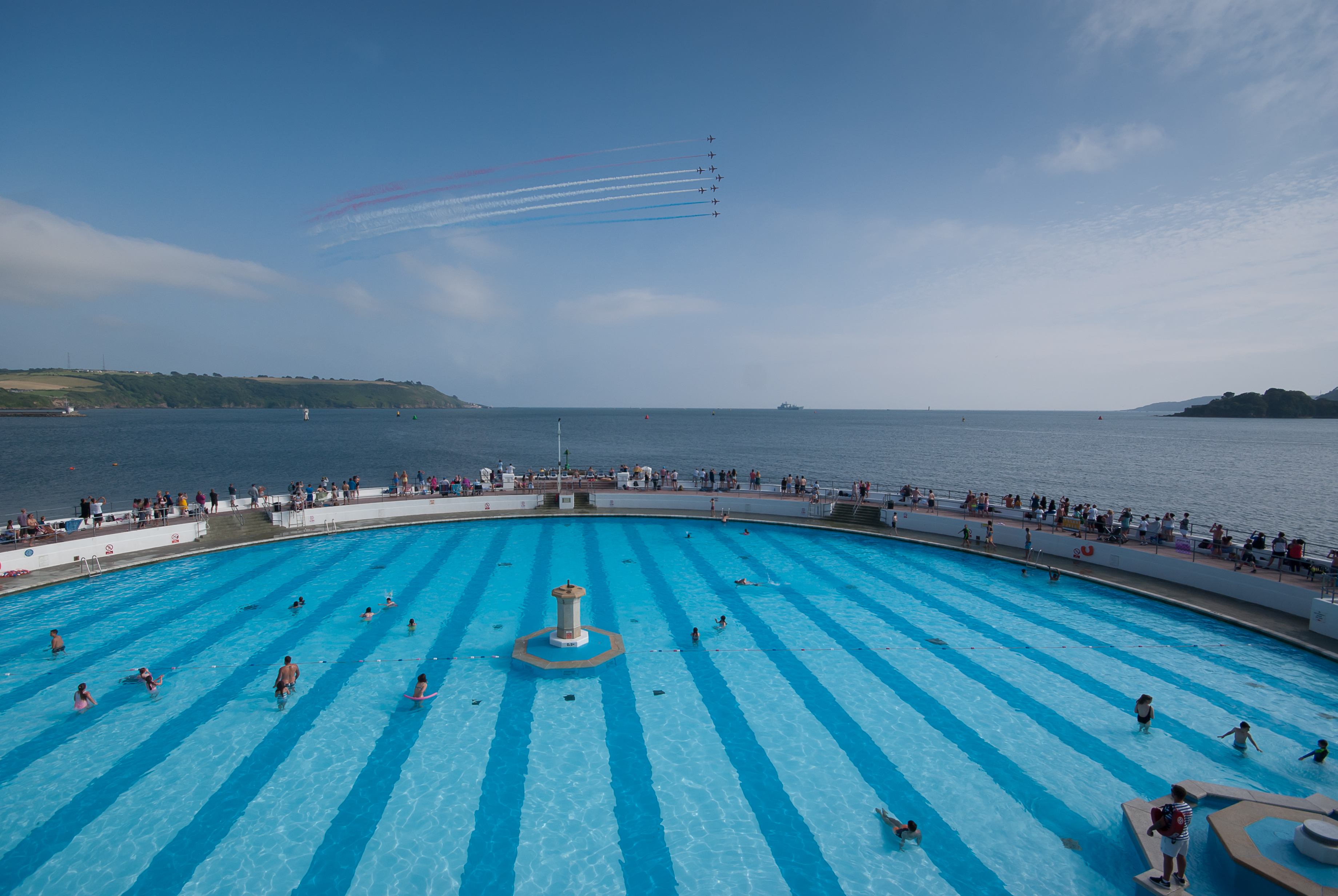
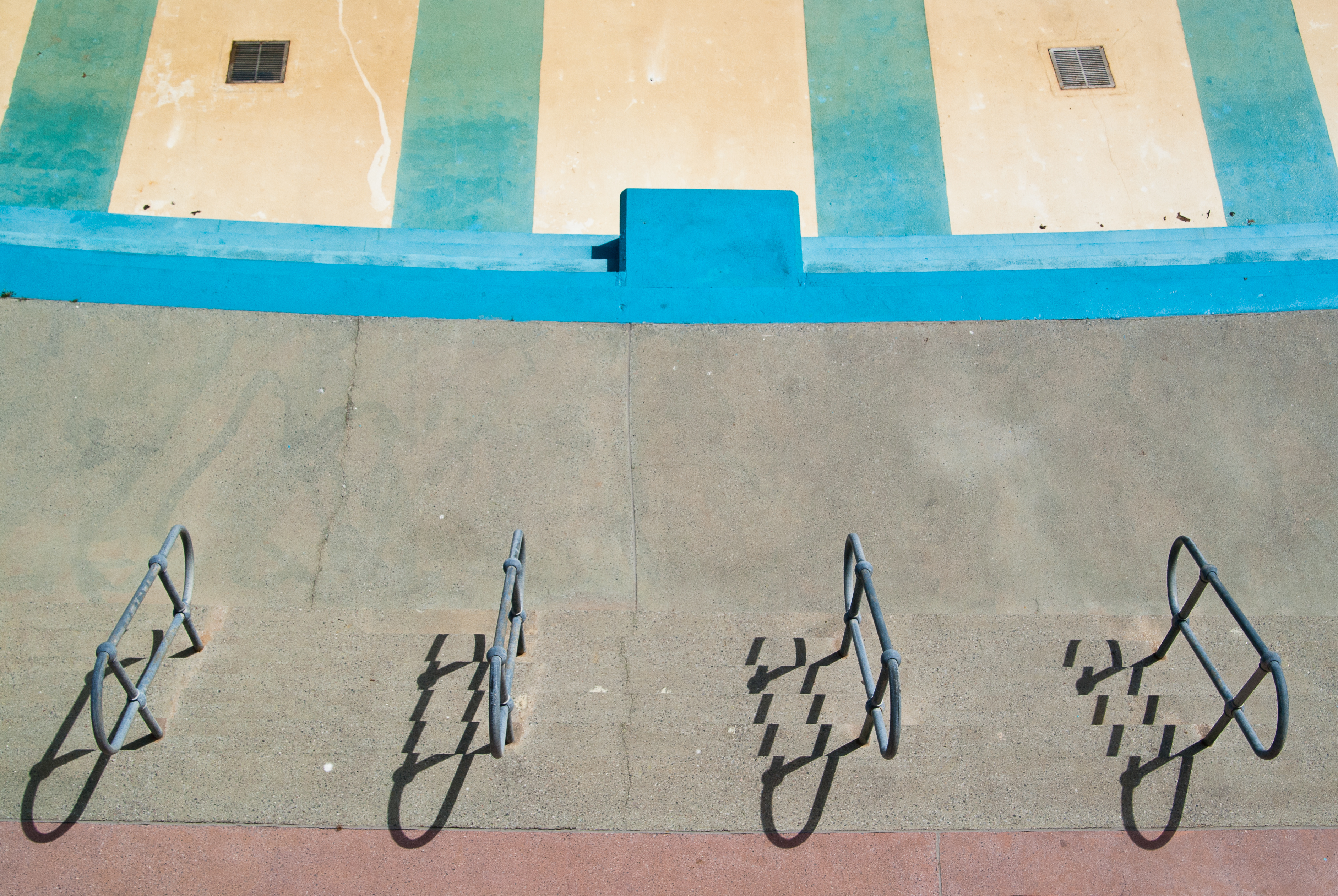
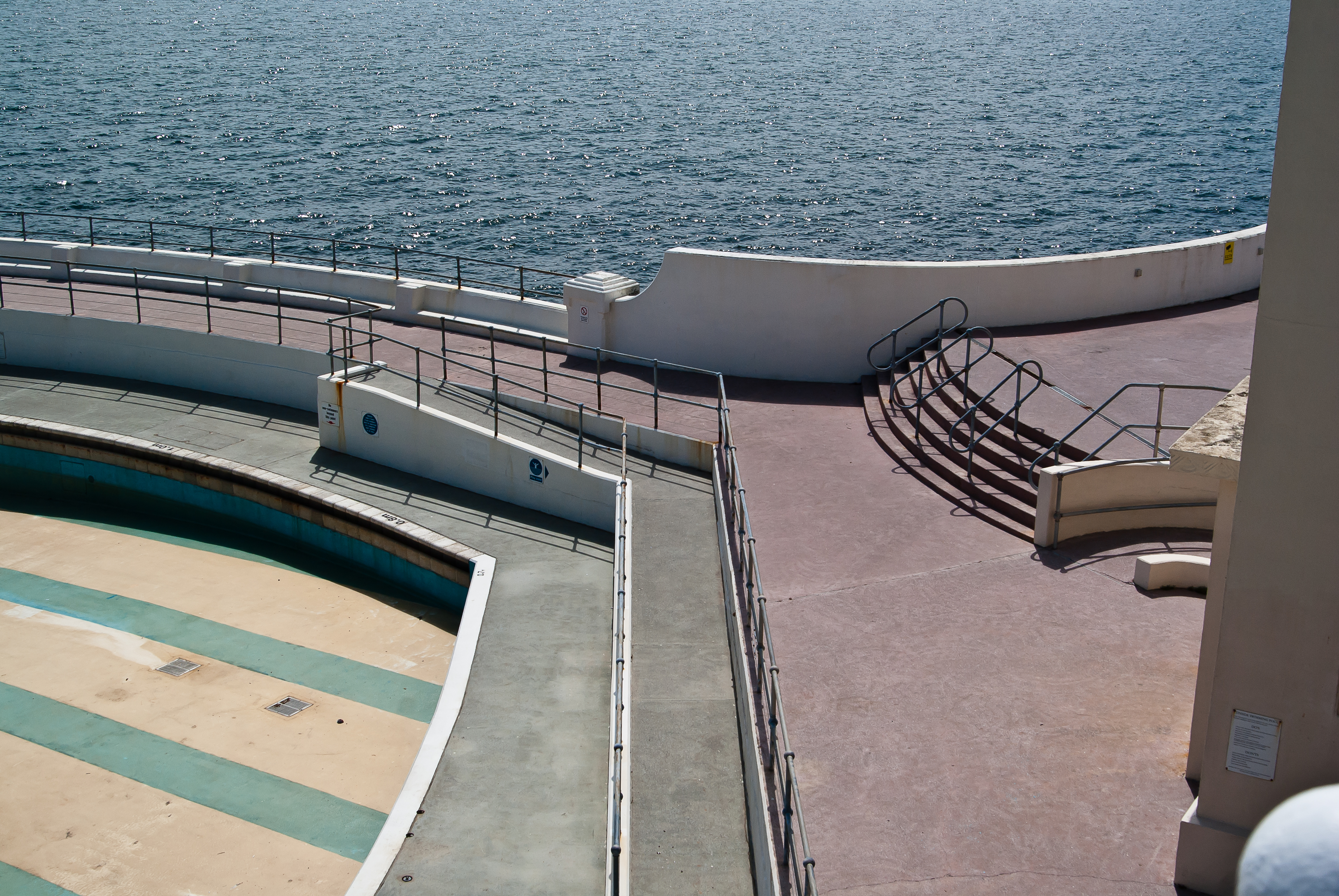
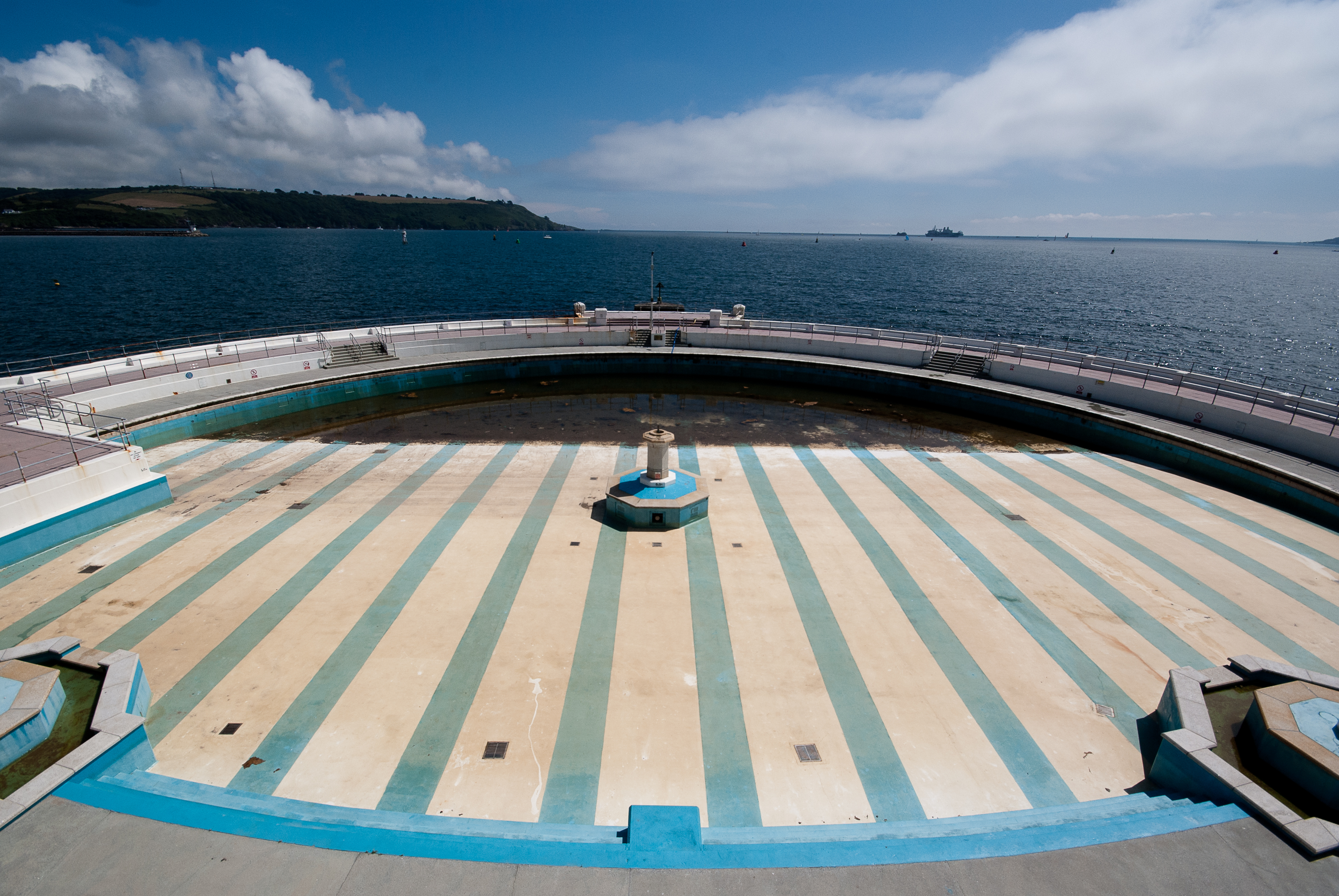
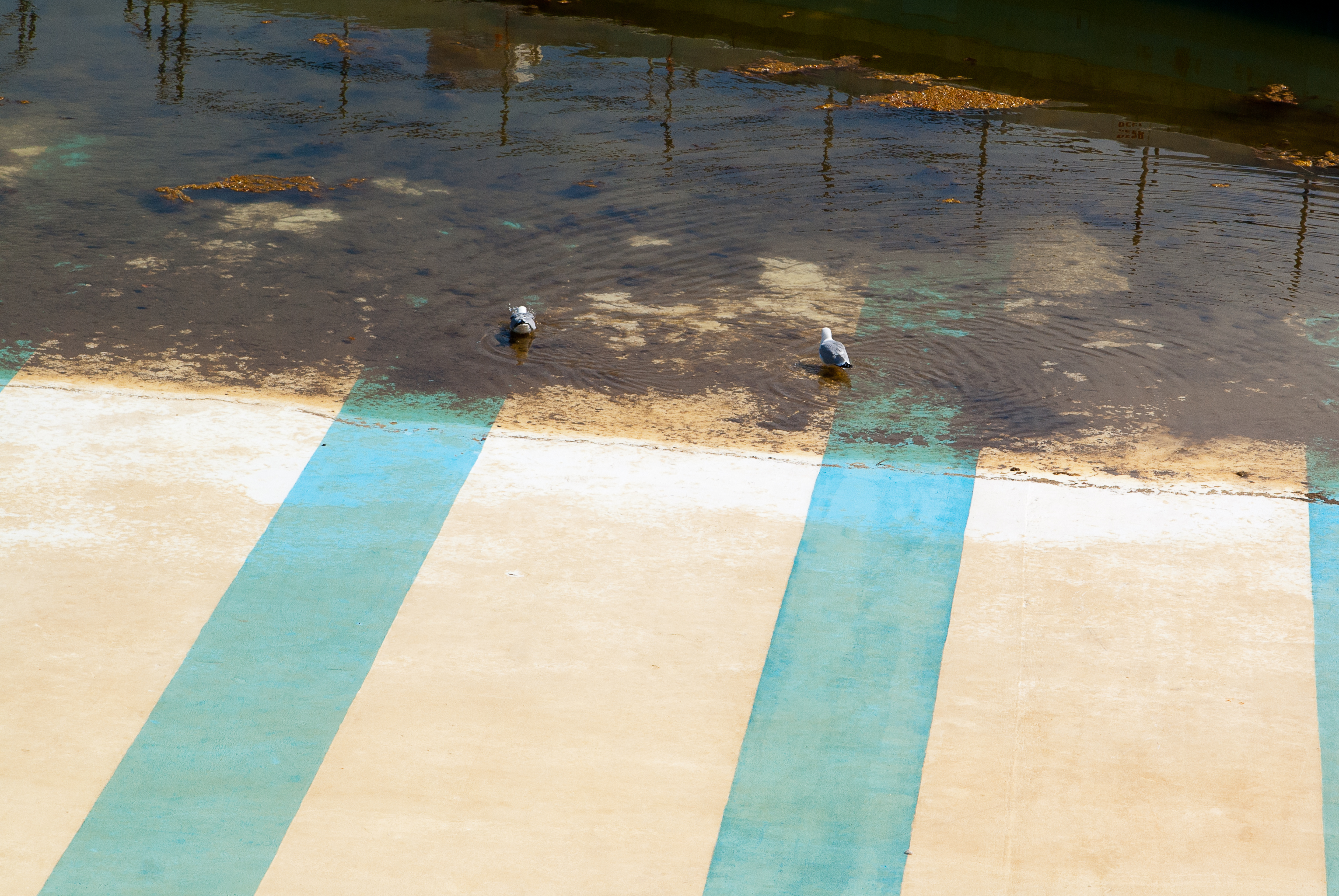
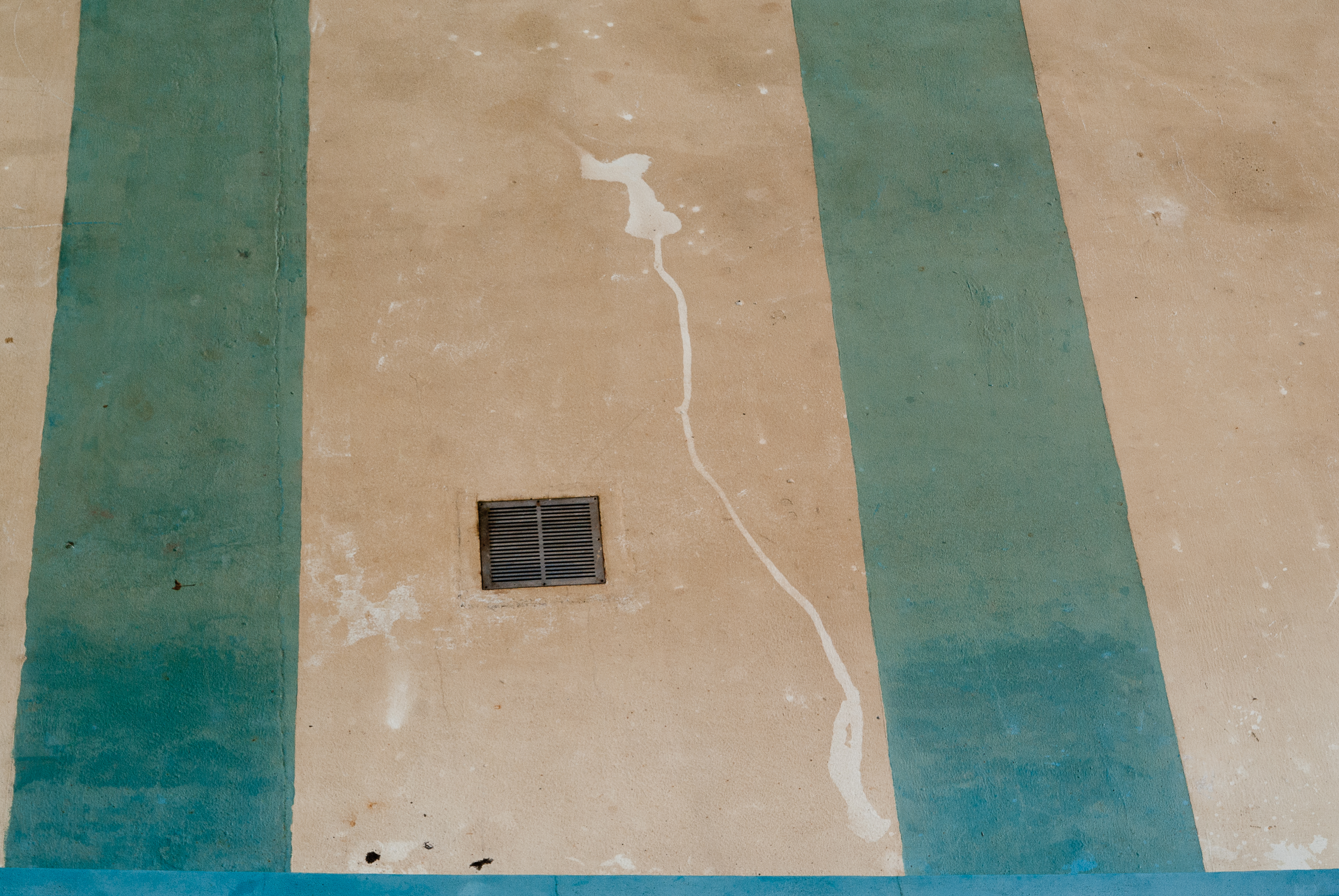
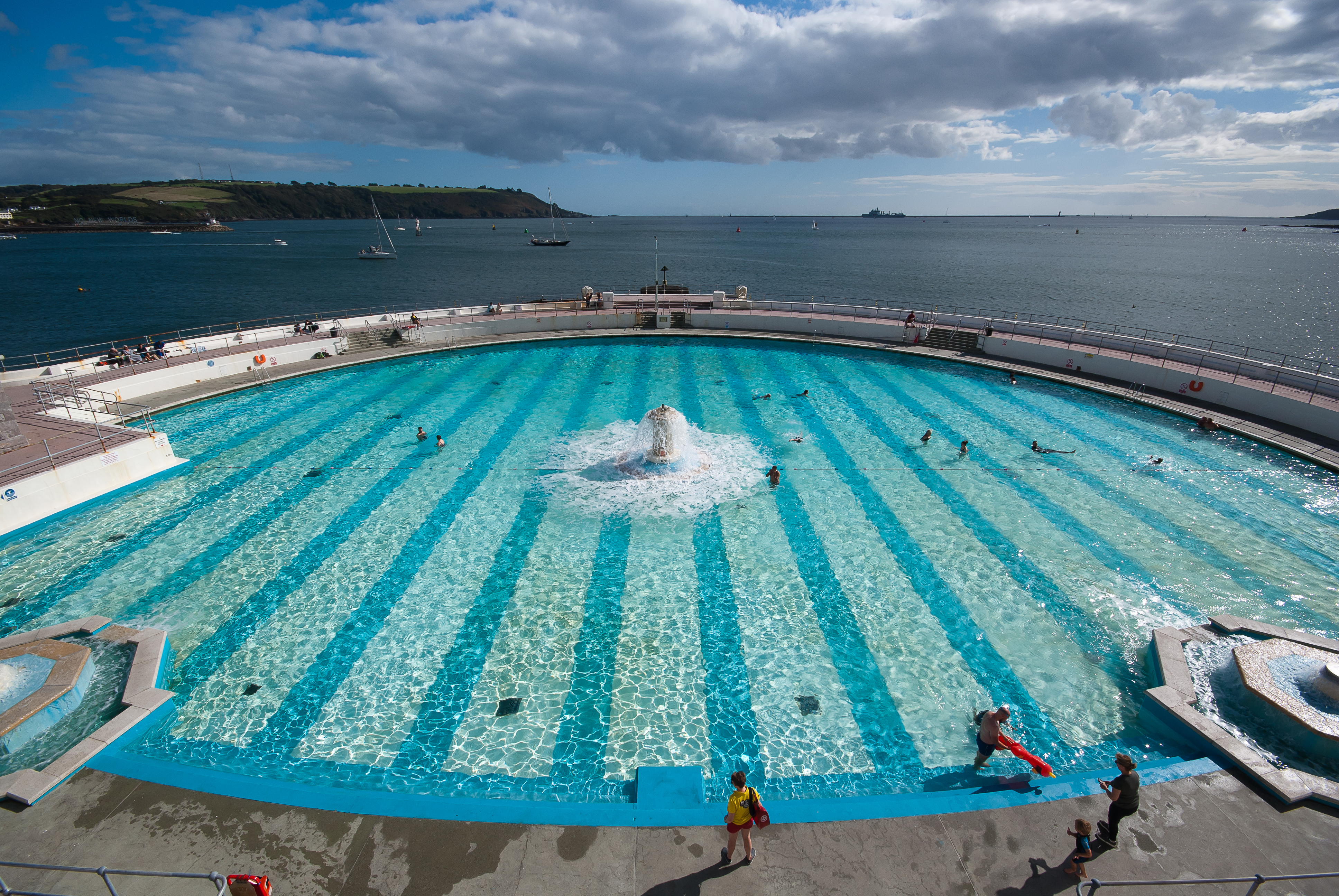
At the time of starting this project, I had no idea that the COVID-19 pandemic would decimate many businesses during 2020, and whilst there was a boom in UK travel as people were unable to travel abroad, UK tourist attractions did not necessarily reap the financial benefits due to government restrictions on which could remain open at certain times. Thus, when I first started photographing Tinside Lido in Plymouth during the 2019 summer season, I was expecting to see a lull in activity through the winter, with a summer boom and a subsequent return to inactivity. The reality turned out to be somewhat different, with the lido seeming to me to become a metaphor for the fortunes of the city during this uncertain time. As I write, cleaning of the pool will soon commence again as a sign of hope that 2021 will see more of a return to normality, but in these uncertain times it is unclear what this season will bring and whether the efforts will be futile.

Assignment 5: Self-Directed Project

This project is a culmination and convergence of themes that have been running though my work for some time now:

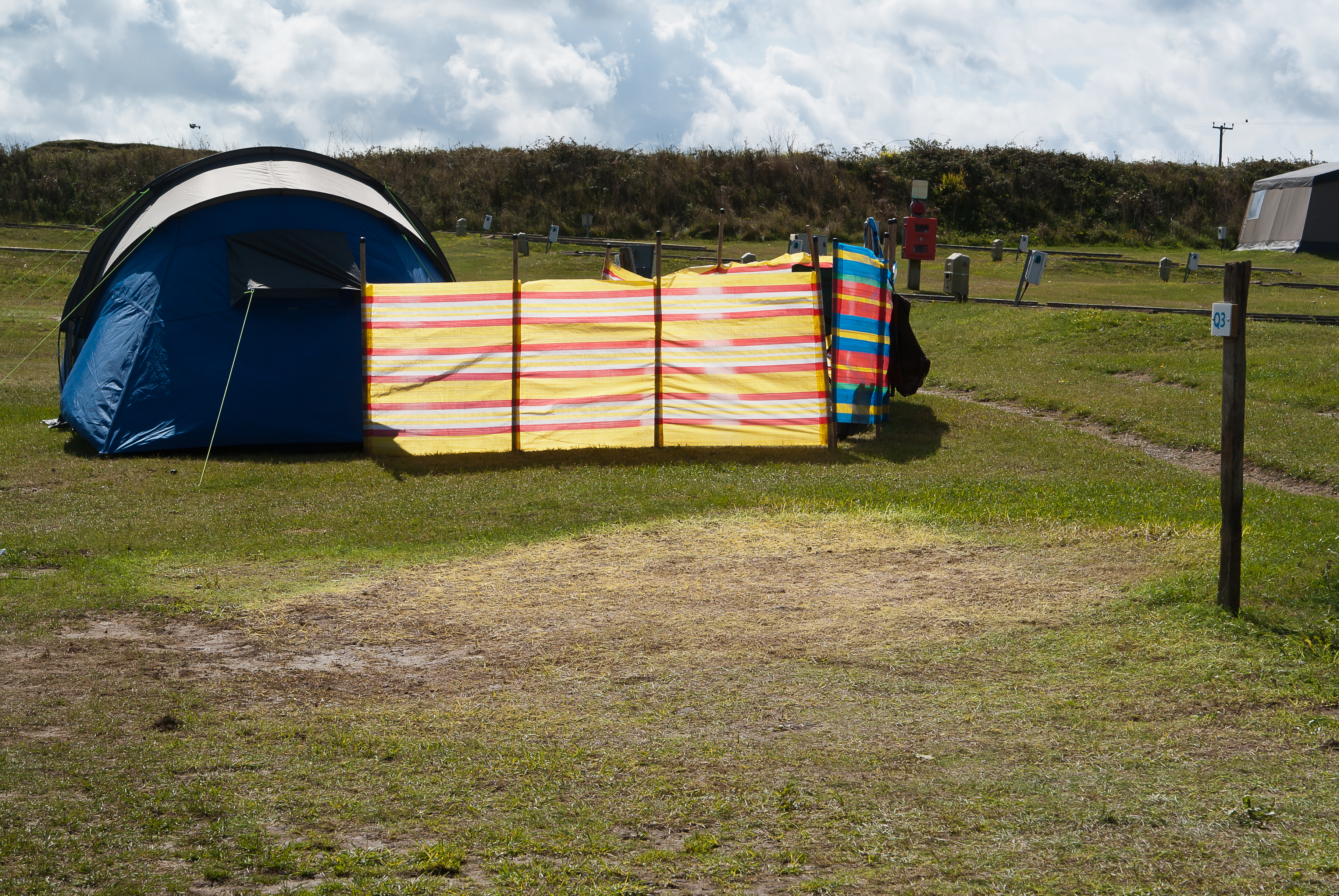
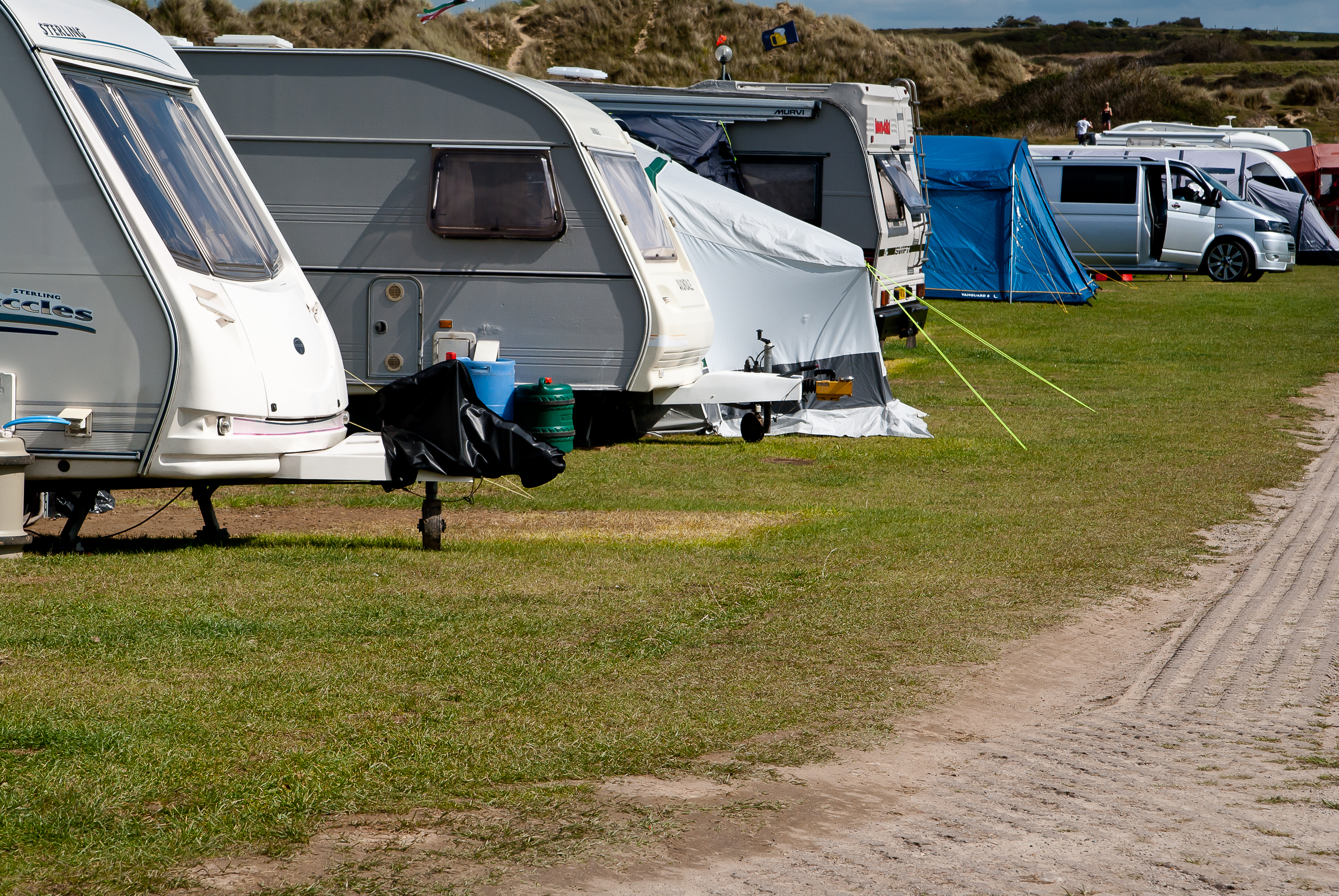
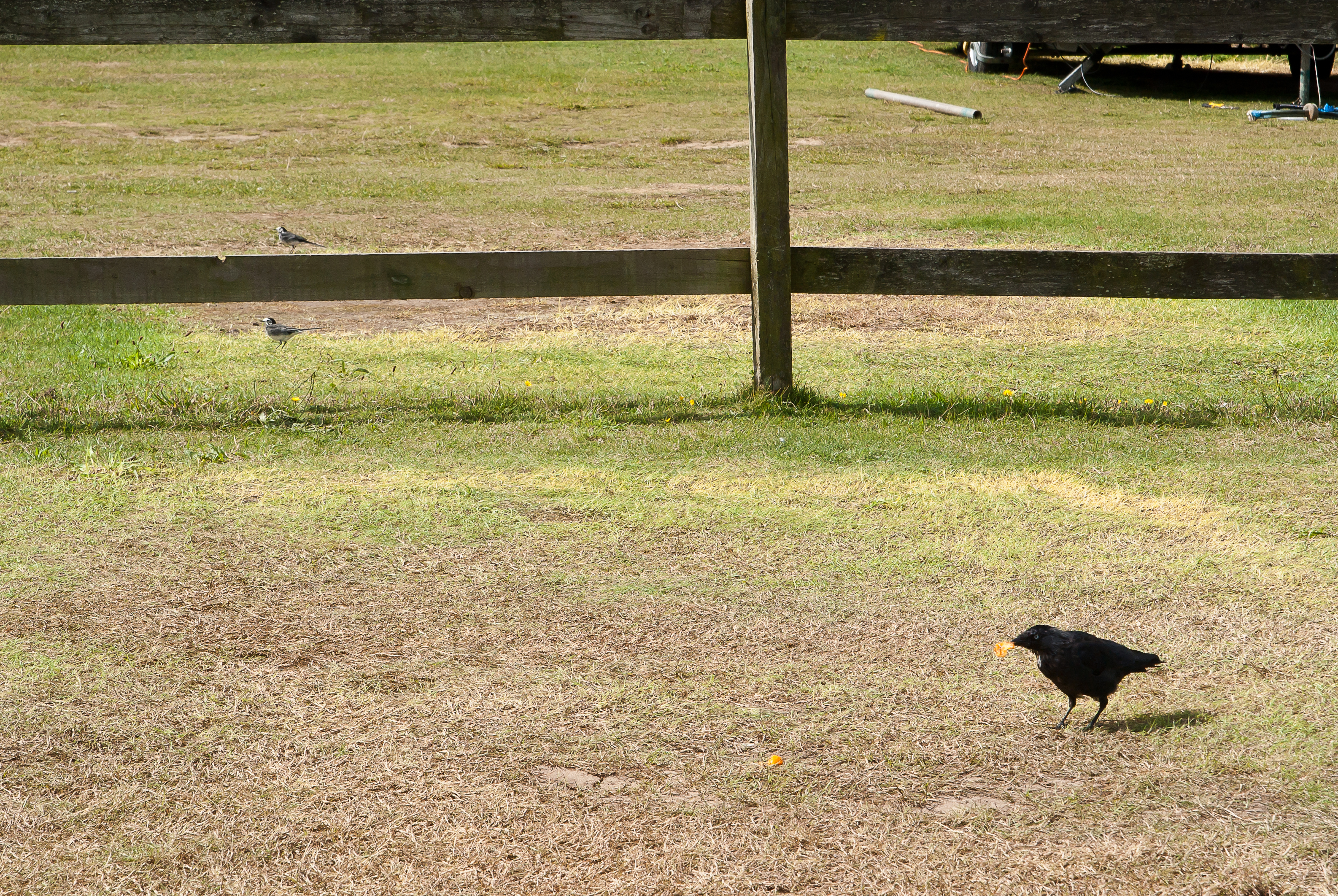
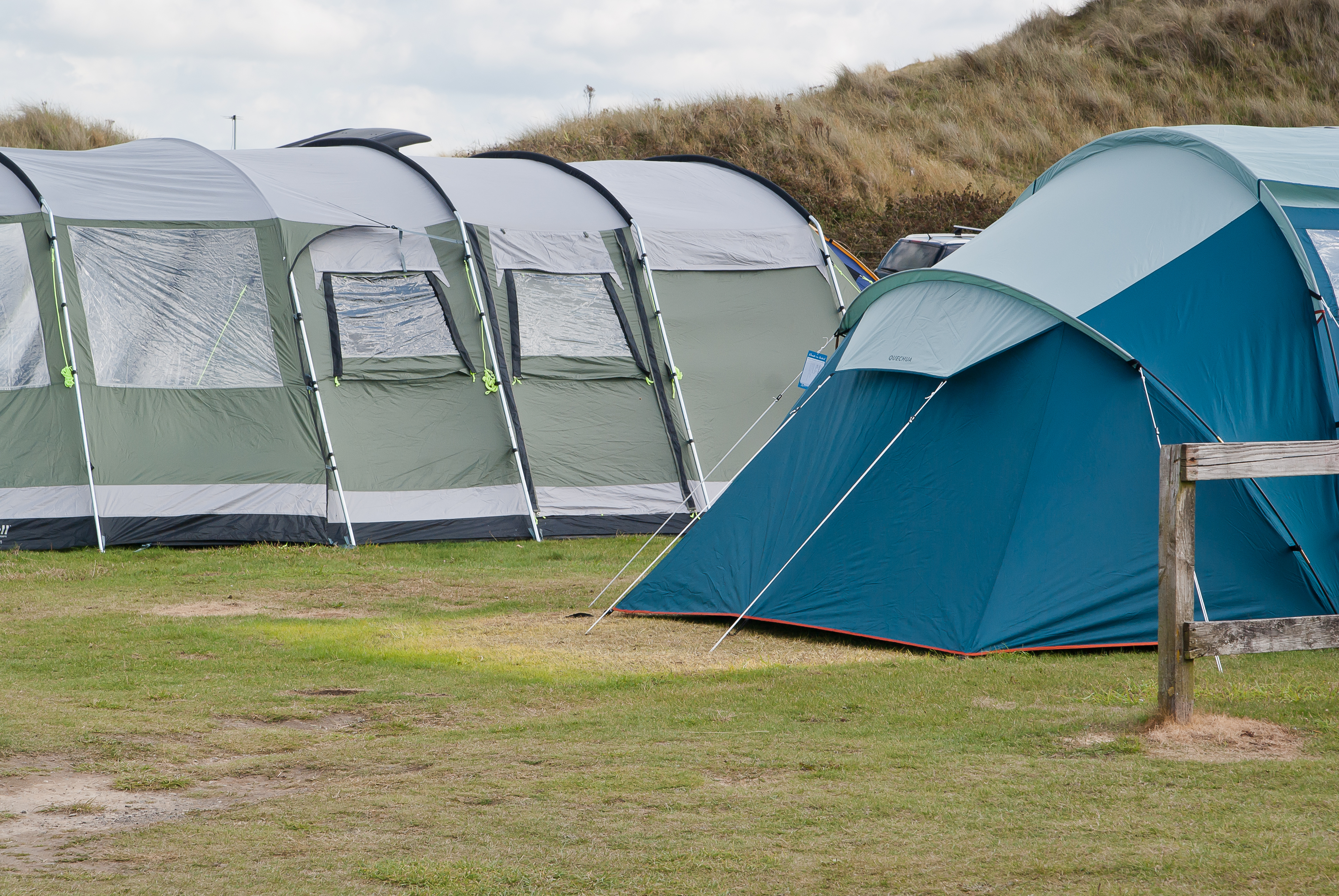
Through previous modules I have been interested in the repetitive nature of human behaviour; in particular the activities that we engage in year after year, generation after generation and document in family photograph albums. For this project, it was the family caravan holiday.

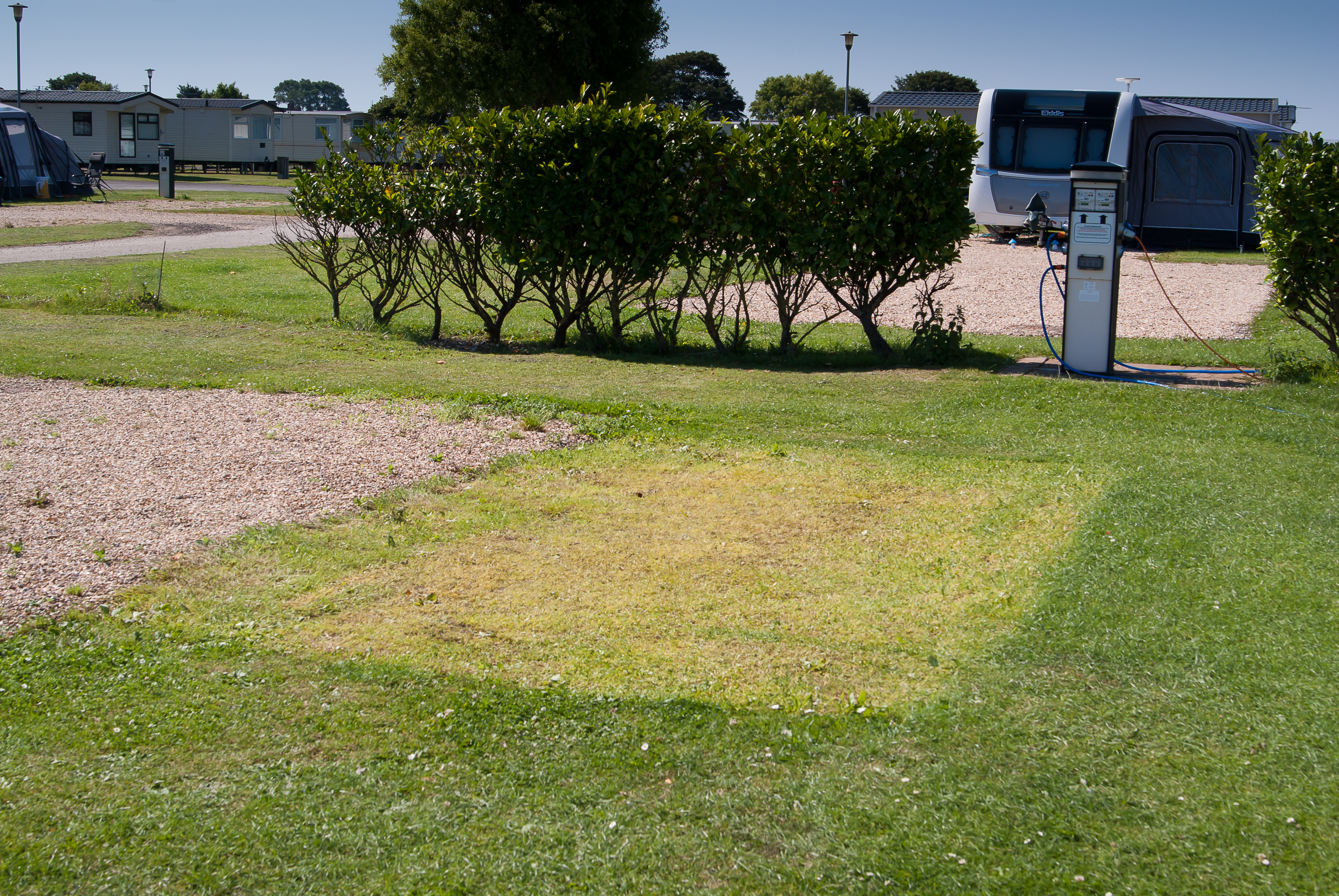
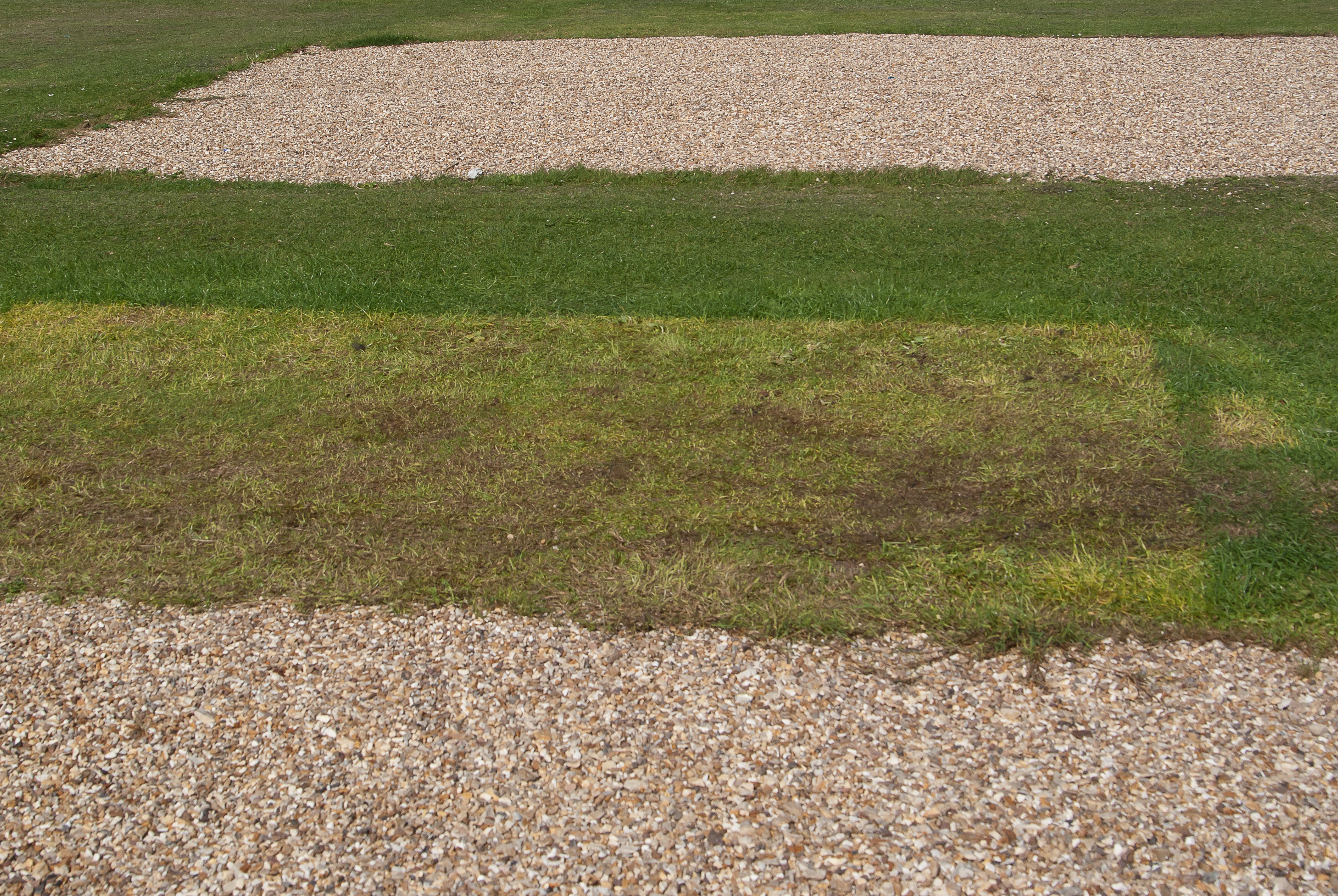
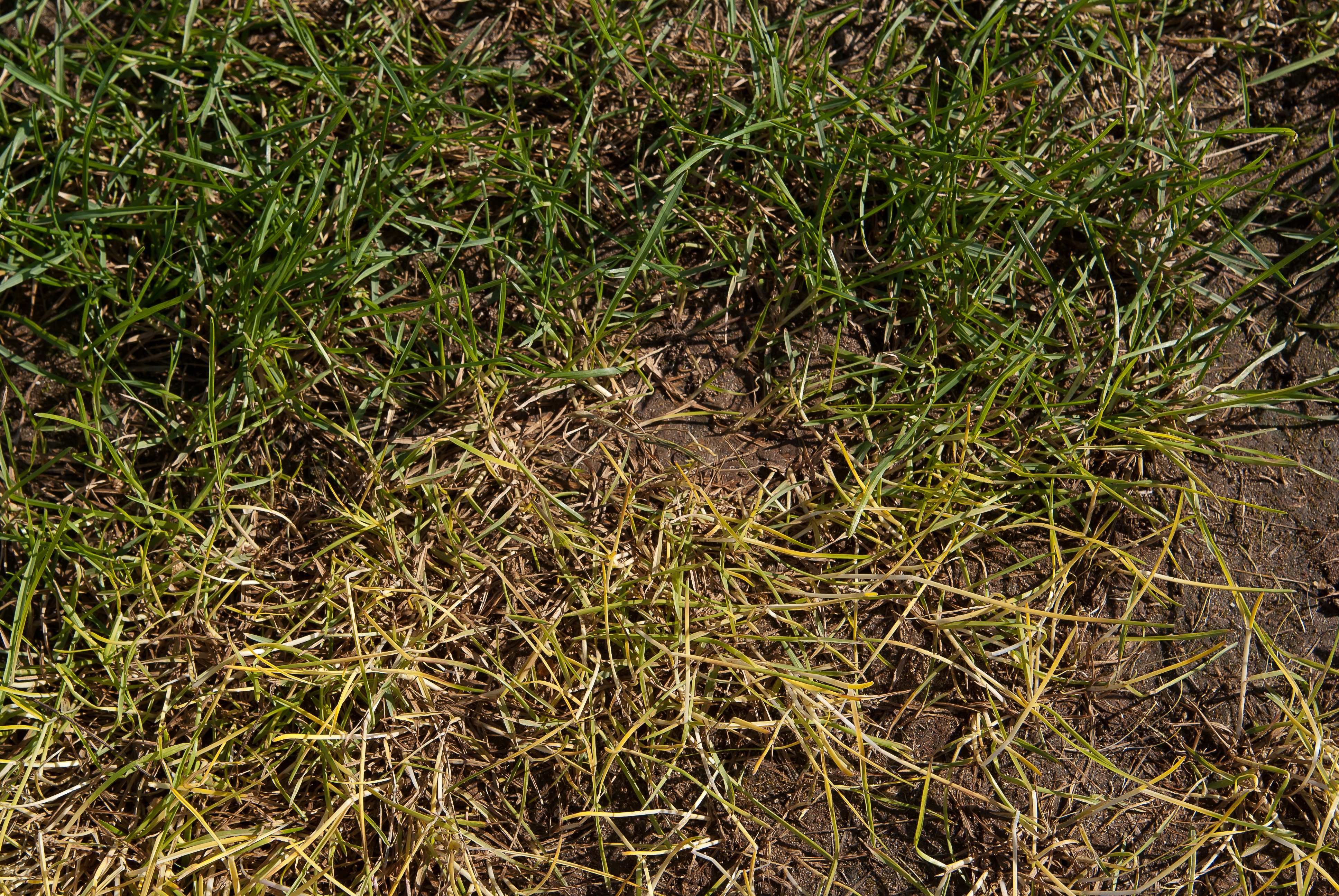
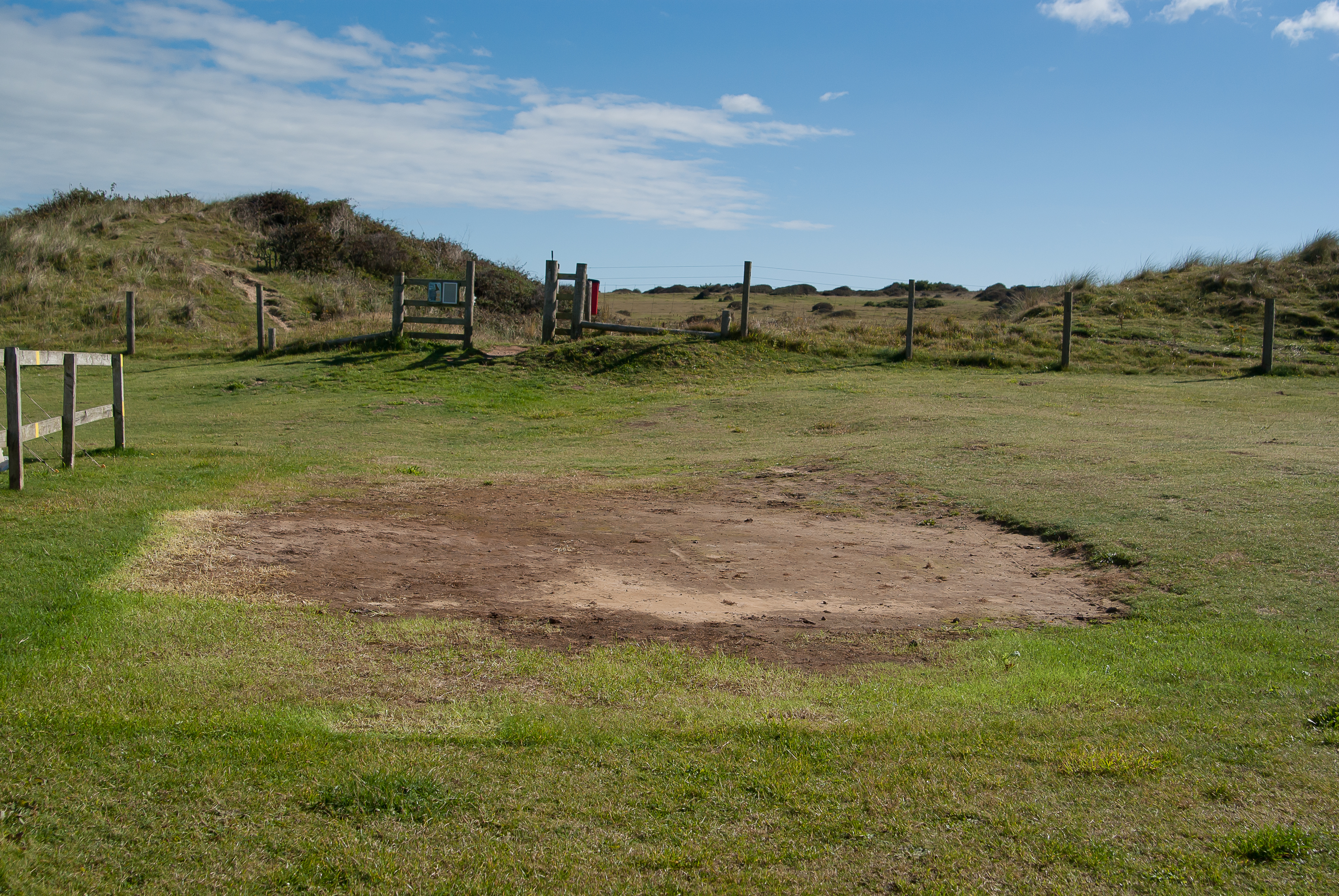
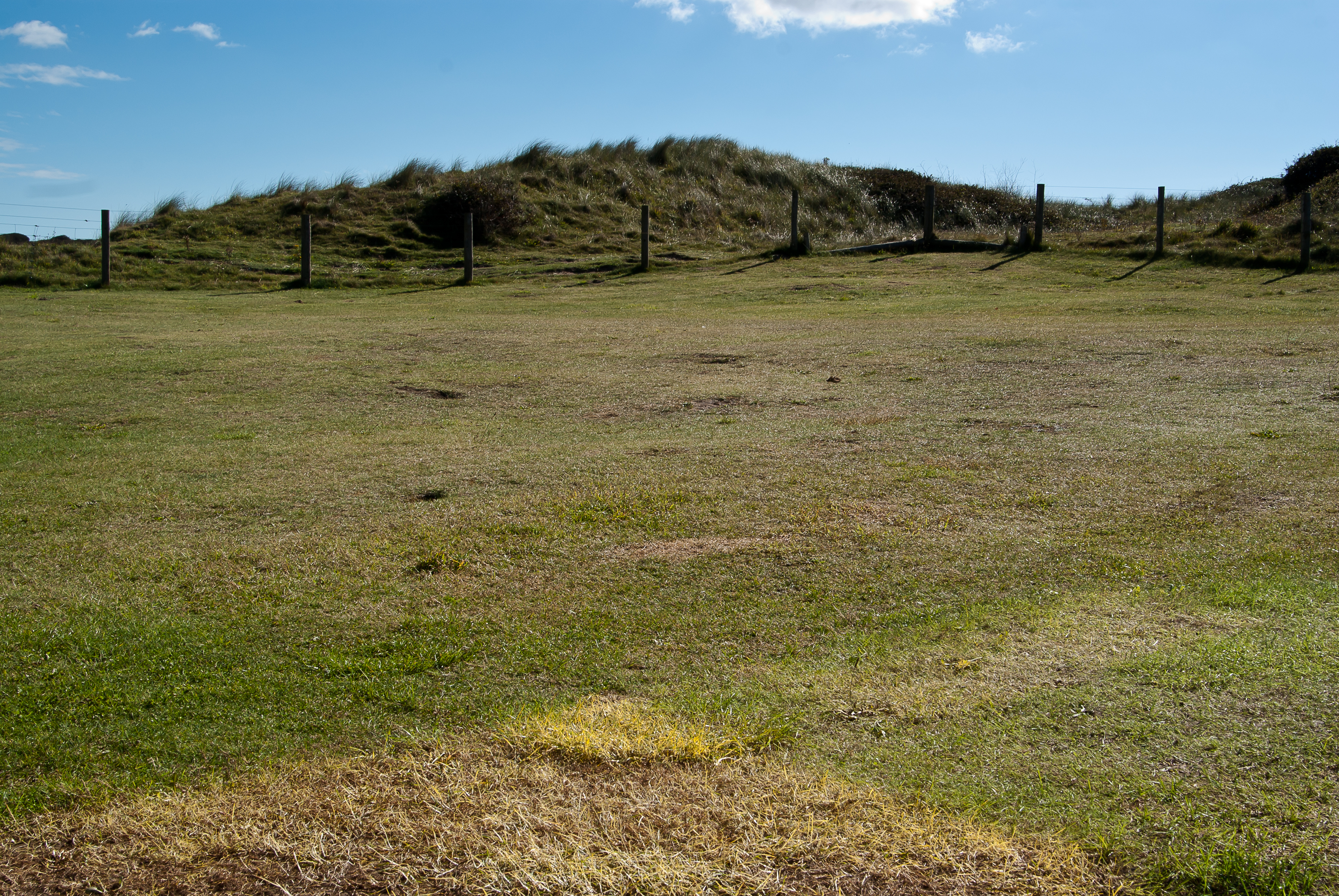
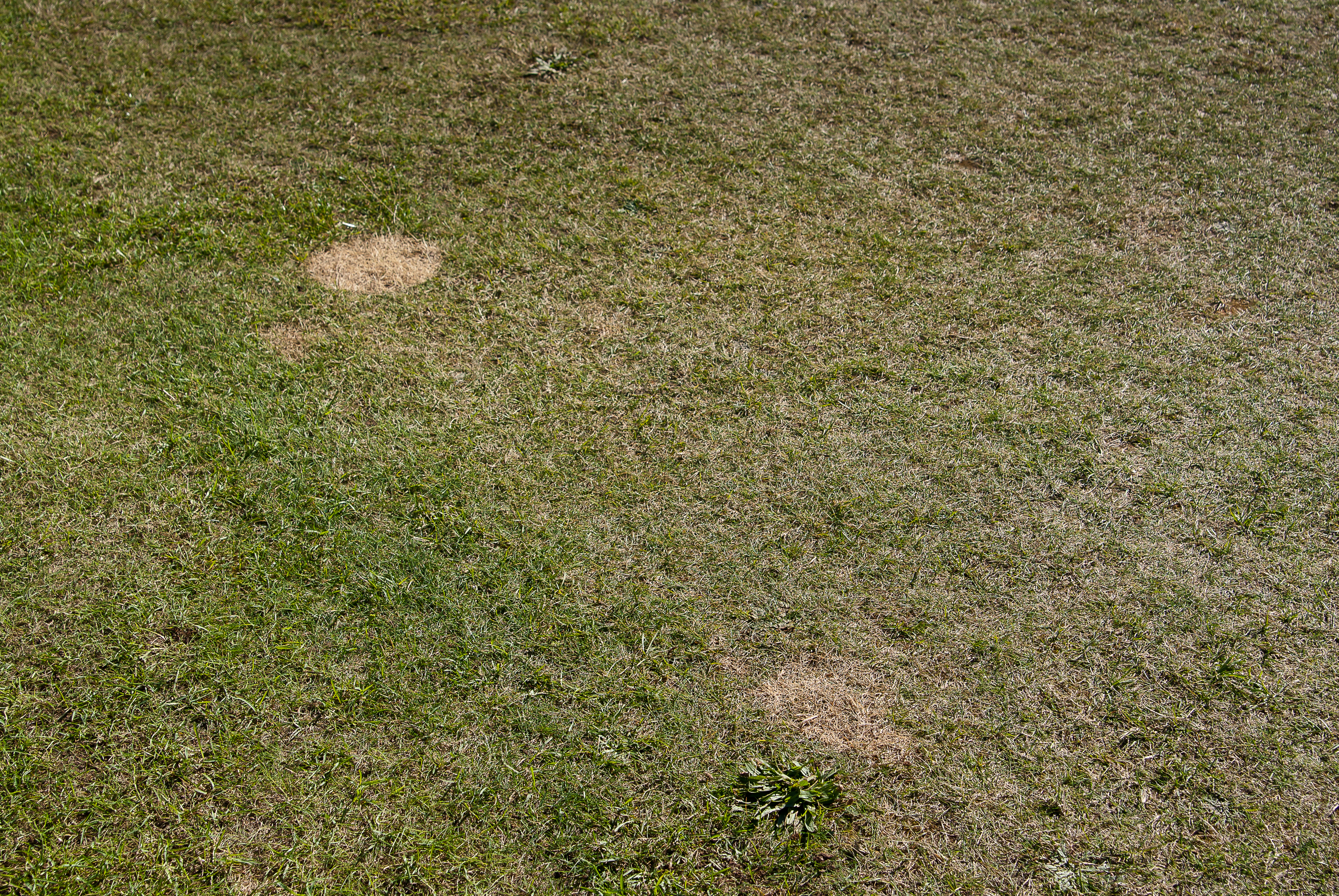
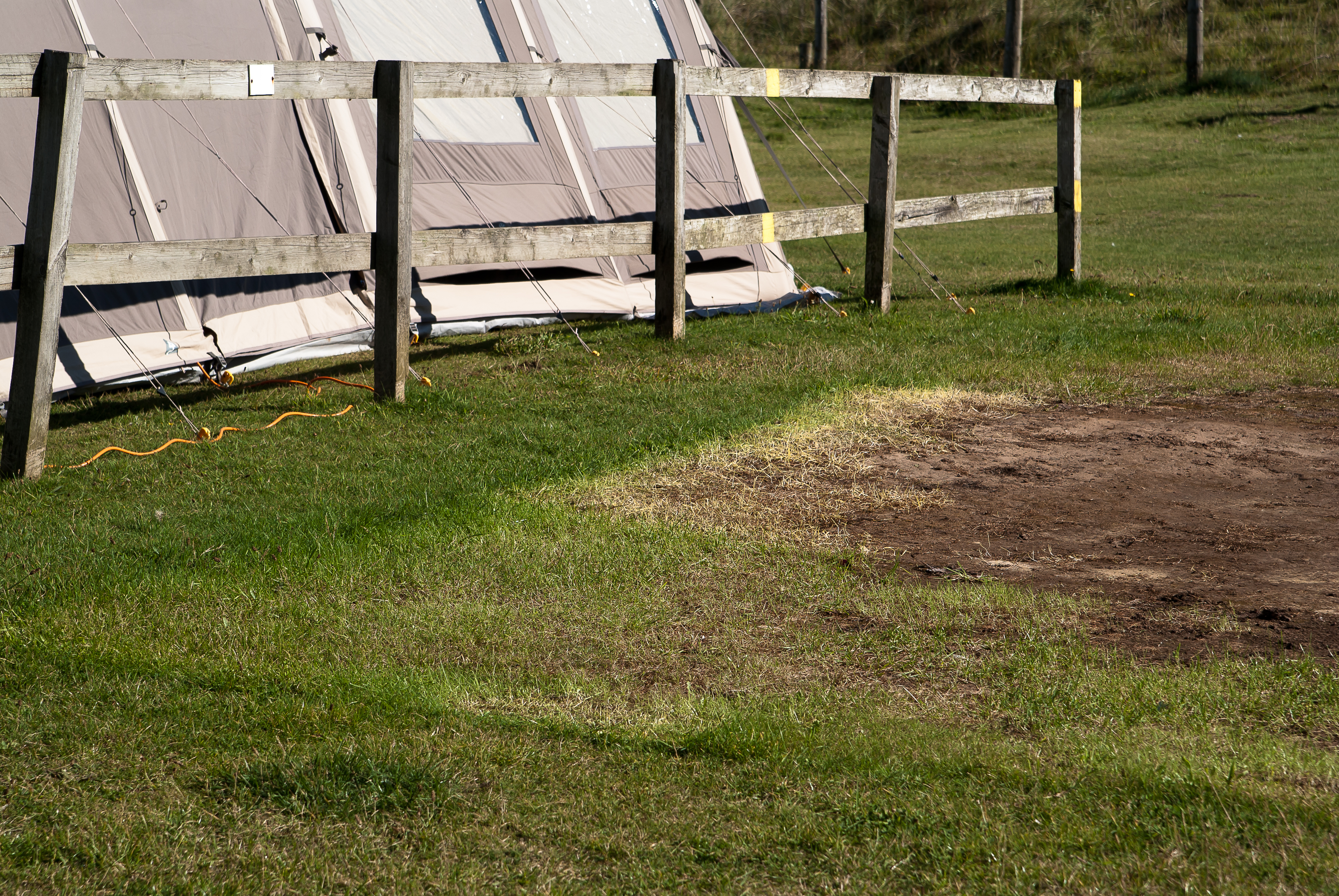
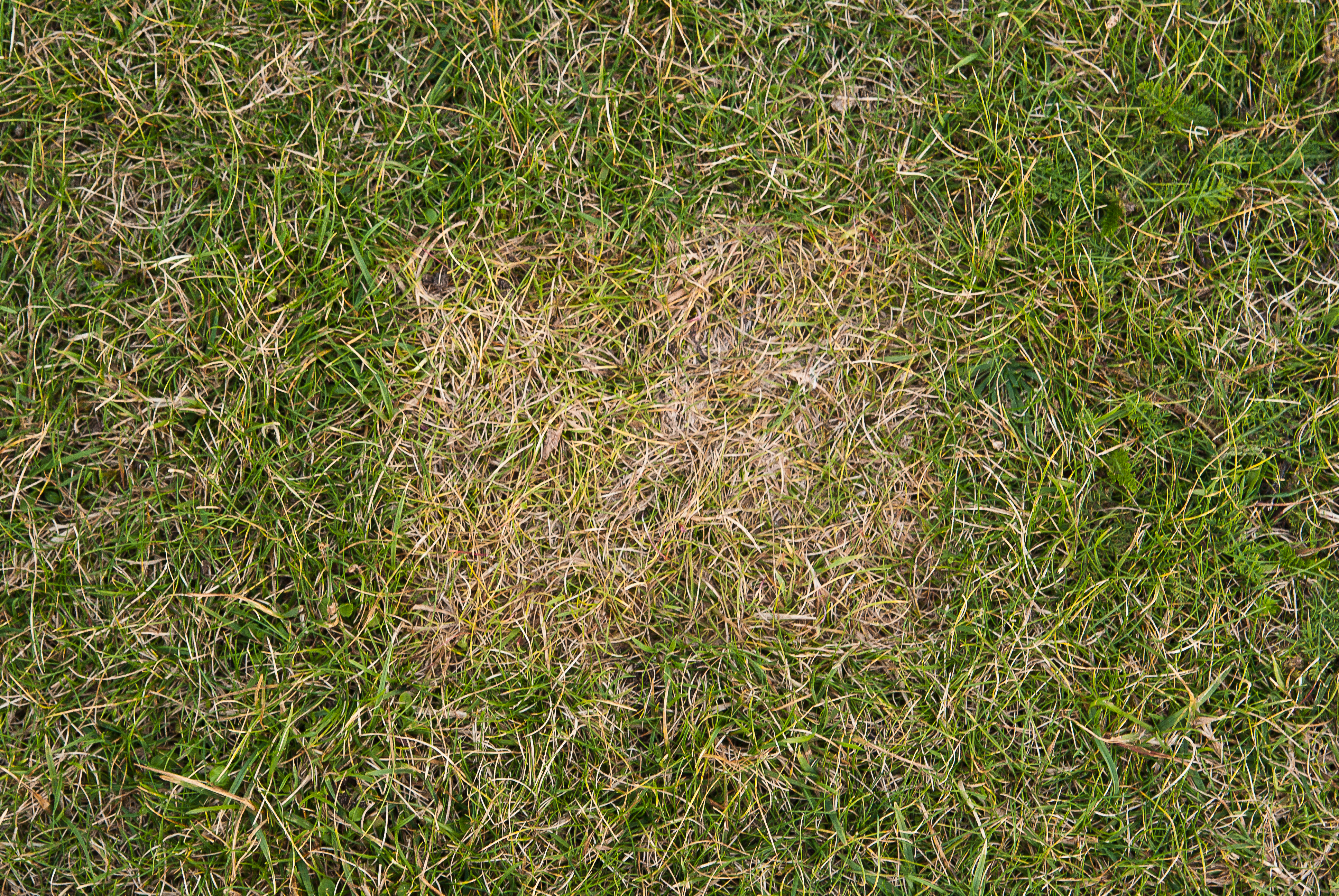
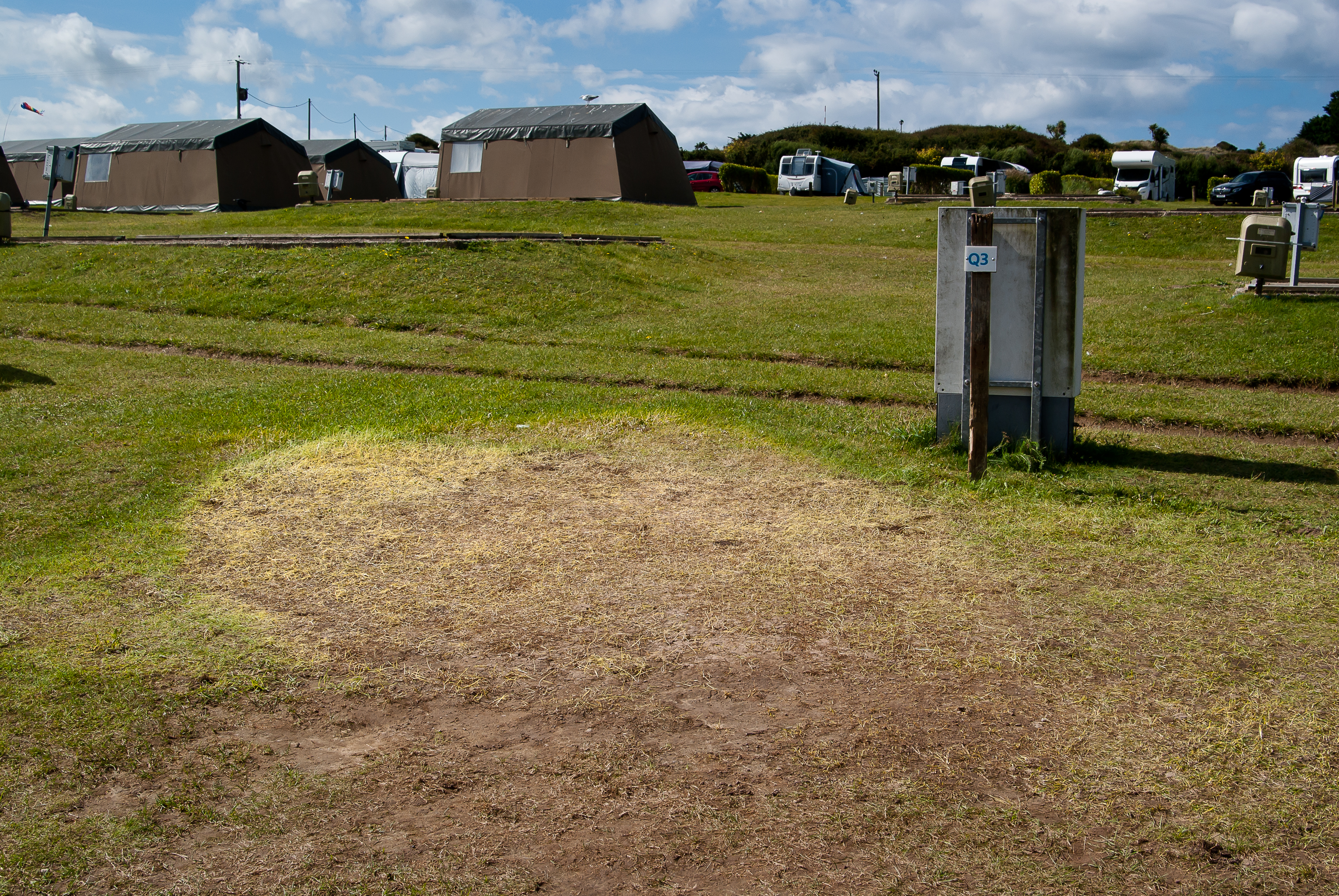
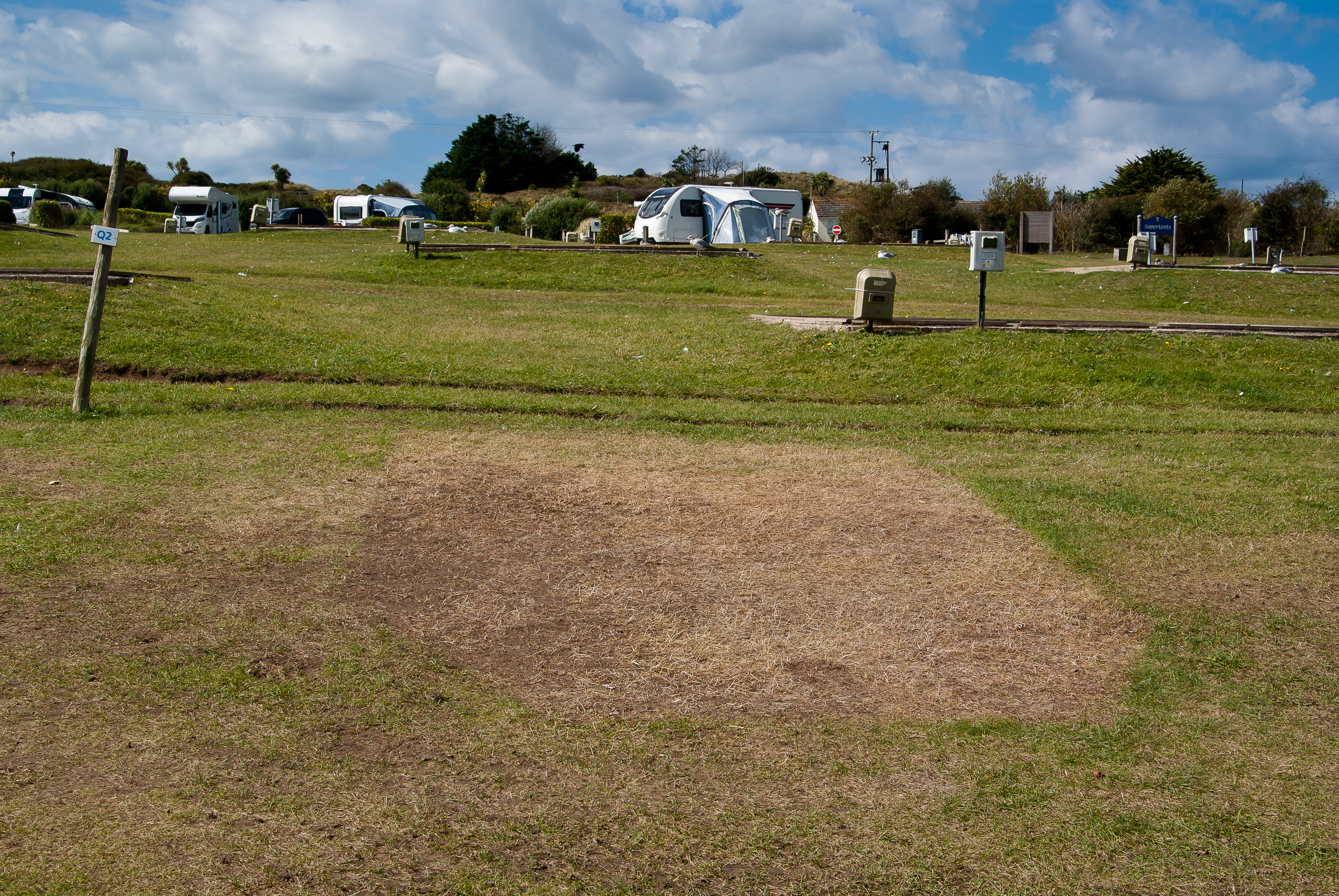
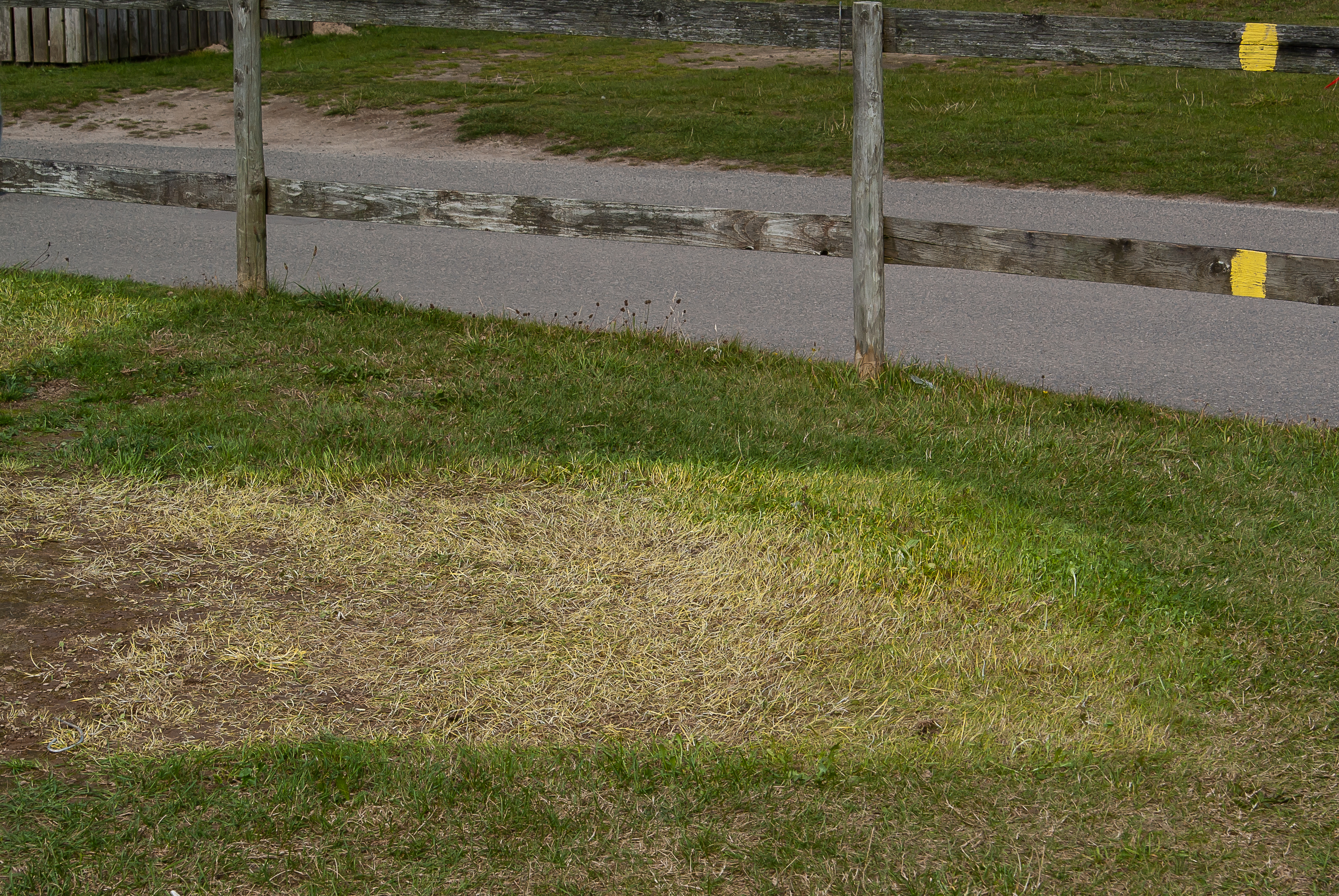
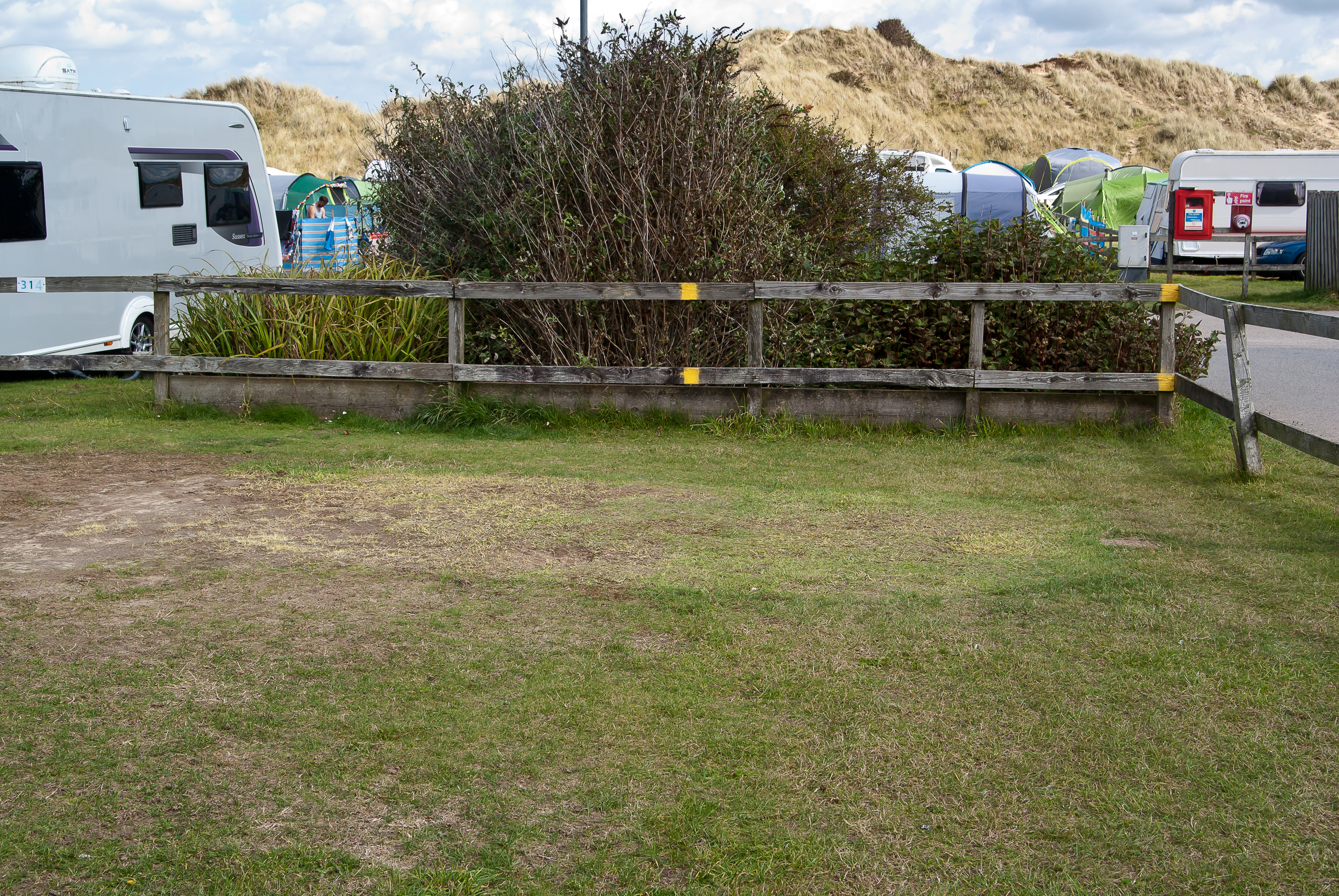
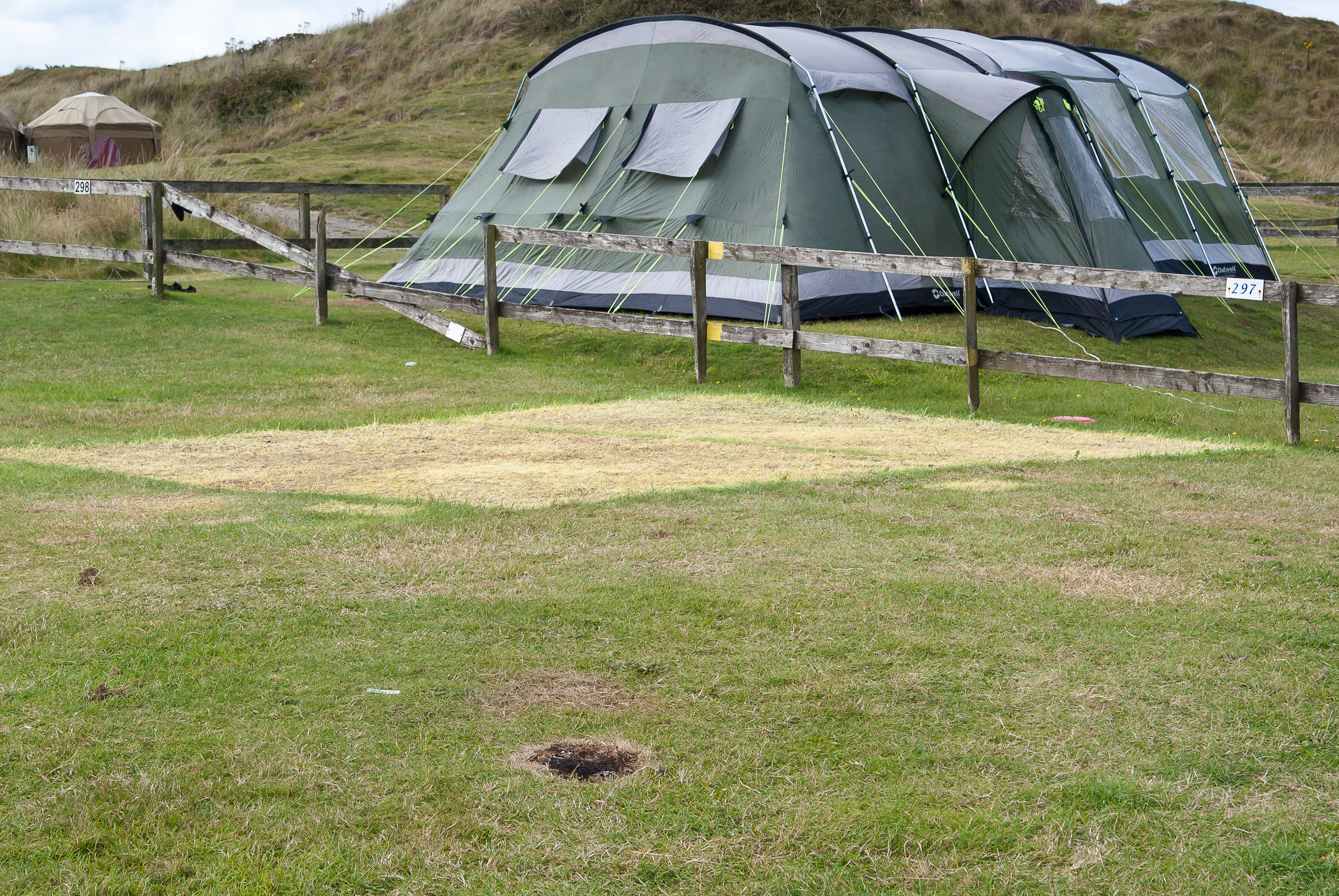
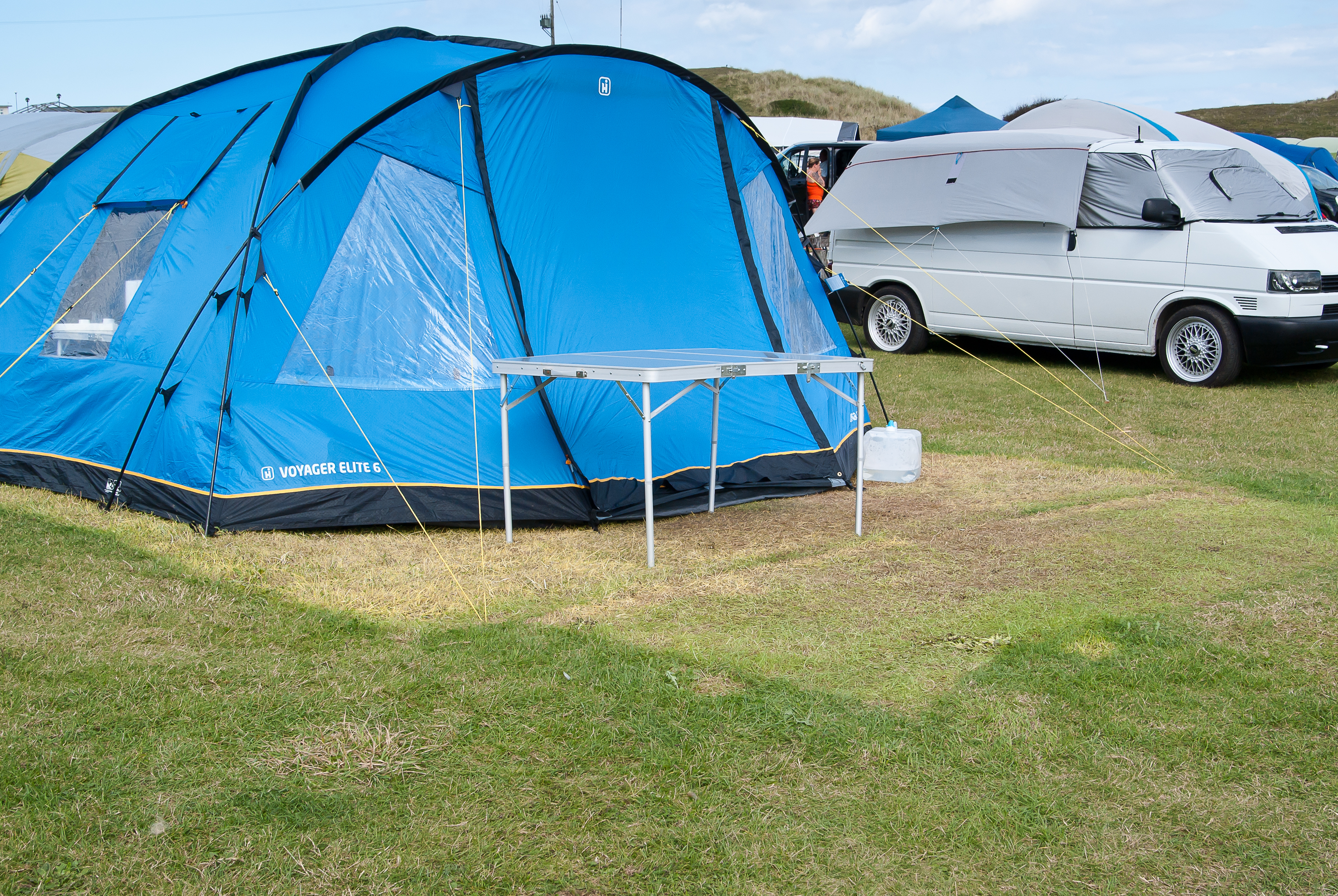
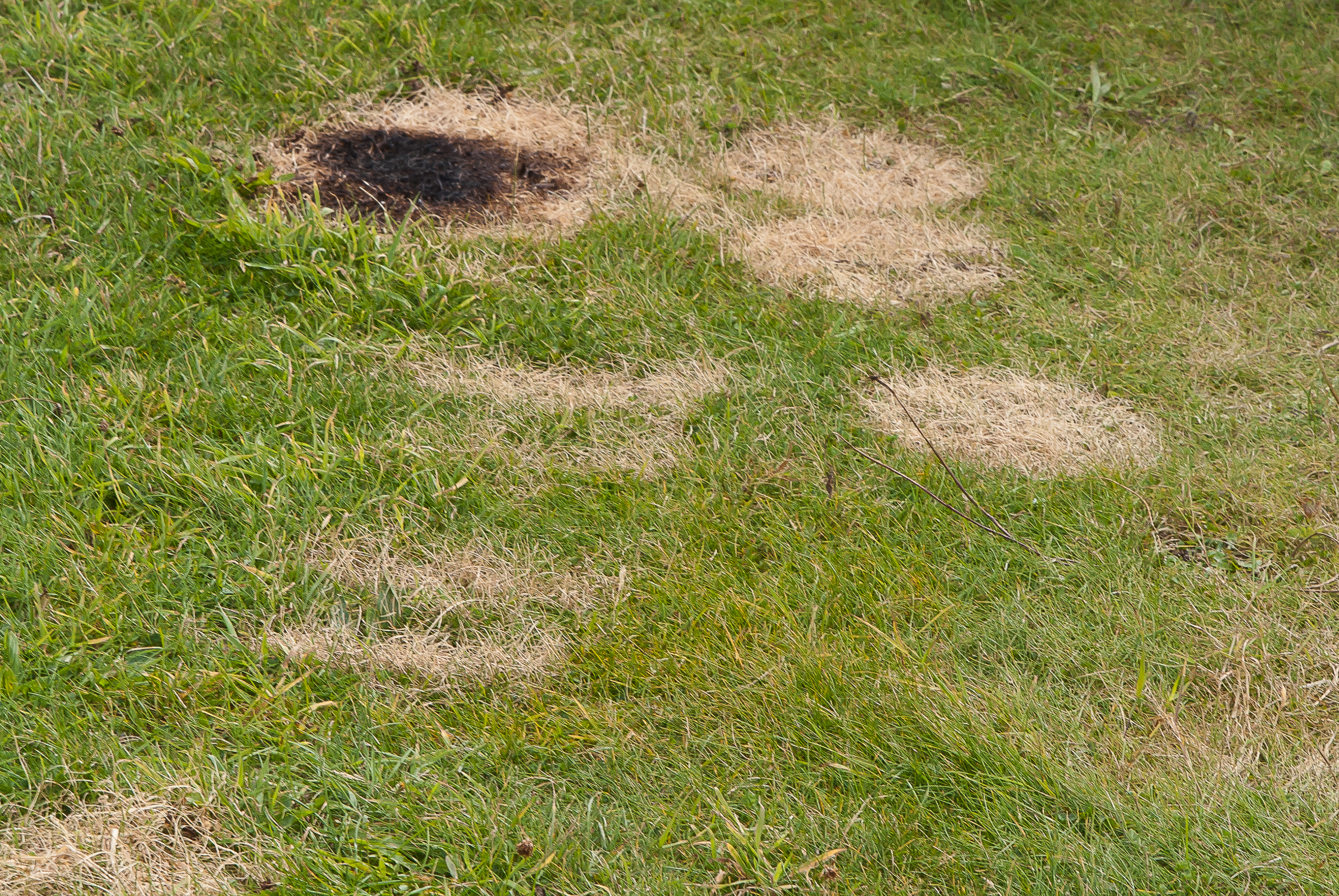
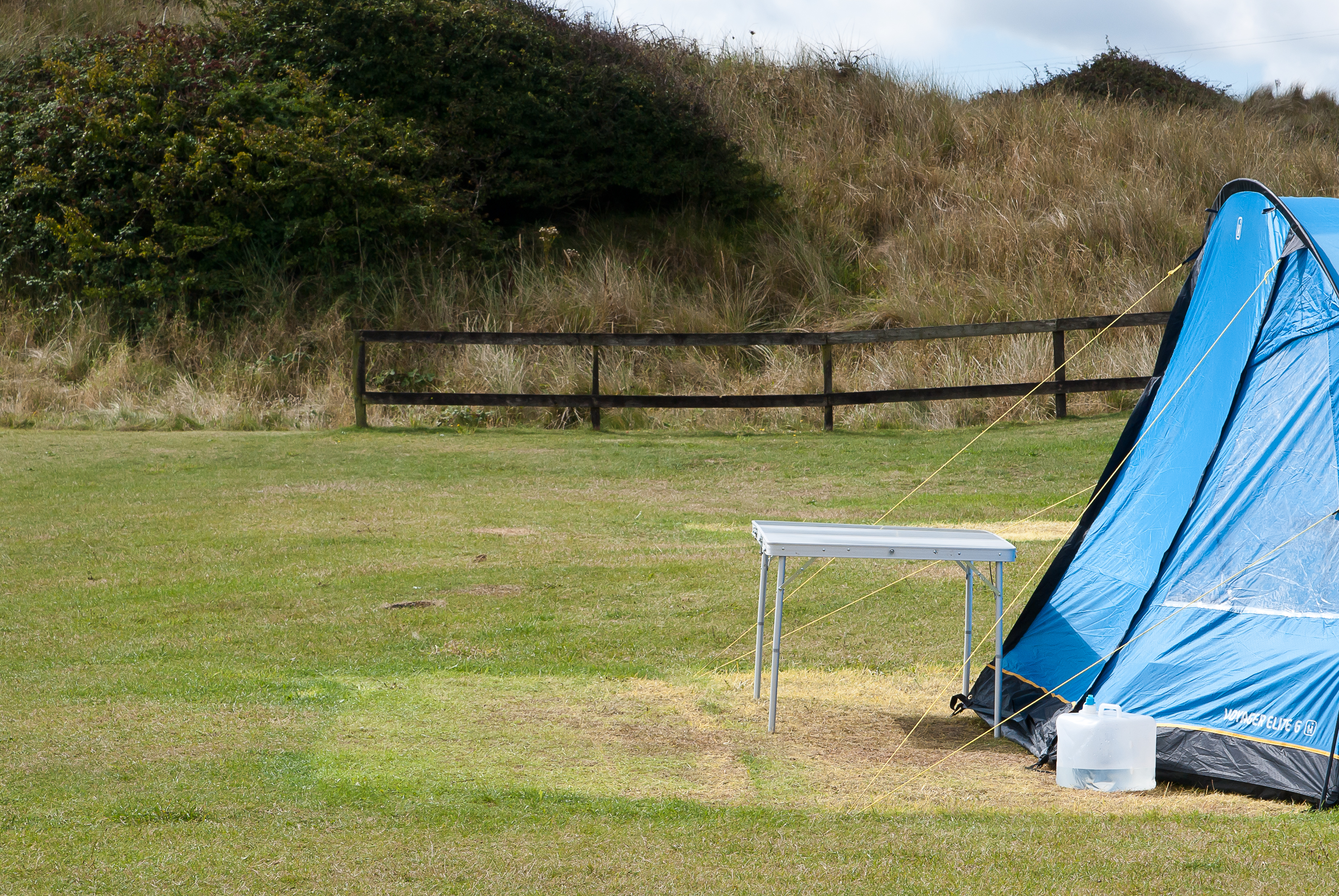
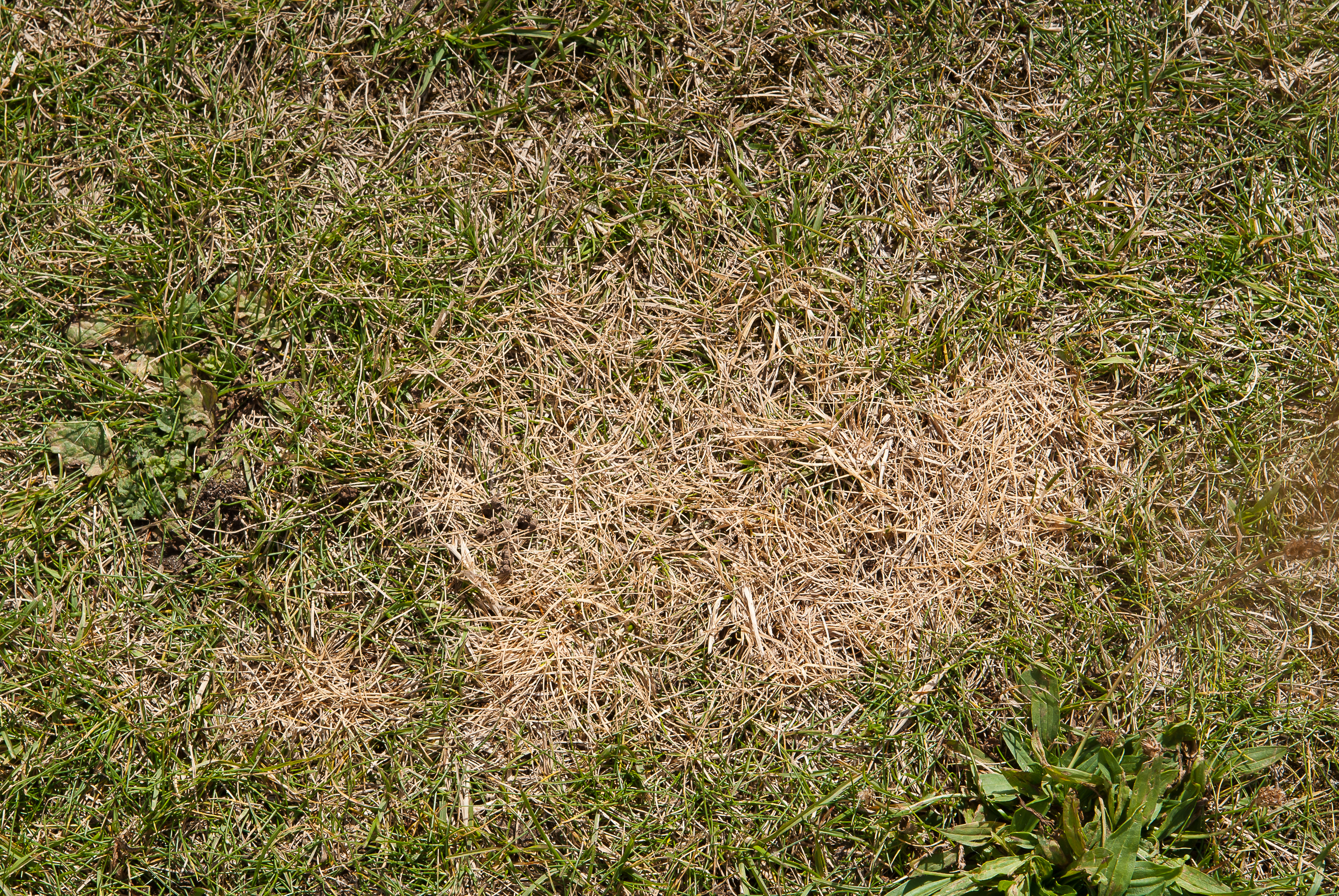
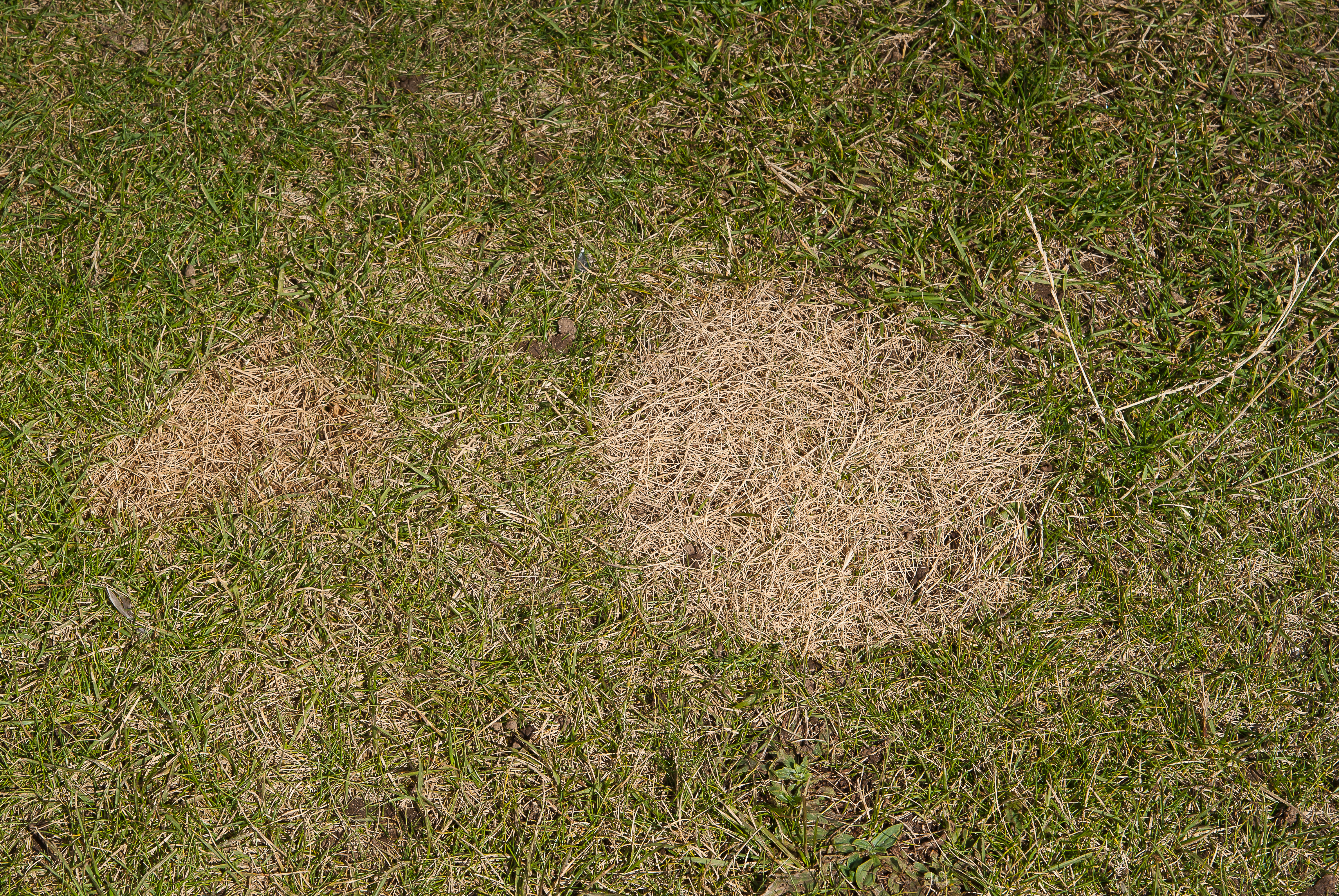
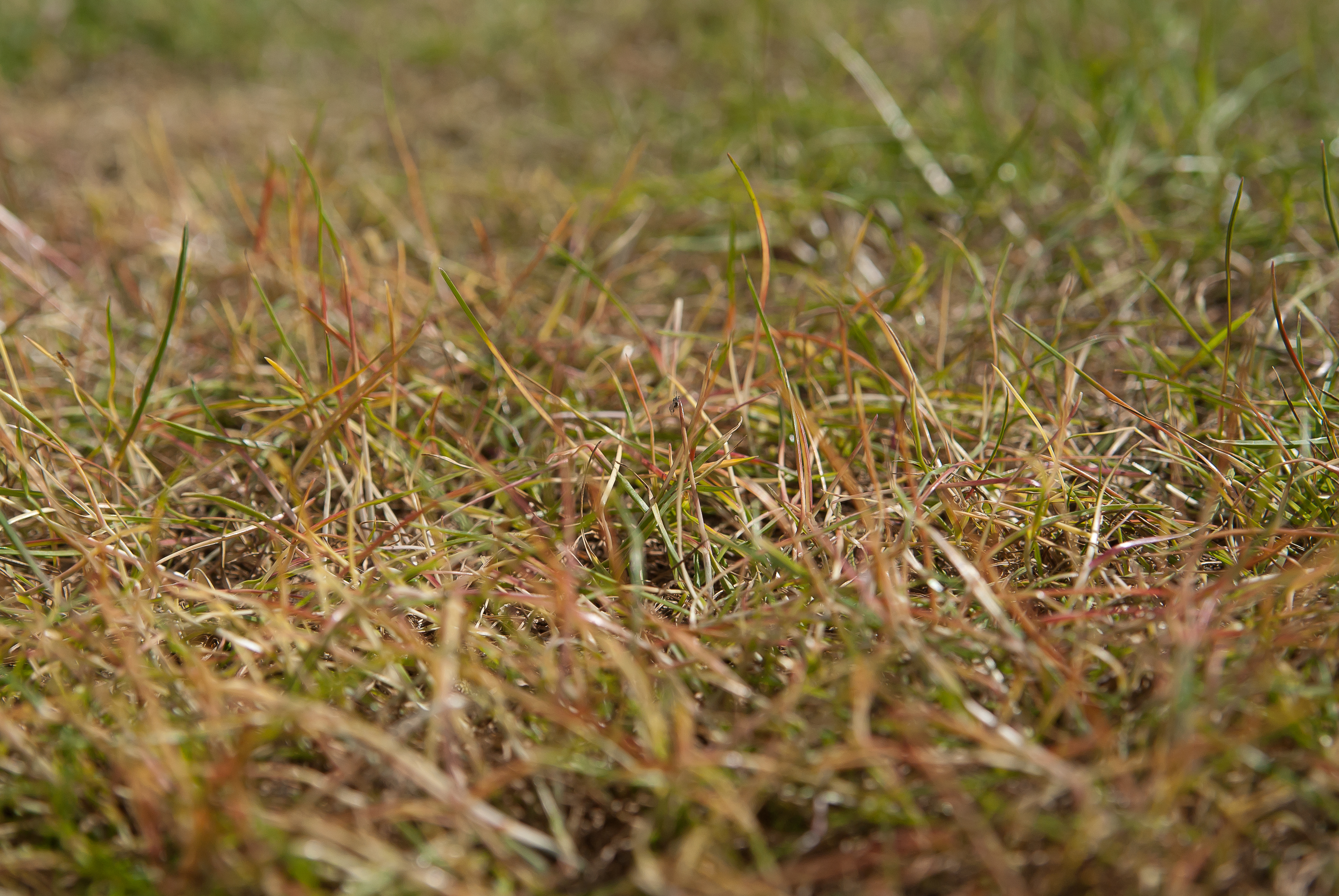
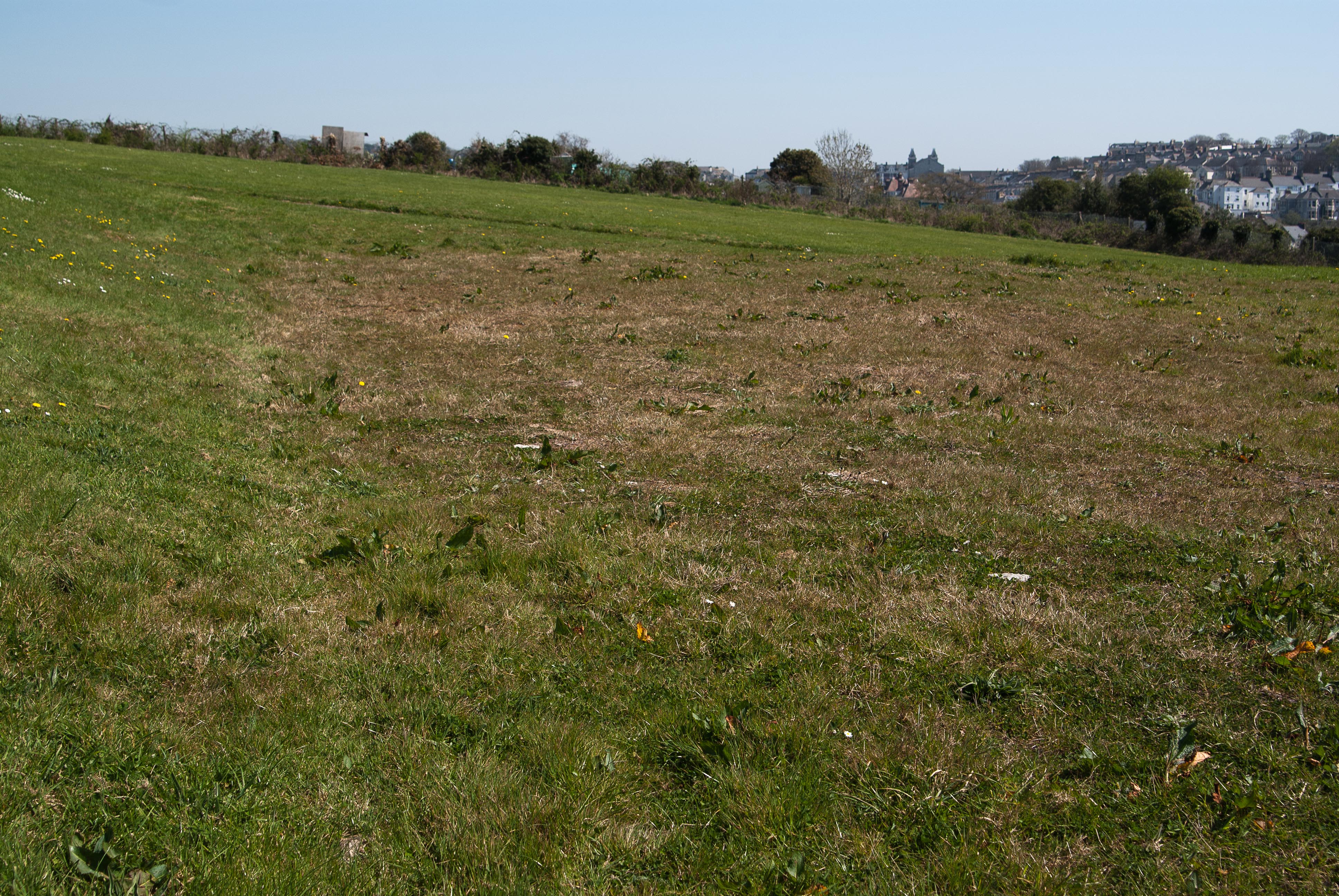
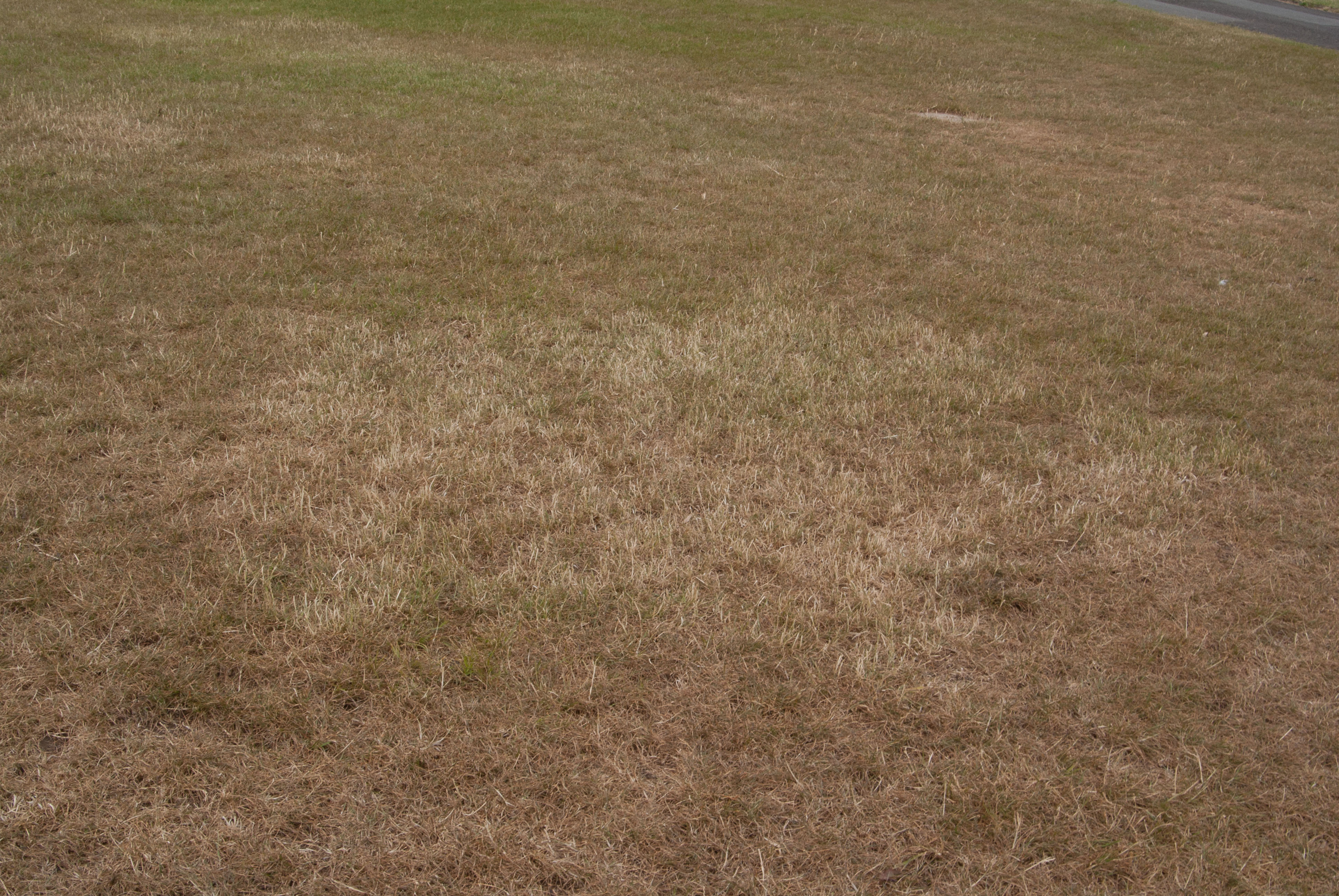
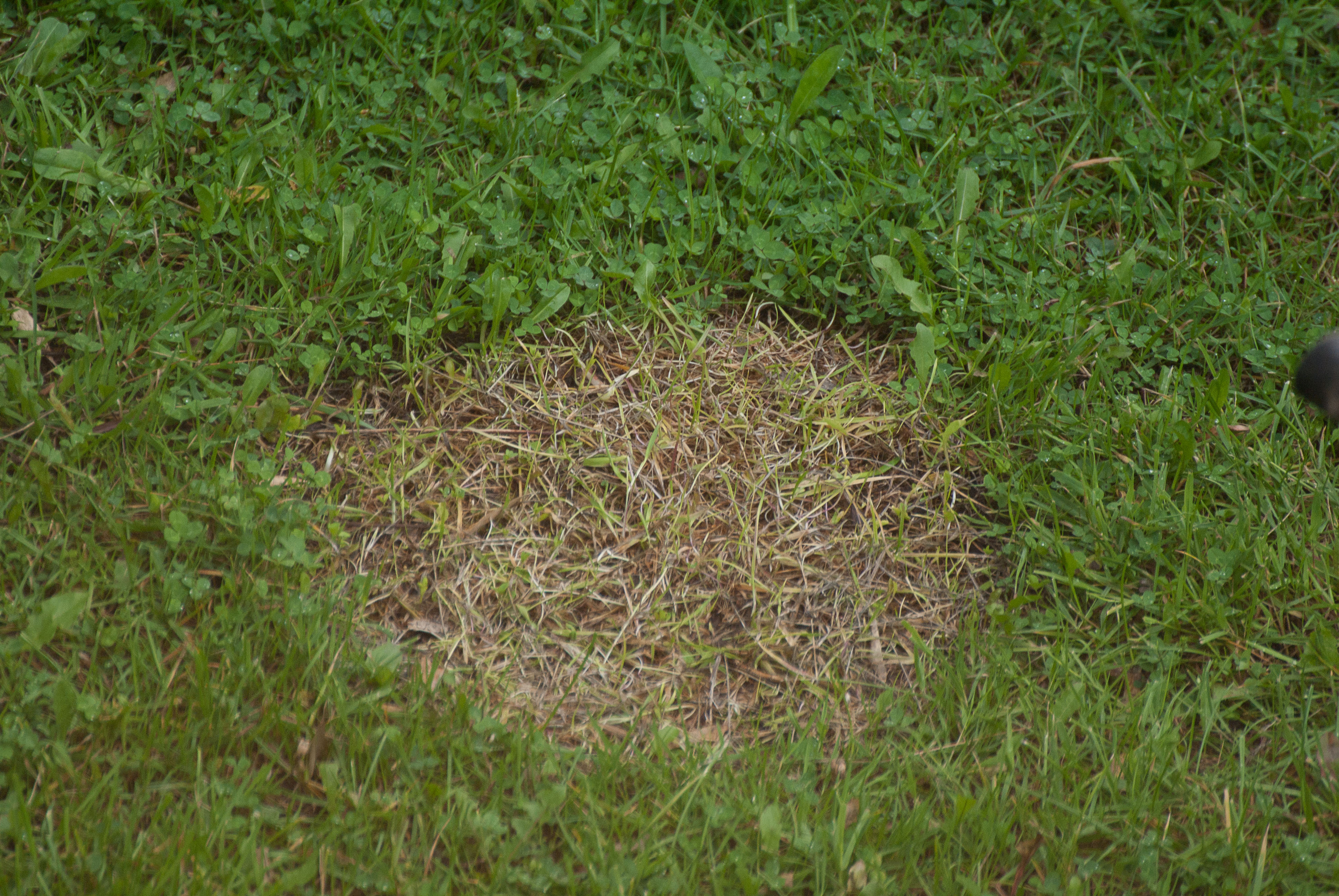
My second point of interest was pushing the boundaries of photography beyond capturing light in a camera: earlier in this course I investigated cyanotypes and lumen prints and for this assignment I looked at the ‘images’ sunlight creates on grass. In this case ‘images’ are overlaid again and again, making a photomontage recording each stay, until the end of the season when the grass is allowed to restore and regrow until the cycle begins again. Thus the project looks at the passing of time, regeneration and repetition in nature and human behaviour.

Evaluation

I am happy with the way this project has turned out, and I think that looking at sun marks on the earth is something I will continue to do for some time. I achieved what I set out to do which was to create an interesting set of images which tells us something of what has been happening whilst leaving a narrative element to the viewer to imagine. My original project brief is shown below and I think I have largely stuck to what I was intending to convey.

I will also remain interested in caravan parks; so many formative memories are created there and they are a specific environment created for a specific purpose which is has a landscape angle to be explored. I would also like to use grass further in my work, perhaps deliberately creating shapes in and perhaps also growing some in the gallery space.

Artist’s Statement

My work focuses of the dynamic tensions between landscape and people, even though people are rarely depicted. Whilst contemplating the landscape I am constantly thinking of the impact landscape has on humans both in a physical and emotional sense. Conversely, I am also interested in the impact humans have on the landscape, not just in the obvious sense of environmental damage, but also in more subtle ways, in the signs of human behaviour left behind on a small scale, temporary basis.

My piece on caravan parks focuses on the evidence left behind by holidaying families in the form of temporary photographic imprints on the grass; repetitive shapes made time and time again throughout the holiday season, leaving short term evidence of those who came before; regenerating year after year as the cycle begins again.

Project Brief

Around two years ago I became interested in how the marks on grass when it has been deprived of light are a kind of naturally occurring photography which, when an item is placed on it for a period of time and subsequently removed, create a silhouetted ‘image’ of that which has been placed there.

I began collecting images of this type of ‘photography’ when I came across it whilst out walking with my camera, whilst wondering what had previously been there to leave the image. Some large areas were indicative of a temporary structure of some sort, hinting at a gathering for an unknown occasion, whereas others were very small.

Inspired by artists challenging what constitutes photography such as Tom Lovelace, following on from my earlier work for this module using the sun to create cyanotypes and lumen prints, and also referencing my research on Land Art, I wanted to explore further these images that are made on the earth itself, which break through the limitations of photographic paper size boundaries.

I also bring to my work a personal interest in the family photo album, and particularly in the images we retake year after year in different forms, for example the holiday snap or the birthday party, and the idea that versions of these images are taken year after year, generation through generation. We are so familiar with these images that when we view someone else’s version, we can immediately imagine the scene beyond the boundaries of the shown image and subconsciously apply our own preconceptions and experience of the our imaginings. Thus it is so with the British caravan park; many people already have their own thoughts on what it is to holiday in this environment.

My project proposal is to combine the interests laid out above and explore how the images created by objects blocking natural light on grass create a new type of holiday photograph, that which hints at what has occurred at the particular site but leaves the viewer to imagine the scenes contained within that confined area of ground.

Assignment 4: Critical Review

Over the past few months I have spent some time pondering how landscape photographers can move beyond mere observation of the land and become more deeply immersed in what is around us. In Camera Lucida, Roland Barthes questions whether landscape is ‘itself only a kind of loan made by the owner of the terrain’ and I wondered whether, if this is true, we can establish a greater and more direct connection with the land; to remove that level of distance suggested by Barthes.

Land Art moves beyond representation as the artists strive to work with the land, often nature, rather than being a step further removed, looking at the land. A stone is not a representation of a stone in the form of a drawing, or a human-crafted sculpture made from representative materials; it is an actual stone, thus the land becomes the artwork. However, if the land is the artwork, what does the viewer who visits a gallery see when they look at photographs of the artwork? Are they merely viewing reproductions, like visiting the Louvre to see a poster of the Mona Lisa rather than the painting itself? What does the photograph bring to Land Art? And what can Land Art bring to landscape photography?

At first glance, photography’s role in Land Art is straightforward; unable to bring a piece of work that spans several miles to the gallery, Land Artists rely heavily on photography to bring their work to a wider audience and engage with the art market. For example, the large-scale works of Christo and Jeanne-Claude rely heavily on photography to be brought to a wider audience: works such as Valley Curtain in Coloarado; a 381m wide gigantic orange-red coloured curtain in the Rocky Mountains.
item.title

With nothing physically to sell, the land artist subverts the art market by preventing the traditional big money sales of objects to be displayed in a multi-millionaire collector’s home. The Christos’ hugely expensive projects are largely self-funded by the sale of drawings with the occasional top up from grants.

Brining these works into the gallery setting in some way is also necessary since without viewers, there is arguably no art. If there is no viewer, the art is merely an expression of the artist’s ideas that no-one else sees; akin to a diary, or an artist’s sketchbook piece, a private musing for the protagonist’s own artistic progress. Thus, the photograph also serves as a tool for the communication and conveyance of the artist’s idea, a means of engaging the viewer, a method of transforming the work from sketchbook piece to ‘art’. The gallery becomes the artist’s forum for communication; the photograph the medium of that communication. Thus the photograph becomes the embodiment of the original art piece, that is to say its tangible or visible form, an extension of the original. In his book In Land, Ben Tufnel defines Land Art as ‘a form of Conceptual art that engaged with earth and landscape’. Tate.org.uk describes Conceptual Art as ‘art for which the idea (or concept) behind the work is more important than the finished art object’. Thus the idea is key; the format (or existence) of the physical artwork itself is secondary. Gombrich in A World History of Art reinforces this perspective by stating that the photograph in Conceptual Art was ‘not thought of as another category of art to be placed alongside painting and sculpture, it was a carrier of ideas and cultural messages’. Gombrich goes on to state that the photograph of Conceptual Art was not an ‘art object’ in itself ‘to be appreciated for its formal, expressive or other aesthetic qualities’.

However, Nancy Holt’s view of the photograph’s role in Land Art is in contrast with that of Gombrich as discussed during a conversation about Robert Smithson’s mirror work Mirror Displacement at Chesil Beach Dorset in an interview with Simon Grant for Tate Etc: ‘It is interesting to think about the fact that an artist takes his material with him into the landscape, sets it up, makes a sculpture and then photographs it, and the photograph becomes the art. The landscape and the art can shrink to the size of something you can put in your pocket – the size of a slide’.
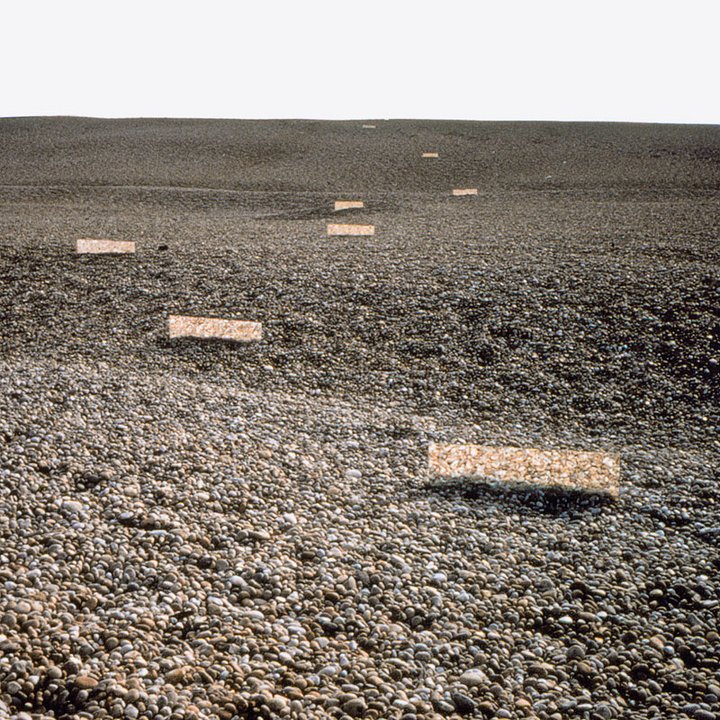
Robert Smithson's Mirror Displacement constructed on Chesil Beach, Dorset and photographed by the artist (1969)

Holt’s view that the photograph becomes the art is reinforced further when considering how artists have photographed the works. The composition is often carefully considered; in the example above, the image has been captured to show the mirrors reflecting the stones arranged in a line that meanders from side to side and ultimately leads the eye through the full depth of the image. The sky is included but featureless and pale grey; similarly there are no landmarks such as the concrete walls that flank Chesil Beach to be seen. The image is cropped so that the beach appears to be a wilderness; there is nothing to give a sense of scale to the viewer and one imagines the furthest mirror to be far in the distance. There is no hint of the nearby sea. By careful composition and omission of unwanted elements, the artist can construct a landscape that they want the viewer to see and create a photograph that goes beyond simple reproduction and can become an artwork in itself.

Similarly, in his book Land Art and Land Artists, William Malpas notes that ‘Andy Goldsworthy photographs his sculptures often looking down on them, so the surrounding landscape is not seen. He edits out unsightly buildings or roads’. The Land Art photograph is sometimes not merely a reproduction, then, but, on a simplistic level, a work in its own right that has been edited in some way by the artist or their collaborator. I think the full truth lies somewhere between, that the photograph is a bridge to the real artwork for the viewer and that an element of participation and imagination is required from the viewer to connect and complete the whole artwork. Indeed, Malpas reports that Goldsworthy himself has said ‘that it is important for the viewer of his art to fill in the gap between the photograph of the sculpture and the real sculpture that he made someplace else.’

In contrast, walking artist Richard Long claims to want to make photographs of his work as simple and straightforward as possible. In Michael Lailach’s book Land Art, he quotes Long as having said ‘the photograph should be as simple as possible…because my art is very simple and straightforward, I think the photographs have got to be fairly simple and straightforward.’ Long’s locations are often anonymous, his walks solitary; the viewer is never expected to be able to view the work in the traditional sense but can only know his work through photographs, text and maps. What the viewer experiences is his memory, what he saw whilst making the walk. As Liz Wells states in her book Land Matters, ‘they record something of that which was experienced … for the audience this is a story recounted, in word and image, … an account that testifies to the experience of the walker but cannot replicate it.’ Long’s photographs bring to the viewer’s mind their own recollections of similar walks and thus the viewer’s own reaction to Long’s images is influenced by their own experiences and preconceptions of walking. In a way, this reminds me of the family holiday photograph; upon seeing someone else’s family album we can recognise and identify with their experiences and, on examining our own thoughts further, can imagine events and settings beyond the actual image itself. in the same way, the viewer must metaphorically place themself in the shoes of the artist walker to fully gain an affinity with the ‘art’, that is the experience of walking itself.

For all of Land Art’s revolutionary nature, the eschewing of the traditional arts markets and materials, and Long’s claims that his photographs are purely documentary, a look on Long’s website at photographs of his ‘sculptures’ reveals a reasonably traditional, picturesque approach to landscape photography. With a penchant for dramatic landscapes, his images carry a touch of the sublime and follow conventional rules on composition, horizon lines, leading lines, depth of field and so on.
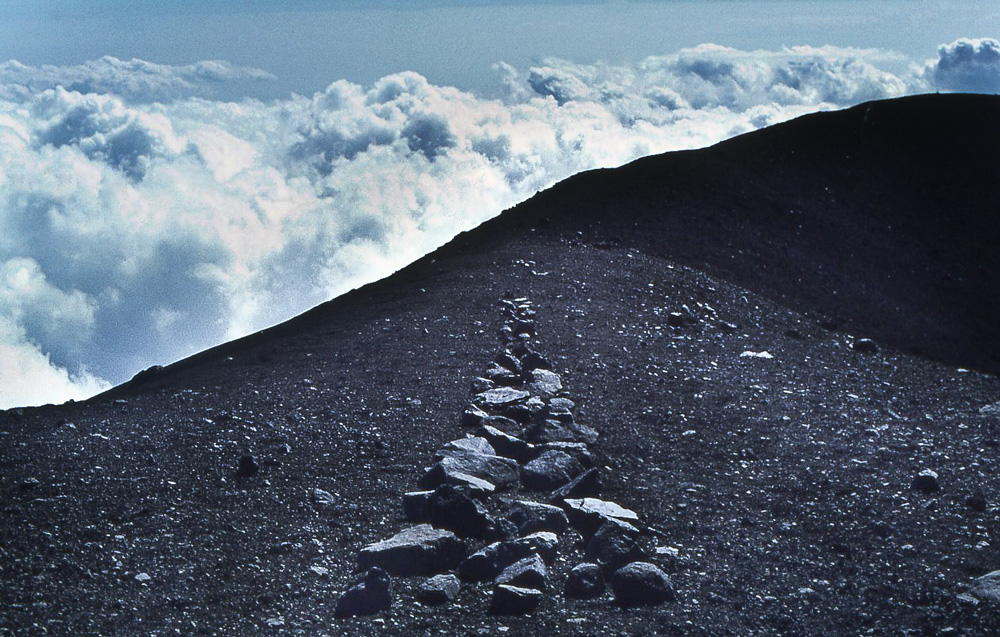
Of course, once many of Long’s walks are complete, the photographs are the only thing that remains as evidence that they actually happened. There can never truly be proof that events such as Long’s solitary walk actually did happen; he could be making it up. As Malpas states: ‘How does one know something is ‘the real thing’, when all one knows of it is through images’. And yet, throughout the history of photography we see images repeatedly trusted as document to an incontrovertible truth. In Land Art, stones may get moved or be so arranged that they do not register with a passerby as a deliberate act; lines in the grass are even more ephemeral, lasting mere hours. This is the case with the work of many Land Artists and indeed some works lasted only minutes or even seconds: Hans Haacke’s Sky Line, for instance, was a performance staged in Central Park, New York whereby he released a number of white balloons affixed to fishing wire into the sky, to be taken up and away by wind energy. As the Phaidon-published book Hans Hacke states, ‘Hacke’s works with air relied totally on the artwork’s functioning in time.’ Photography thus becomes the essential medium for recording the event, Roland Barthes’ That-has-been’; documentary evidence that it really happened.

Transition and transformation are key attributes of Land Art; after all its media, the land and landscape are in a continual state of flux. Robert Smithson’s Partially Buried Woodshed had twenty truckloads of earth loaded onto it until its central roof beam cracked. The work was designed to slowly break up under the weight of the earth and be gradually taken over by nature. On land owned by Kent State University, Ohio, the work was graffitied upon with an anti-war slogan by protesting students, before being mysteriously cleared away over a decade later. The photograph becomes evidence of the changes in such artworks, where even the artist cannot witness every subtle development without living on site and the viewer may only see it once in person, if at all. The photograph becomes a marker of history, capturing a moment in time that cannot be replicated. In a way the photograph becomes the opposite of the Land Art, recording, preserving, freezing while the art is constantly evolving, unfixed, changing, impermanent. The photograph becomes the supplementary story of the work’s development over time.

One of the enduring attractions of photography is its ability to perform so many different functions in a succinct form and its use in Land Art is a prime example of this. The photograph as document, a piece of history, record, memory, conduit for ideas, autobiographical statement, evidence of existence, or a piece of art in its own right; photography and Land Art form a symbiotic relationship where each feeds and enhances the other. Photography is a vehicle which traverses the barriers to bring Land Art to the majority of its viewers: those who cannot view it in situ. And perhaps Land Art, particularly that by the more subtle practitioners like Richard Long and Andy Goldsworthy, can act as a guide to the landscape photographer, for if we take the cue of artists like Long who consider the process to be of more importance than a physical object, maybe landscape photographers could alter their mindset to incorporate the process of making images as part of the work itself rather than solely concentrating on the end result, and thus can surely become closer to the land by engaging more holistically than merely viewing and photographing.

References:

christojeanneclaude.net [Accessed 10 January 2021]

http://www.tate.org.uk [Accessed 10 January 2021]

Nancy Holt and Robert Smithson in England, 1969: Notes from an ancient island – Tate Etc | Tate

Lost Art: Robert Smithson – Essay | Tate [Accessed 28 January 2021]

Tufnel, B. (2019) In Land: Writings Around Land Art and its Legacies. Alresford: John HUnt Publishing

Malpas, W. (2013) Land Art in Great Britain (3rd ed.). Maidstone: Crescent Moon Publishing

Lailach, M. (2007) Land Art. Köln: Taschen GmbH

Grasskamp, W. Nesbit, M. Bird, J (2004) Hans Haacke. New York: Phaidon

Wells, L. (2011) Land Matters. New York: I.B.Tauris & Co Ltd
Exercise 4.1: Critical Review proposal

Due to unforeseen circumstances, I have had to switch tutor. As part of our online introductory we discussed my critical review proposal.
During this module I have become interested in considering how landscape photographers can move beyond mere observation of the land and become more deeply immersed in what is around us. Land Art moves beyond representation as the artists strive to work with the land, often nature, rather than being a step further removed, looking at the land. Land Artists also rely heavily on photography to bring their work to a wider audience and engage with the art market.

My proposal for my critical review is to consider the role of photography in Land Art, both in practical and conceptual terms; its purpose, meaning and validity as a work of art in its own right, and with considerations around the term ‘landscape’. I will take into consideration the intentions of the Land Artist in making such photographs and how these photographs sit within and alongside the wider landscape photography genre.

Assignment Three: Spaces to Places

One November’s day few years ago, we took our then toddler daughter to her favourite local theme park.  In contrast to the usual summer throng of visitors with their picnics and ice creams, and long queues for rides whilst under attack from children and wasps fuelled by a combination of sugar and sun, the park in the week before its annual winter shutdown was virtually empty, with just a scattering of families wandering between rides.  No jostling, no hubbub, no frayed tempers, no children giddy with pent-up excitement; just an eerie silence punctuated by occasional subdued conversation.  In theory,  the thought of a theme park to oneself seems inviting, even preferable: more ride time; somewhere to sit down; no excess noise.  However, the visit was not a success.  The operator of my daughter’s favourite carousel had to stop the ride when she, the lone participant, became distressed at being repeatedly flung around in circles in silence.  With barely anyone else there, the theme park had become an empty space, lost of its context and association with fun.

This scenario perhaps helps to explain, in 2020, the sense of unease experienced in cities all over the world at the height of lockdown restrictions imposed by governments in response to the Coronavirus pandemic.  In considering this assignment, I frequently returned to the notion that a space becomes a place largely when stories are ascribed to it, via history and events; in other words a place is a product of human activity, from creating or building a physical environment to how we interact with the landscape.  In the theme park example above, when normal human activity ceases to occur, the sense of place is lost.

In his book Places of the Heart: The Phsychogeography of Everyday Life, cognitive neuro-scientist Colin Ellard describes a 2012 study he conducted in New York.  He took visitors to two sites and recorded their reactions, both physical and emotional: one site was a ‘long, blank façade’ of a supermarket; the other a lively area with restaurants, shops with open doors and windows and a ‘pleasantly meandering mob of pedestrians’.  The results were, perhaps with hindsight, predictable: those people stood in front of the blank supermarket recorded low states of arousal and happiness; those at the lively site themselves felt engaged and positive and recorded high levels of arousal.  Returning to the 2020 lockdown scenarios across the globe, this evidence raises concerns about what effect taking our daily exercise in an empty urban area is having on the collective mental health of city dwellers and is a subject that has been ignored in the media during the pandemic.  Media reports of near-empty city centres focus entirely on the economic impact and make no mention of the psychological impact on those who are still frequenting the city streets; shop and hospitality workers, for instance.

I also looked at the work of Mat Hennek in my research for this assignment.  Although not depicting lockdown but in fact representing the finding of pockets of quietness in otherwise bustling urban areas, his series Silent Cities shows beauty in stillness and gives a sense of holding one’s breath, waiting for the action to begin again.

I decided to make my images into a slideshow as this is an unexplored area for me and I felt that adding accompanying music would enhance the atmosphere.  The finished piece is intended to convey a sense of the melancholy coupled with a touch of the uncanny – but also a small injection of humour created by the birds that have entered some of the images.

References:

Hennek, M. (2020) Silent Cities. Göttingen: Steidl

mathennek.com/works/silent-cities/ [Accessed 15 August 2020]

Ellard, C. (2015) Places of the Heart: The Phsychogeography of Everyday Life. New York: Bellevue Literary Press

Music: https://www.bensound.com/royalty-free-music

Two Books on Psychogeography

As part of my research for Assignment Three I read two books on Psychogeography.

In his book Psychogeography, Merlin Coverley gives its definition as the “study of the specific effects of the geographical environment, consciously organised or not, on the emotions and behaviour of individuals”. The book takes us through a history of psychogeography, noting its predominantly white male perspective, following mostly literary traditions of Paris and London from Daniel Defoe to Peter Ackroyd and into the modern era and the rural wanderings of Will Self.

There are some interesting ideas in this book, for instance the thought that landscape is permeated with traces of previous inhabitants and events and that there is a sense of place beneath the surface of everyday activity.  Coverley refers to Peter Ackroyd’s observations of how certain areas of London ‘resonate with ideas, activities and the occupants of earlier inhabitants’ and how histories of certain areas are endlessly replayed in a distortion of time, which Ackroyd termed ‘chronological resonance’.  This is something I have explored in previous photographic work within the realms of the family construct and following this thread to a landscape setting would be an interesting avenue for my work. 

The book is also an inspiring starting point for finding new ways of looking at our surroundings, from the dérive, through ley lines and methods for random wanderings. The  COVID-19 lockdown under encouragement by the government to take local daily walks was a serendipitous time to discover this volume and as a result I discovered much about my local area that I had not previously known in twenty years living at my current address.

Colin Ellard’s Places of the Heart: The Psychogeography of Everyday Life Investigates the effect that physical spaces have on human behaviour and emotional state, delving into history, scientific experiment and the future of virtual reality.

It is well known that supermarkets and department stores lay out their wares in carefully researched locations designed to incite shoppers to part with as much money as possible but I had not considered how the architecture of a bank or even a theme park could be designed to evoke a specific human response. It makes sense that if views of nature can reduce stress and aid recovery from illness in humans, then man-made environments can also impact our wellbeing.

From the construction of the first walls and introduction of private bedrooms to homes, human behaviour has long been shaped by the structures around us.  Both revolutionised concepts of inner and outer space and private and public behaviour.  However, despite our living and working spaces being ever adapted to promote productivity and maximum efficiency, human environmental and spatial preferences are subconsciously underpinned by biological and evolutionary behaviour.  For example in an open space such as a public square, people will gravitate towards the edges first following the primitive geometry of ‘prospect and refuge’ or seeing without being seen.

The concept of place as an influence on human activity and emotion is an interesting one for the photographer as it raises questions of how to capture this in one’s work and, I think, places the onus on the photographer to not simply depict a landscape in a factual manner, devoid of any sign of human interaction but should consider carefully not only how the landscape is shaped by humans but the effect that landscape has on humans.  

References:

Coverley, M. (2018 ed.) Psychogeography. Harpenden: Oldcastle Books

Ellard, C. (2015) Places of the Heart: The Psychogeography of Everyday Life. New York: Bellevue Literary Press