Exercise 3.3: Late Photography

David Campany’s essay Safety in Numbness discusses his issues with the genre of ‘late photography’ – the practice of photographing the site of a significant newsworthy event after a period of time has elapsed.

Campany is quite disparaging of aftermath photography and in particular discusses a television programme Reflections of Ground Zero which followed Joel Meyerowitz as he made images of Ground Zero in the days following the World Trade Center terror attacks of 2001.  Campany argues that in putting the emphasis on Meyerowitz’s work the programme classes photography as culturally superior to moving images.

Campany argues that photography after the event is too far removed from what has happened and describes the resulting images as ‘particularly static, often sombre and quite ‘straight’ kinds of pictures’ and likens them to forensic photography rather than photojournalism.

He goes on to discuss photography’s well-documented connection between photography and memory to the extent that the former is often thought of as only a signifier of the latter to the exclusion of other meaning.  In fact, he argues, the connection between photography and the past is more because photography is at the rear of contemporary culture.

Returning to Meyerovitz’s images he refers to ‘epic scenes’ and the mastery of light, plus the formal approach blended with Meyerovitz’s sense of what ‘a ruin should look like’.

Whilst I agree that Meyerovitz’ images do appear to be presenting a ‘glossy’ side to Ground Zero – perfectly lit, iconic monuments rising from the rubble like a great ancient ruin, I do think that late photography has a role to play in photojournalism and certainly in the wider art sphere.

It is worth remembering that Mayerovitz’s series was produced primarily for New Yorkers.  In this context the style of the images makes more sense; the iconic ruin representing a beacon of hope and a monument of remembrance for the city devastated by terrible tragedy.

We also have a new perspective on the late photography debate – that provided by the 2017 fire at Grenfell Tower in London.  Personally I don’t remember much of the footage from the event as it was happening; distant views of a burning building that did not reflect the horror of witnessing such an event in reality, perhaps because of compassion fatigue, perhaps because images of a fire, whether moving or still, cannot adequately convey the terror of witnessing such an event first hand.  For me, the most memorable and horrifying images that truly showed the extent of the event were the photographs taken once the building was opened to investigators. The images of what little remained of the insides of people’s homes truly emphasised how utterly consuming the fire had been and the sheer impossibility of escape for those trapped inside.

References:

davidcampany.com/safety-in-numbness/ [Accessed 3 May 2020]

www.itv.com/news/2017-06-15/inside-grenfell-tower-the-horrific-scenes-facing-firefighters/ [accessed 3 May 2020]
Exercise 3.2: Postcard Views

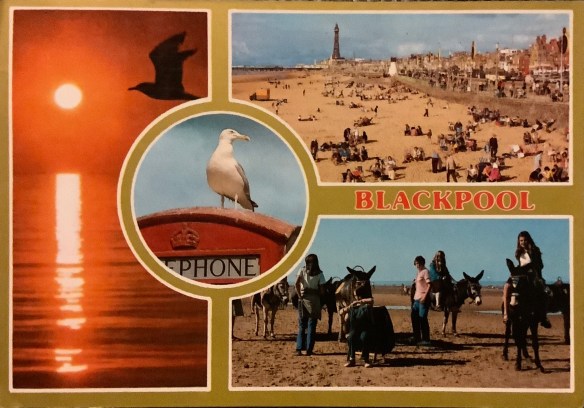
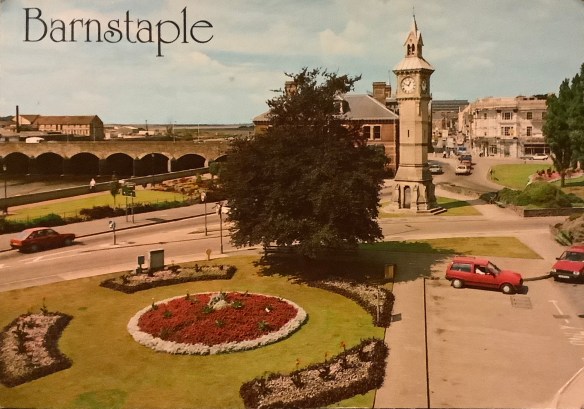
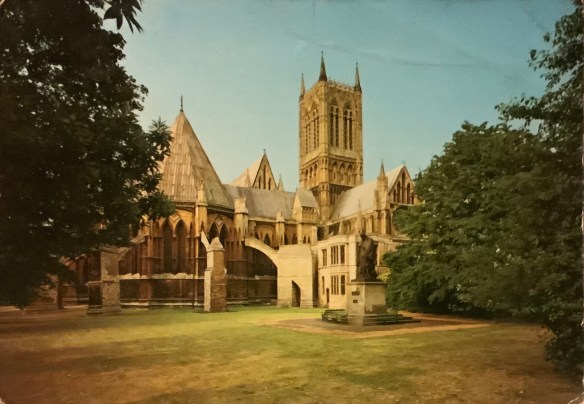
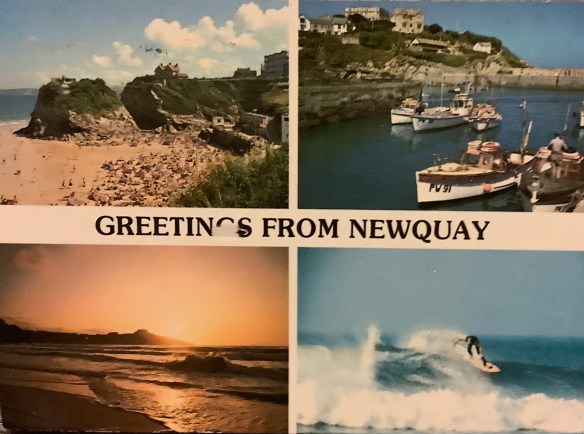
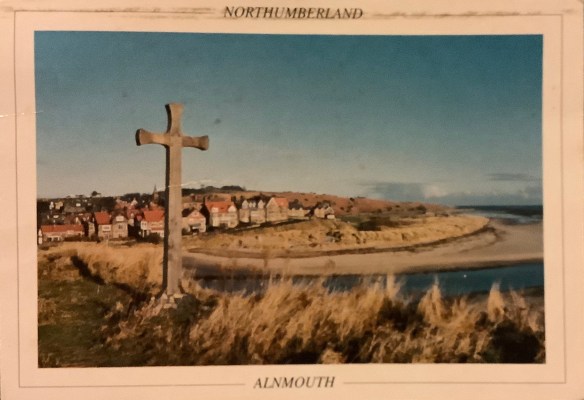
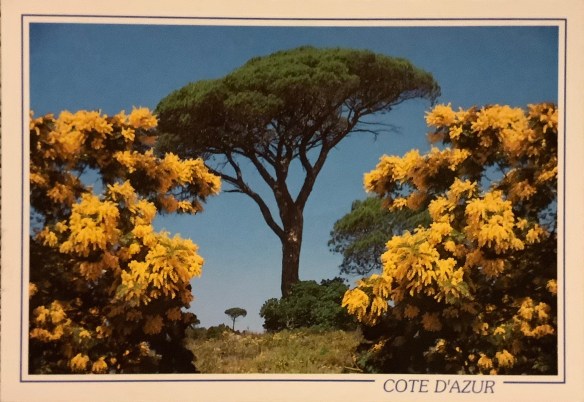
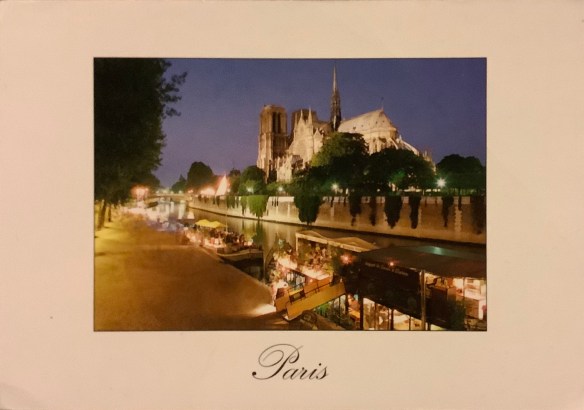
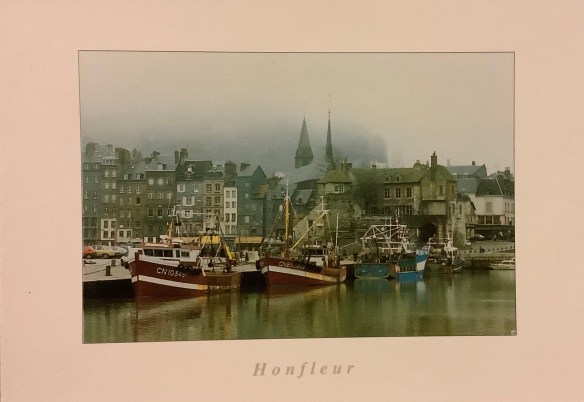
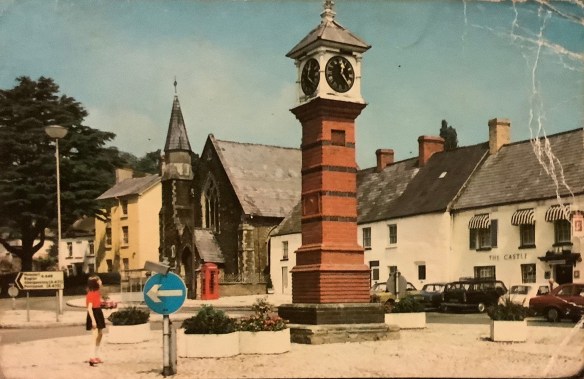
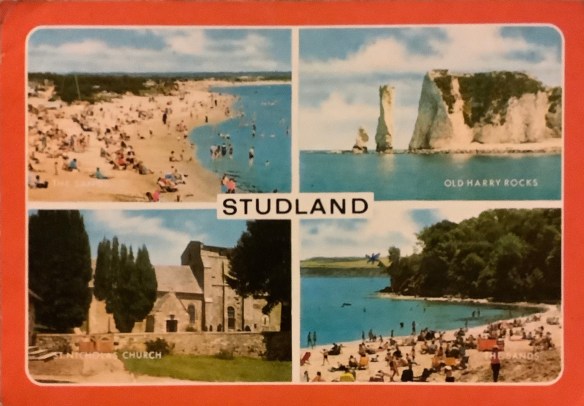
I have quite a few postcards, mostly sent to me from holidaying friends and family, that I have collected through the 80s, 90s and 00s.  It is a shame that the most recent one I have is dated 2003; it seems that people post their own holiday photographs online instead by traditional mail since the advent of social media.  The small selection below are displayed in chronological order.

Whilst there are some exceptions, the vast majority follow picture postcard stereotypes.  Skies are overwhelmingly blue and bad weather seems to never occur in the land of postcards.  Streets must always be empty but beaches must be crowded.  Only one postcard in my wider collection is in portrait format.  The exceptions are interesting.  Alnmouth is permitted a deserted beach because it enhances the air of rugged, historic mystery created by the ancient stone cross and the wild grass in the foreground.  Honfleur is shrouded in heavy mist, a curious choice as the town is known for being picturesque and is worthy of a traditional picture postcard viewpoint.   Both of these cards are in the later part of my collection and it would appear that some differing styles have crept into the postcard genre over more recent years with a little more freedom for the photographer to create an alternative atmosphere.

Though styles may have diversified over the decades, I would agree with Fay Godwin that the postcards mostly bear no relation to the actual experience of visiting the places depicted, mostly because of the lack of human presence.  I have never seen Lincoln Cathedral’s lawns empty, and the empty lunchtime streets of Usk in the first image and Barnstaple (as signified by the times on the clock towers) create an unintended sense of the uncanny that would put any prospective visitor off.  The only honest depictions are those of the crowded beaches.


Graham Clark wrote “… the landscape  photograph implies the act of looking as a privileged observer so that, in one sense, the photographer of landscapes is always the tourist, and invariably the outsider.  Francis Frith’s images of Egypt, for example, for all their concern with foreign lands, retain the perspective/ of an Englishman looking out over the land.  Above all, landscape photography insists on the land as spectacle ad involves an element of pleasure.”

The issue of insider versus outsider has been raised by several photography theorists, including Susan Sontag, Martha Rosler and Abigail Solomon-Godeau.  It is perhaps easier to see how a portrait photograph made by an ‘outsider’ can be seen to be as detached from the subject, perhaps even exploitative, versus that of an ‘insider’ which displays a more intimate version of the subject.  This translates to landscape in examples such as Ed Ruscha’s Every Building on the Sunset Strip (1966), which spends a detached ‘outsider’ view devoid of emotion and embracing the banal.  In contrast, Paul Seawright’s 1988 series Sectarian Murder is a poignant ‘insider’ perspective revisiting the sites of 1970s sectarian violence in the area close to where he grew up.

I think both approaches are fine as long as the photographer is mindful of what they are trying to achieve and is not simply doing so out of ignorance.  I think most serious landscape photographers today do research their chosen location, even if they are not from the area compared to the days of early landscape photography where research of unchartered lands was often impossible when each new landscape was a curiosity, a spectacle to be paraded to viewers who had never seen such scenery before.

References:

la Grange, A. (2005) Basic Critical Theory for Photographers. Oxford: Focal Press

blogs.getty.edu/pacificstandardtime/explore-the-era/worksofart/every-building-on-the-sunset-strip/ [Accessed 8 May 2020]

www.paulseawright.com/sectarian [Accessed 8 May 2020]


Exercise 3.1: Reflecting on the Picturesque

When I think of the Picturesque I instantly think of the Classical seventeenth paintings of Claude Lorrain and Nicolas Poussin in the National Gallery, those idealised pastoral scenes featuring perfectly ordered landscapes.  In truth, whilst Claude was without doubt a master of his genre, walking past painting after painting of the formulaic style leaves me feeling quite sickly, like experiencing a sticky bun that is too sweet.

Whilst Claude’s scenes are of his own invention with their perfectly positioned Classical buildings in just the right setting, it is easy to find examples of idealised versions of real landscapes too.  William Widgery’s 1870 painting Bowerman’s Nose contains little of the bleak ruggedness of the actual landscape and instead draws on Claude’s influence with it’s gentle sunlight and soft greenery.  It is just as easy to find lower quality modern day versions in cheap souvenir galleries along the Devon and Cornwall coast although there does seem to have been some improvement in variety and quality in the last two decades or so.

And yet it is surely the Picturesque in terms of perfect real life landscapes that attracts most photographers to the genre in the first place.  My mood still lifts every time I am travelling through the glorious English countryside with its rolling hills and postage stamp rows of distant fields in the late afternoon sun, no matter how many times I have seen it before.  The Picturesque doesn’t display the ferocious crashing waves of a stormy sea or the precipitous danger of the rugged mountain that we see in the Sublime but contains a gentle, reassuring beauty all of its own.  Many of us as serious artists move onto more probing, investigative avenues of work and, if we consider that one of art’s roles in society is to provoke and question, we would be wrong, I think, to ignore the uglier sides of our landscapes.  However, I do believe the Picturesque has a place in photography and art in general, even if it is only as a gentle reminder of the joy in first starting on our photographic journey.