Assignment Three Preparation

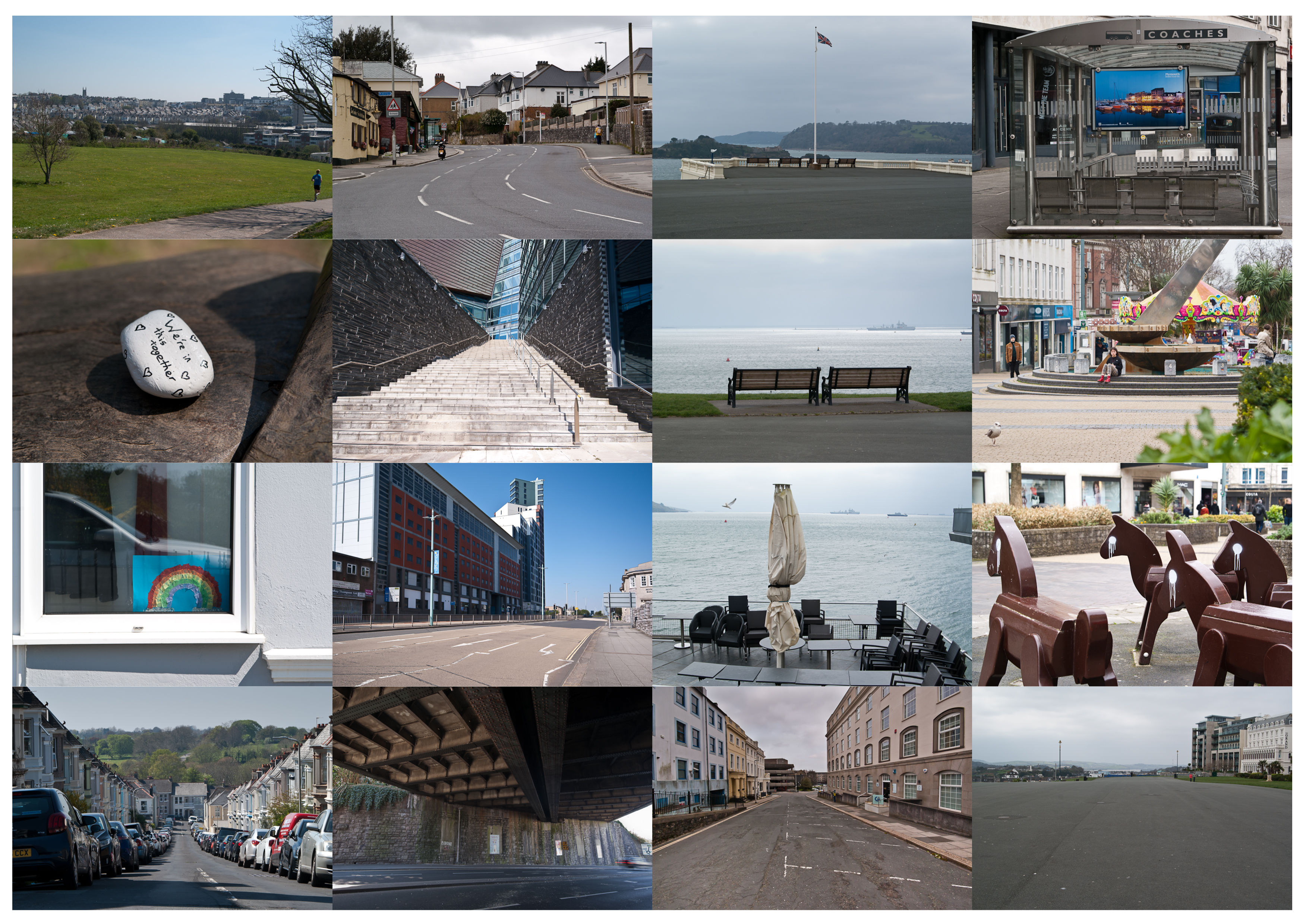
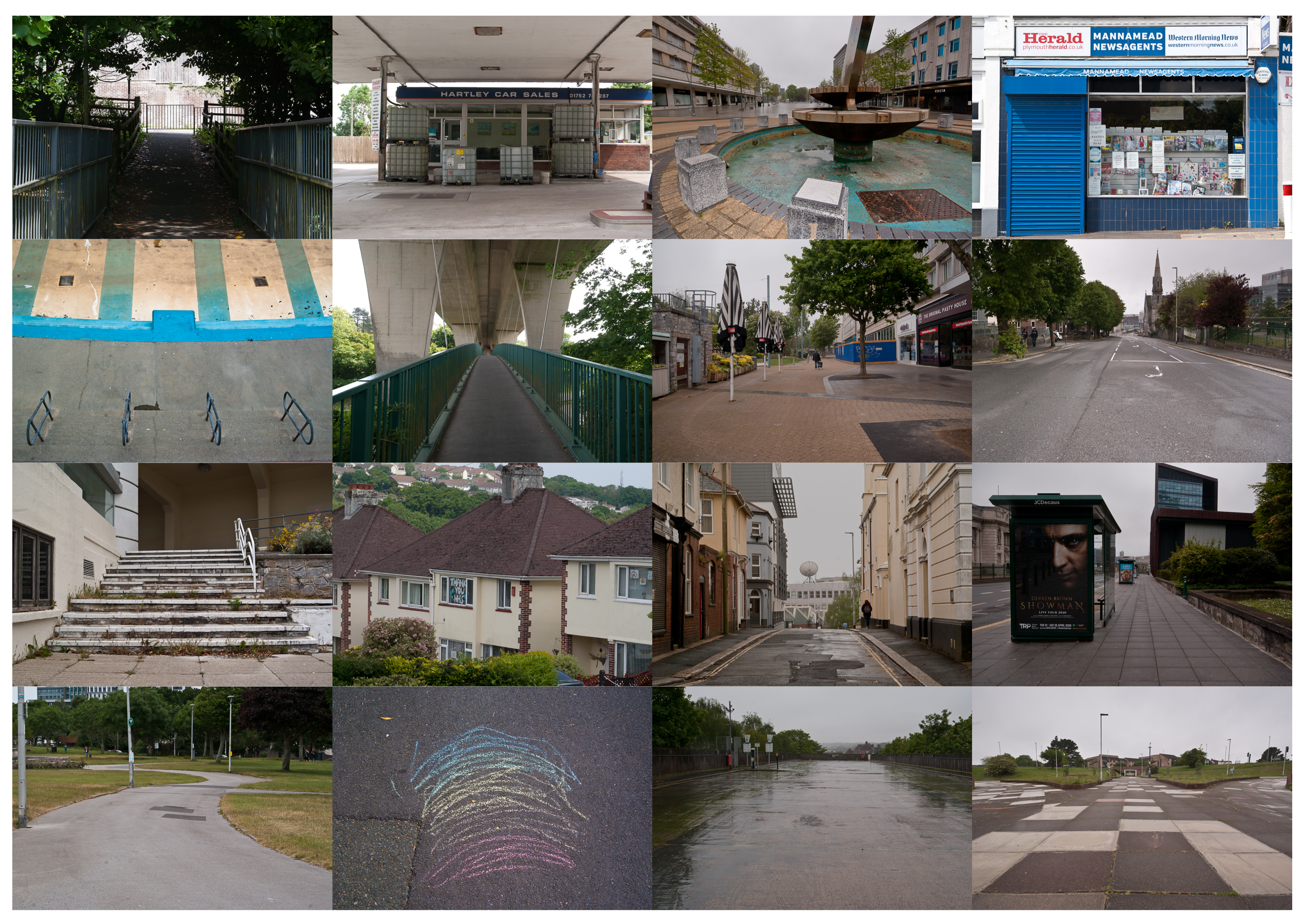
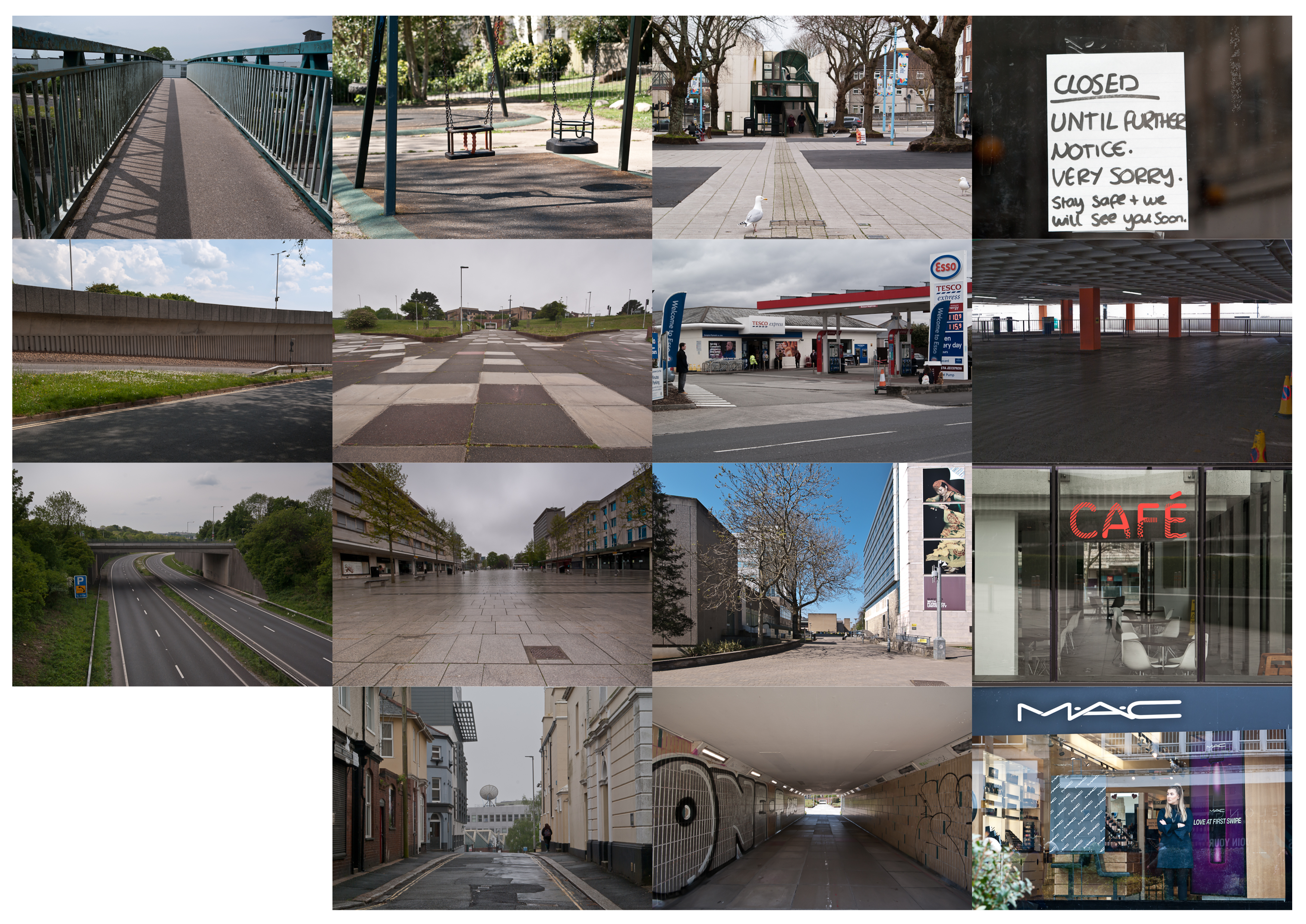
My working method for assignment three was straightforward compared with the previous two assignments; these are simple observations made on my frequent walks during lockdown. I was acutely aware of the effect walking around an empty city has on the psyche and the number of examples available to record were numerous. The main challenge I found, then, during this assignment was choosing which images to use. I assembled what I thought was the final collection several times and the next day changed my mind. even now in front of me is an image that didn’t make it into the final assignment and I am wondering whether I should have included it. However, a final decision has to be reached and so I am continuing with the most recent selection I made. I am, however, planning on making an alternative version to post on social media. Below are my contact sheets showing all the images that were part of my final decision making process.

Exercise 3.6:‘The Memory of Photography’

David Bates’ essay The Memory of Photography addresses the contribution photography has made to the ‘relation of memory and history’.  Photography is traditionally viewed as a ‘time machine, a place for remembering’ but it’s purpose is constantly changing, particularly in the digital age, and perhaps this is why those traditional considerations are so pertinent now.

Freud identified the distinction between ‘Natural Memory’, the normal human ability to recollect, and ‘Artificial Memory’, devices created by humans to extend and aid human memory.   Kracauer compared  photography to historiography as they both rely on historical narrative.  Le Goff wrote of the collective cultural remembrance devices introduced by kings such as archives, libraries and museums.

Le Goff investigated how photography’s role is seen to be helping to trigger specific common visualised memory, referencing Bordieu’s discussion of family albums.  The photographs in the album serve as an aide-memoire to share collective memories through the family.  Bates investigates whether this application as collective memory aide can be applied to other social and cultural groups too?  Does photography help these groups to form or at least recognise ‘acquired characteristics’?  Examples of such areas which could be included are: police; media; arts; and independent social group photographs, each contributing to establishing a ‘truth of social remembrance’.

Foucoult discussed how ‘popular memory’ was being obstructed; that popular literature, what we are taught in school and cheap books giving popular memory no way of expressing itself.  In other words, people are shown not memories of who they were but what they must remember having been.  In a world of social media and ‘fake news’ this argument seems to me more relevant than ever in modern times.  As we move forward into an ever more uncertain future, what memories will be instigated by the photographs we are making and seeing today?  Will the collective memory remember how things really were or will it be distorted by our media and ourselves presenting a selective public face to the world or at least the internet)?

I think the concerns around memory being altered by misleading objects, including photographs, are valid.  An experiment in 2002 found that half of the participants were tricked into believing they remembered a hot air balloon ride as a child from fake photographic evidence. It is easy to imagine this process being recreated through the media or schooling and influencing collective memory.

References:

www.tandfonline.com/doi/full/10.1080/17540763.2010.499609 [Accessed 20 August 2020]

www.bbc.co.uk/news/science-environment-24286258 [Accessed 20 August 2020]

Research: Mat Hennek

Mat Hennek is a German photographer who had a successful career in commercial portrait and product photography before moving into the art genre.

His recently released book Silent Cities coincidentally came out during the 2020 Coronavirus pandemic lockdown across Europe but in fact the images were all made over the last seven years during normal human social and economic activity.  Hennek visited several cities worldwide for this series, including Tokyo, Dallas, Shanghai and Paris, making unplanned walks through the cities whilst consciously avoiding the usual tourist areas.

The urban landscapes are almost devoid of people, save for the occasional exception: a lone cyclist; a group of half concealed travellers.  Perspective is most often flattened, frequently cutting out the sky and sometimes the foreground too, creating a barrier to the viewer, preventing them from feeling a part of this landscape.  In some images the pattern of the architecture removes all sense of perspective, leaving the viewer disorientated and confused.

Prior to this series, Hennek produced a series entitled Woodlands, which are images of groups of trees completely filling the frame, silent, almost monochromatic, flattened in perspective.  I think Hennek has approached the urban environment in the same way; his colours are subdued, often feature greenery, and there is a sensitivity to texture and material and their juxtapositions.  Forms in both series are often pared down to simple compositional elements.

The result of Hennek’s approach is the impression that the cities are waiting for people to appear and carry out their usual business, as if they are on hold.  There is a sense of the uncanny, of time having stopped.  The overall sense is of beauty in the simplicity of being able to view these structures unobstructed but also of silence and stillness, like holding one’s breath.

References:

Hennek, M. (2020) Silent Cities. Göttingen: Steidl

mathennek.com/works/silent-cities/ [Accessed 15 August 2020]