Exercise 5.7: Prepare your Artist’s Statement

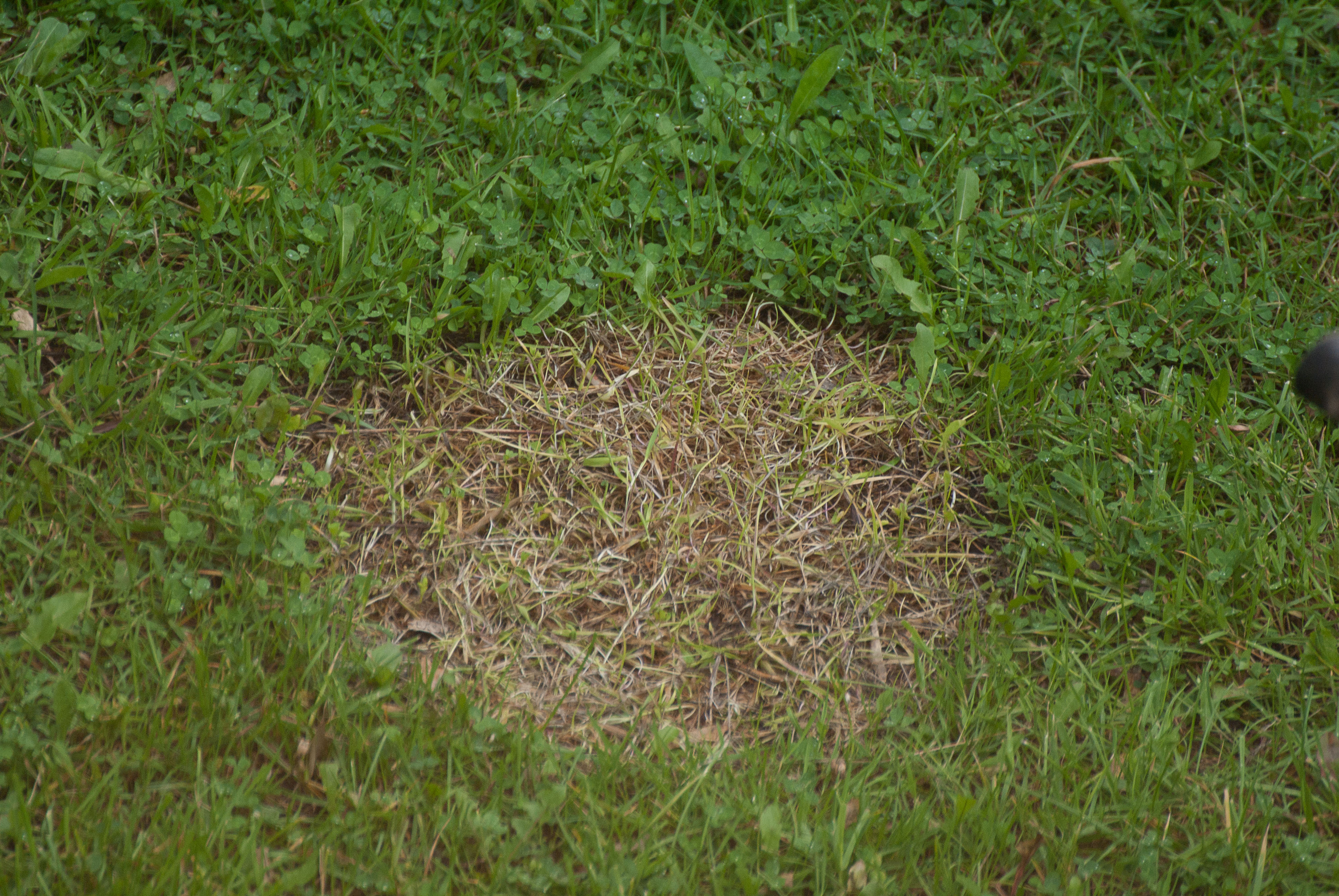
My work focuses of the dynamic tensions between landscape and people, even though people are rarely depicted. Whilst contemplating the landscape I am constantly thinking of the impact landscape has on humans both in a physical and emotional sense. Conversely, I am also interested in the impact humans have on the landscape, not just in the obvious sense of environmental damage, but also in more subtle ways, in the signs of human behaviour left behind on a small scale, temporary basis.

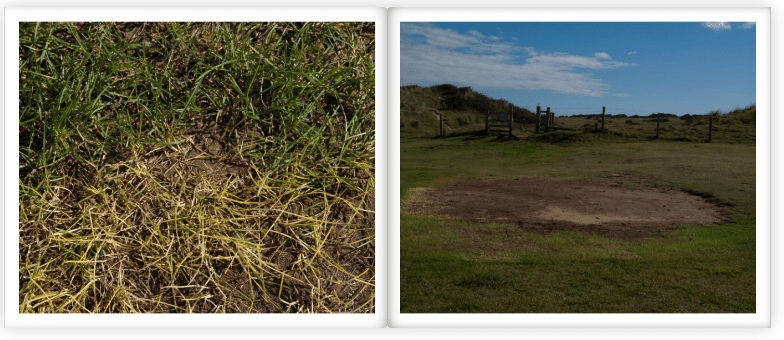
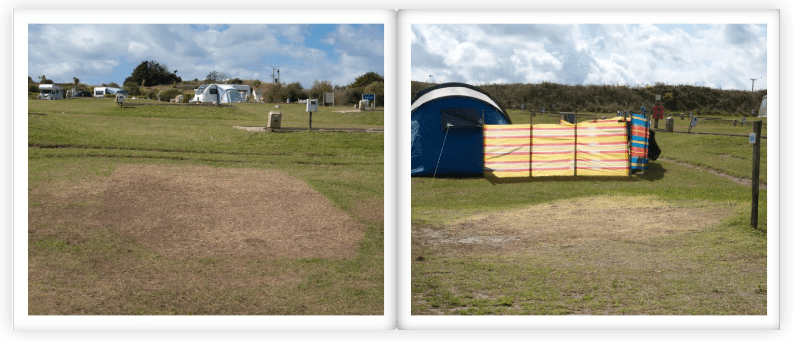
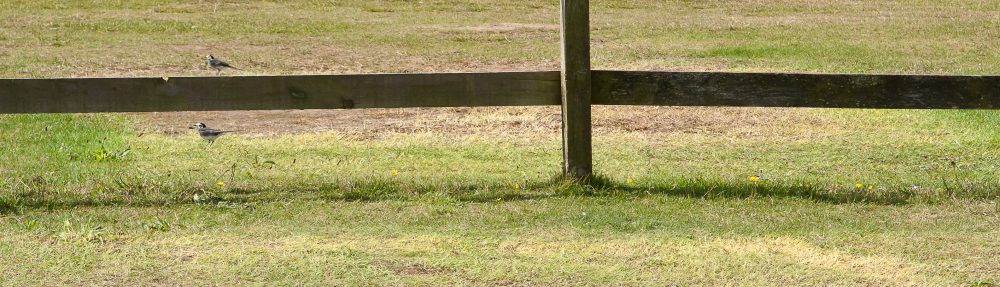
My piece on caravan parks focuses on the evidence left behind by holidaying families in the form of temporary photographic imprints on the grass; repetitive shapes made time and time again throughout the holiday season, leaving short term evidence of those who came before; regenerating year after year as the cycle begins again.

Exercise 5.6: Context and Meaning

In his essay Context as a Determinant of Photographic Meaning John A Walker explains how changing where an image is displayed changes its context; in most cases this results in a change in emphasis of content. However, a total change in meaning can also result. It is also possible to change meaning by juxtaposition to text to something which was not signified by the image alone.

Paintings and sculptures were originally created in situ, for example as a mural. the portability of the canvas enabled mobility which lost connection between the work and specific places, culminating in the availability of photography on a global scale.

When photographs of a place are viewed out of context, it is common to research its original meaning, thus rendering it eternally fixed. Walker suggests that we should also be investigating its context through the different socio-historic junctures it has passed since its ‘birth’ thereby also considering its ‘life’. Walker cites Jo Spence’s series Beyond the Family Album, Private Images, Pubic Conventions, as a prime example of this; originally personal images, their meaning was emphasised differently when shown in a feminist magazine, a library and a gallery. If the context in which an image is displayed can be altered by the space in which it is shown it stands to reason that the influence can also extend the other way.

The mental preconceptions of the viewer must also be taken into account, whilst assuming that many people’s responses will be similar.

I found the concept of the context of images changing depending on where they are shown interesting and this is something I had not really considered before. Once of our local department stores has shown art exhibitions for a while and I have found it interesting and refreshing to view art in a different context. Whilst I envisage my submission for Assignment 5 to be shown in a traditional white space, the local lido images I have been producing for Assignment 6 would definitely benefit from being displayed in the space they were taken and I would like to approach the local council regarding this if I have the confidence to do so.

Exercise 5.5: Create a Slideshow

Whilst I created a slideshow for Assignment 3 using Windows Movie Maker, there is now an error uploading from this software. I tried various other methods, but all seem to either produce poor quality slideshows or cost money. In the end I have have had to use Google Slides for this exercise which isn’t ideal but at least conveys accurately how I wanted the slideshow to look. I have opted for a plain format with simple transitions and no music.

Exercise 5.4: Online Exhibitions

Sharon Boothroyd’s WeAreOCA article Online Exhibitions invites us to consider the slideshow format of presenting images, using Andy Adams’ Looking at the Land as an example.

At first I was daunted at the prospect of watching an eighteen minute slideshow; I thought my mind would wander part way through. I was also surprised that there was no music; my preconception was that this would be required to create ambience and to bring the exhibition, which is by different photographers, into a unified whole. On both counts I was wrong; the exhibition was utterly engaging and the absence of music enhanced the subdued feel of the images, which were often very simple in composition and at times reminded me of Mat Hennek’s Silent Cities series.

Overall, I really enjoyed the piece and saw a number of intriguing images that I would like to return to. I suppose the main downside of the format is the inability to linger longer over certain images, though that is easily overcome by further investigation by the viewer.

Exercise 5.3: Print on Demand Mock up

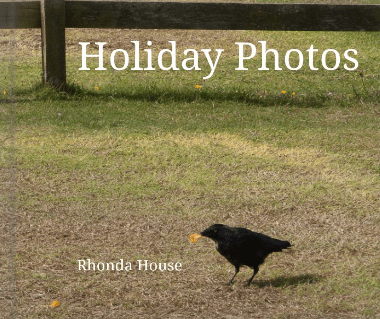
For this exercise I have prepared a mock up submission for Assignment five using book software from Blurb. I have used Blurb before so found the software relatively easy to use. I have a personal preconception that a photographic book needs text to accompany the images (even though i have purchased ones that do not) and for that reason I probably would not consider a book as my choice of presentation for this particular assignment since I want to present the images without text. However, it is a medium I would consider for future projects should I deem it appropriate.

Exercise 5.2: Print Quotes

The purpose of this exercise is to research different companies offering inkjet (giclée) and C-type printing. All prices are for A3 prints as this is a size commonly used for portfolio purposes. I have included descriptions of the options as described on the websites because I am not well versed in the differences between the different types.

Company 1: DS Colour Labs

C-Type Prints – described as ‘Silver Halide printing light-sensitive paper and silver based chemistry, a technology which has been constantly refined over time.’

Lustre £1.20

Gloss £1.20

Pearl £7.49

Velvet £7.49

Lustre – ‘a very natural photographic finish reminiscent of traditional photographic printing. Coated with a slightly stippled texture Lustre prints are very resistant to fingerprints, scratches and scuffs and feature a semi-matt finish with minimal glare.’

Gloss – ‘produces higher contrast in your work with a vivid, glossy finish which accentuates the colour to give a punchy, rich feel.’

Pearl – pearl-like crystals give a unique high-gloss effect and add a beautiful iridescent touch to your photos with deep blacks and purer highlights 

Velvet – ‘professional coating with a zero-reflective top layer creates a stunningly soft and deep- matte effect…..enhanced color reproduction, white purity and excellent image stability.’

Giclée Prints – highest quality, archival digital inkjet prints available.

Permajet – £10.99

Hahnemuhle – £11.99

PermaJet – T’he image reproduction will surpass your expectations in all areas providing images that meet the highest standards of Museum quality giclee prints. Photographers and artists will appreciate the natural heavyweight feel and smoothness of the range as well as the subtle, yet varying, base colours which bring your images to life and add a sense of depth and clarity which cannot be reproduced on a normal gloss or satin paper.’

Hahnemuhle Photo Rag – The fine, smooth surface and feel of Photo Rag make this paper very versatile and it is ideal for printing both black and white and colour photographs and art reproductions with impressive pictorial depth.

I note that the offer sample packs to enable comparison of the different papers and this is something I intend to look into further to improve my knowledge of the variances.

Company 2: Loxley Colour

C-Type Prints

Loxley’s offering is very similar to that of DS, apart from the inclusion of Metallic instead of Pearl. Metallic is described as ‘A beautiful shining paper that is perfect for those showstopping images. The Metallic print finish adds a sheen to images with an almost reflective appearance.’

Lustre £4.52

Gloss £4.52

Metallic £6.77

Velvet £6.77

Giclée Prints

Loxley offer a wide range of different papers from Fujifilm, Hahnemuhle and Epsom all priced at £12.99 each.

Company 3: Theprintspace

C-Type Prints

Again, the offering from theprintspace varies slightly from that of the other two, offering matt, gloss, flex (described as ‘super-gloss’) and metallic.

Matt £8.54

Gloss £8.54

Metallic £10.28

Flex £13.36

Giclée Prints

Seven different papers are available, from Canson, Epsom and Hahnemuhle, all priced at £11.23.

The research shows there is a very wide range of different papers and pricing available and photographic printing appears to be something of a minefield to the inexperienced. I have used both DS Colour Labs and Loxley before and the only different I have found was that Loxley seem to offer a more premium service in terms of customer service and packaging but not necessarily in the finished product itself. This is an area I definitely need to improve my knowledge in and I will allocate some expense to trying out the different options later in the year.

Technically, it could be argued that an inkjet print is not a photograph because they are created by laying ink onto a sheet of paper rather than being photography in its purest sense and I am inclined to agree, also the argument is a little pedantic. It is, of course, still a print of a photograph, since the original image has been made with light. In practical terms, however, I would not be put off using or purchasing a print purely because it was an inkjet.
Exercise 5.1: Origins of the White Cube

Thomas McEvilley’s introduction to Brian O’Doherty’s Inside the White Cube: the Ideology of the Gallery Space summarises the book as follows:

Modern art gallery spaces are built to a rigid set of rules; walls are white and there are no windows, thus the art is free to ‘take on its own life.’ The context is similar to that of religious buildings; the artworks appear out of time so take on their own status of appearing in limbo in a ‘chamber of eternal display.’ Egyptian tomb chambers which also built as a removal from the outside world, and from the flow of time, as were Paleolithic cave art chambers, which were deliberately set in areas which were difficult to access. These spaces are ritualistic and attempt to ‘cast an appearance of eternity over the status quo in terms of social values and also, in our modern instance, artistic values.’

O’Doherty states that, on entering the white cube, we give up our humanness – like in a religious building we do not speak, eat, drink, lie down, since or dance. The white cube attempted to bleach out the past and become a transcendental space, but the problem with transcendental principles is that they refer to another world.

Plato theorised that ‘at the beginning was a blank where there appeared inexplicably a spot which stretched into a line, which flowed into a plane, which folded into a solid, which cast a shadow, which is what we see’. The white cube represents the blank which Plato claimed everything evolved from.

It is interesting that the white cube is compared to a religious building as I have certainly felt a reverence when looking at iconic artworks similar to that within a cathedral and agree with the sensation of feeling out of time. However, the modern gallery is also often too overcrowded (pre-COVID) to gain that sense so that actually achieving it is rare. The aim of achieving commercial success by getting as many visitors in as possible does not easily align with the design sensibilities of the white cube and thus the effect is often lost.

Exercise 4.6: Proposal for Self-Directed Project

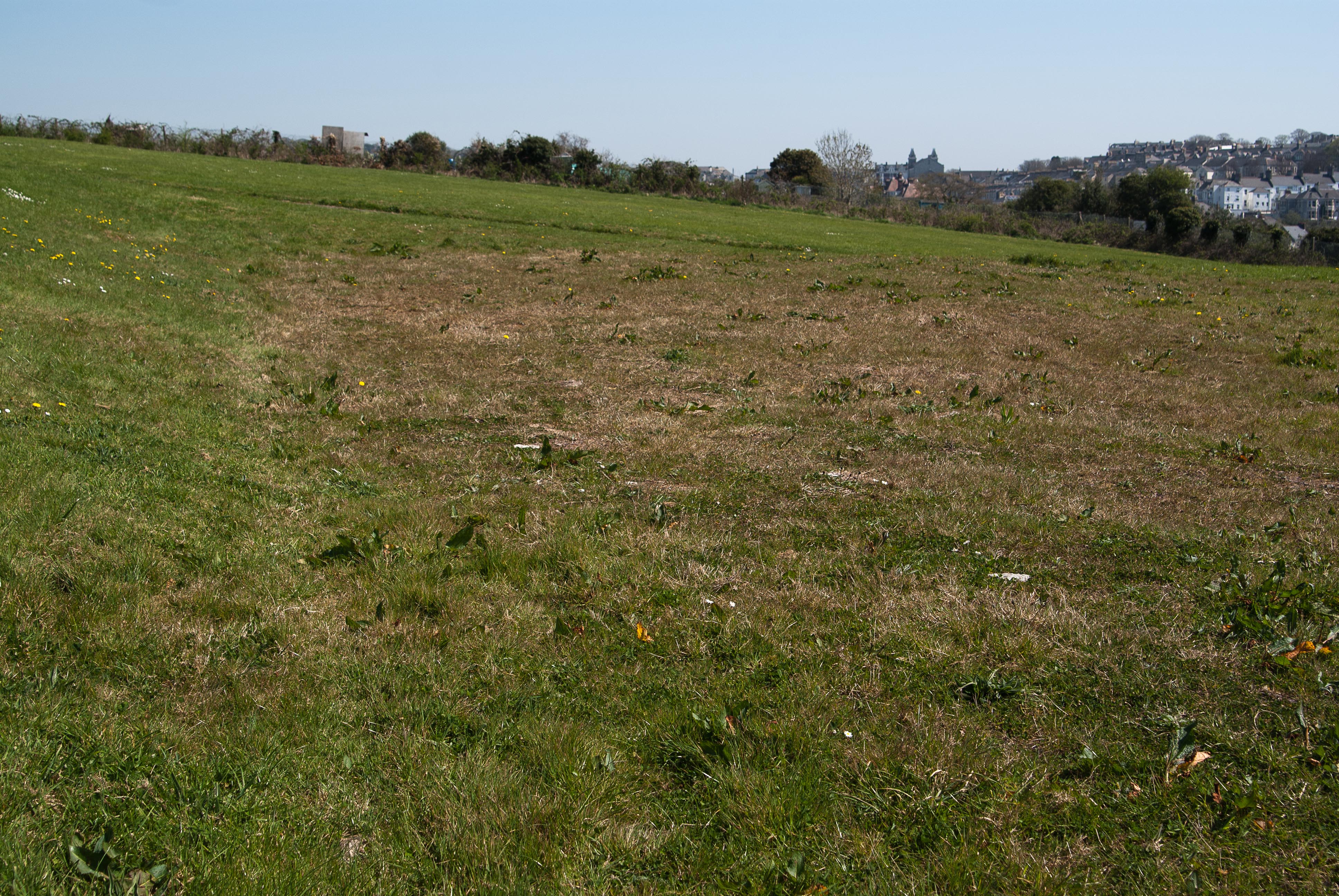
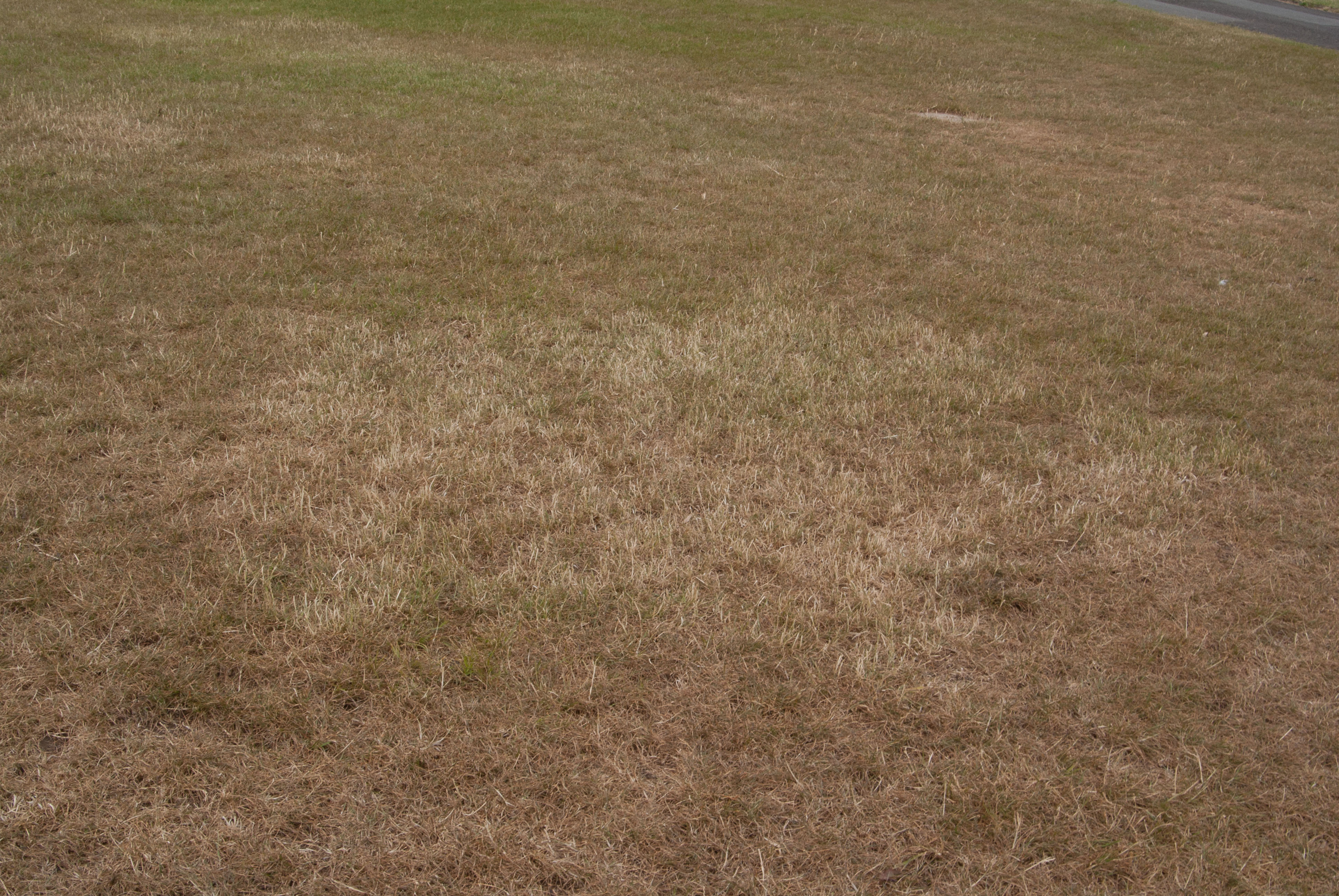
Around two years ago I became interested in how the marks on grass when it has been deprived of light are a kind of naturally occurring photography which, when an item is placed on it for a period of time and subsequently removed, create a silhouetted ‘image’ of that which has been placed there.

I began collecting images of this type of ‘photography’ when I came across it whilst out walking with my camera, whilst wondering what had previously been there to leave the image. Some large areas were indicative of a temporary structure of some sort, hinting at a gathering for an unknown occasion, whereas others were very small.

Inspired by artists challenging what constitutes photography such as Tom Lovelace, following on from my earlier work for this module using the sun to create cyanotypes and lumen prints, and also referencing my research on Land Art, I wanted to explore further these images that are made on the earth itself, which break through the limitations of photographic paper size boundaries.

I also bring to my work a personal interest in the family photo album, and particularly in the images we retake year after year in different forms, for example the holiday snap or the birthday party, and the idea that versions of these images are taken year after year, generation through generation. We are so familiar with these images that when we view someone else’s version, we can immediately imagine the scene beyond the boundaries of the shown image and subconsciously apply our own preconceptions and experience of the our imaginings. Thus it is so with the British caravan park; many people already have their own thoughts on what it is to holiday in this environment.

My project proposal is to combine the interests laid out above and explore how the images created by objects blocking natural light on grass create a new type of holiday photograph, that which hints at what has occurred at the particular site but leaves the viewer to imagine the scenes contained within that confined area of ground.

Exercise 4.5: Signifier – Signified

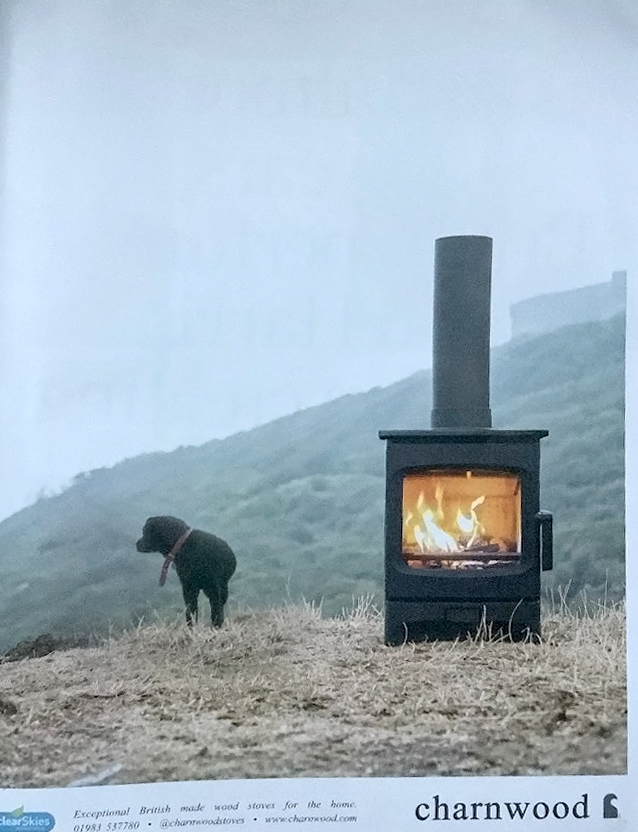
For this exercise we were asked to choose an advertisement with identifiable signs. This term comes from semiotics as discussed in the 1977 Roland Barthes essay Rhetoric of the Image. According to Barthes, the sign consists of a signifier and a signified, or, in other words, what is depicted and the message it connotates. There is also a second level of meaning, myth, which relates to the viewer’s existing contextual knowledge that contributes to their reading of the image.

I chose an advert from the high-end interiors magazine Elle Decoration, noting that my preconceived assumption would be that the placement in this magazine aims the advert at home lovers with a middle to high income.

My interpretation of this advert is:

Dog collar: domesticated – home

Dog looking back: waiting for someone – country walks

White sky: cold day, British

Hill in background: walking, exertion

Brown grass in foreground: need wellies/ walking boots, exertion. Practical, not picturesque

Washed out colours in landscape: misty, chilly, inclement weather

Wood burner: cosy, home, warm

I have interpreted the advert as a contrast between a typical dog walk in Britain, that is to say, a bit chilly, not particularly picturesque, the type you would need stout boots for, and the cosiness of the domesticity and warmth that awaits by they burner once back home. it is interesting that there is very little text on this advert and none at all on the photograph; the image has been allowed to speak for itself.

Exercise 4.4: ‘Of Mother Nature and Marlboro Men’

In Deborah Bright’s 1985 essay Of Mother Nature and Marlboro Men she discusses how landscape photography plays a large part in creating cultural ideologies, whether the photographer intended it or not.

She explains how the American attitude towards ‘wilderness areas’ has long held religious overtones and how there was a conviction that garden spots ‘could elevate the aspirations and manners of the immigrants and workers who used them.’ Railroads vied for business by marketing the landscape that could be seen on their routes. With the increase in automobile travel came ‘planned roads and numbered scenic turnoffs, sited and designed to conform to conventional pictorial standards.’ Photography became the key method of illustration for merchandising the business of landscape scenery, and these images became the established standards against which future pictorial representations of these areas would be compared.

The public appetite for spectacular scenery was whetted by the introduction of cinema. The Western played a particular role in masculinising the western landscape, with cowboys and rugged scenery.

Even when landscape photography gets political, the art market has influenced the production of inoffensive, marketable images such as John Pfahl’s beautiful images of power plants in his series Power Places.. In contrast, Lisa Lewnz’s Three Mile Island Calendar sidesteps the high price art market and displays gritty images of the power plant alongside key dates in the ill-fated power plant’s history.

Bright goes on to suggest that women might further address today’s landscape issues by documenting the so-called ‘female’ spaces that have been primarily designed by men; ‘the home, beauty salon, shopping mall, etc.’ Women have consistently been ignored by the major museums when arranging exhibitions of landscape photography. Women, instead are seen as nature itself, inseparable from it, whereas men can ‘act upon nature and bend it to their will’.

Her final paragraphs are a rallying cry to photographers to recognise the their own ideological assumptions and consider whether we need to to move beyond the ‘restrictive terms’ of the art market and galleries, to question traditional assumptions of nature and investigate our accepted social reality.

Although the essay is now over 35 years old, I think many of Bright’s points still stand: whilst much progress has been made in getting women’s voices heard in landscape photography, names such as Helen Sear and Dafna Talmor as still very much known only in art circles. The call to landscape photographers to make more work questioning society’s assumptions on landscape and depicting reality are even more pressing in today’s climate crisis with an uncertain future ahead for humankind.