Assignment One: Tutor Feedback and Response

I am very pleased with the feedback I received from my tutor for Assignment One.  My tutor said I write very well and am able to communicate my ideas, influences and creative ambitions.

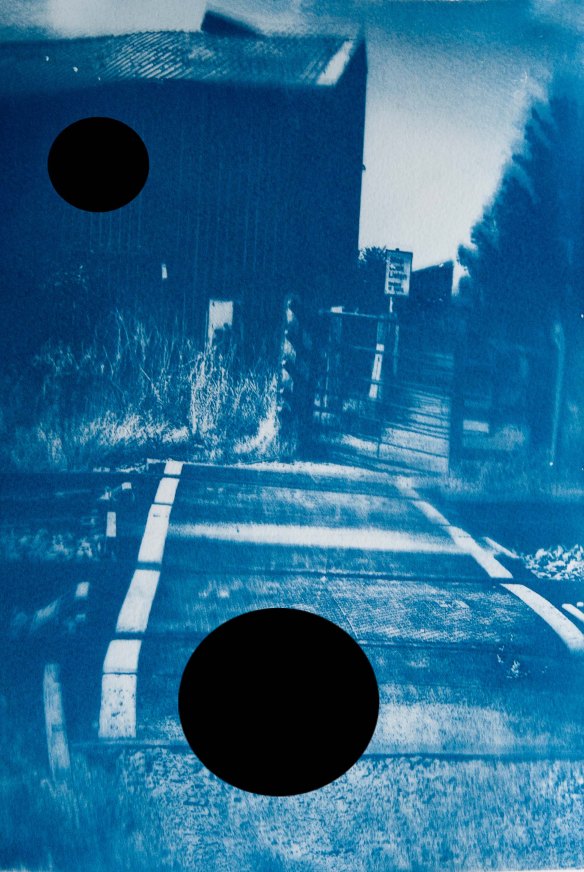
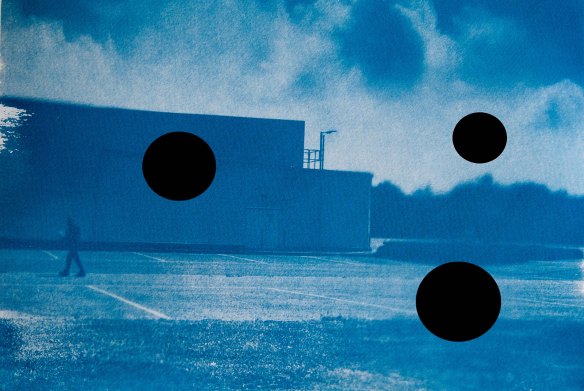
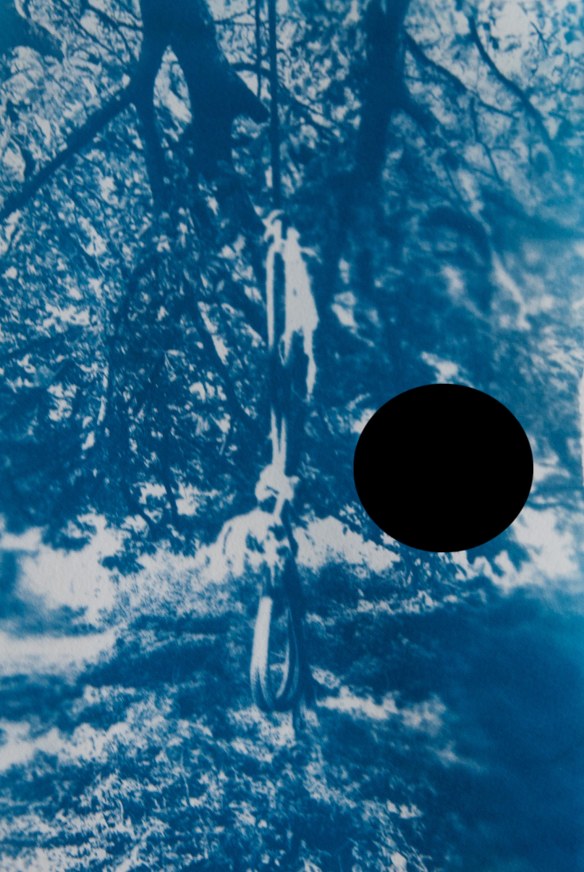
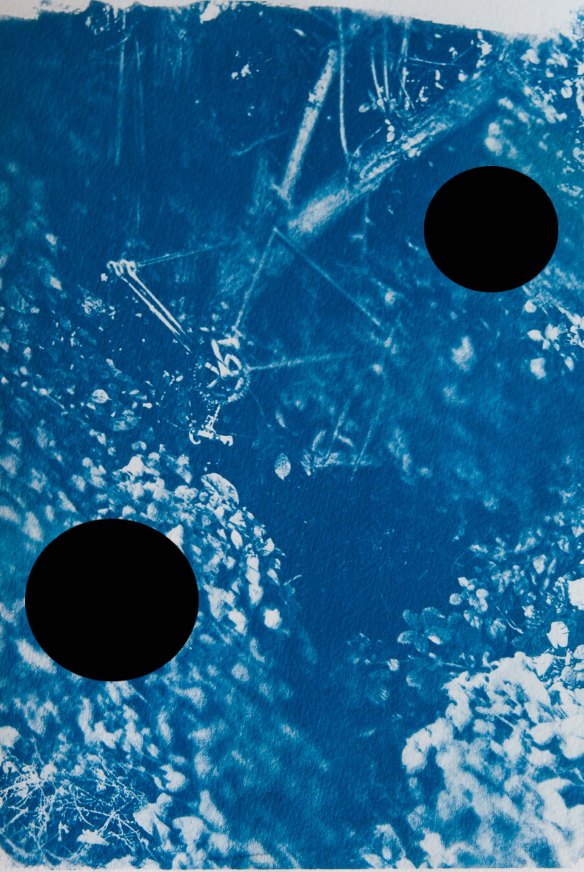
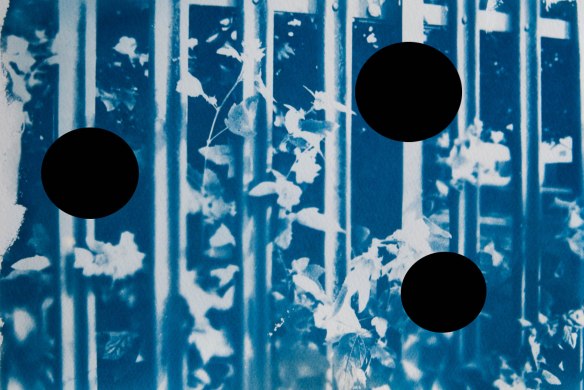
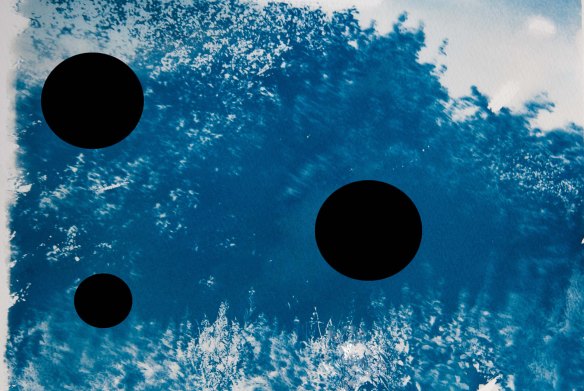
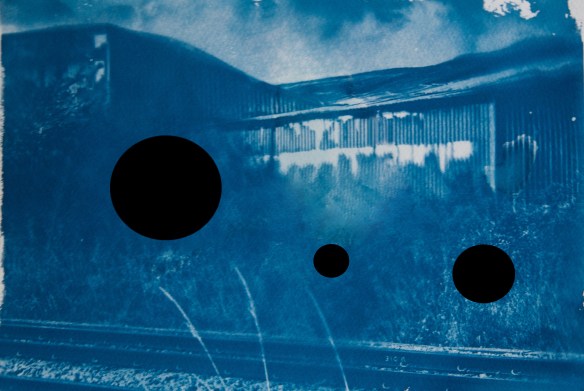
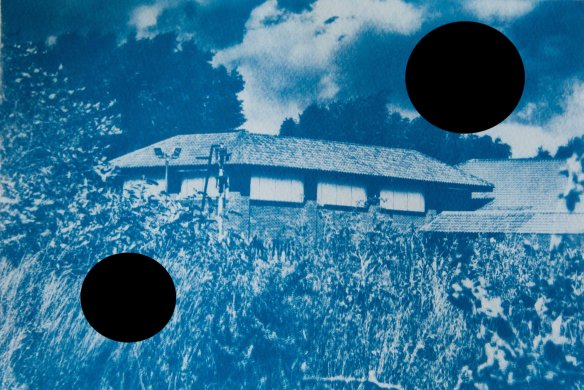
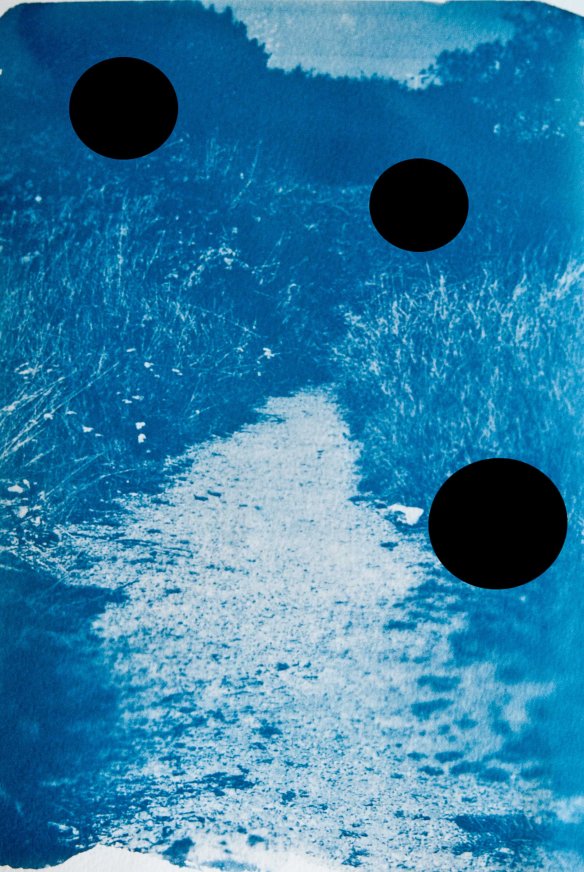
The cyanotype colour works well as an emotive aid, evoking a sense of melancholy and turning everyday landscape scenes into something uncertain.  It also adds drama to the optical distortion and diffusion created in the cyanotype process which in turn adds to the sense of the uncanny and uncertainty.   The black graphics disturb the notion of the photograph depicting something that was once in front of the camera as well as offering a psychological gateway.

I am pleased to have achieved a balance between descriptive and analytical writing as feedback from previous modules has indicated that my content is a little light on the analytical aspect and this is something I have been consciously working on in response.

I have a list of follow up actions to work through:

  • Include details of the creative process leading to submitted assignments
  • Develop this assignment further by making physical cuts in the cyanotype prints rather than adding the black shapes digitally (due to time constraints I will carry this out at the end of the module prior to assessment)
  • Investigate Ackroyd and Harvey who developed grass seed that could retain photographic impressions for a long time.  I have heard of this before and I have an idea surrounding grass for a later assignment so this will be useful research
  • Look at Freund’s paper on the uncanny with a view to developing assignment one further
  • Look at John Balldessari’s work using coloured dots
  • Tidy up missing references and spelling in my learning log.  I have started to go through this and it is part of my standard workflow prior to assessment so I will continue to read back through previous submissions and amend as required.
Assignment One – Beauty and the Sublime

I spent a lot of time thinking about the sublime for this section of the course and what it means to me.  For me it is a sense of longing mixed with trepidation, of desire for something mixed with a sense of uncertainty or danger.  I saw several examples of works that represent the Sublime; a common subject in this area is the sea as I discovered in works by Tacita Dean, Nadav Kander and Dafna Talmor.

Thinking about my own experience, as a parent the greatest day to day fear is of something happening to my children.  My daughters are of the age to be beginning to forge their own independence, with some of my eldest’s friends allowed to ‘hang out’ with others in various public spaces.  Whilst at my aunt’s recently she told me that an unexplored World War Two bomb had been found in the woods where we used to play as children and I distinctly remember as a child seeing a bra hung from a tree and wondering what had happened to its owner.  It is the attractiveness of these places that are so desirous to youngsters with their ability to stir up mixed emotions of being grown up coupled with the possibility of a sense of the unknown, even danger and the parents’ over-imaginative visions of terrible accidents and abduction that I have chosen to explore with this project.

Having seen Mark Preston’s work Zone A – A Palestinian View of Jerusalem I became interested in the cyanotype process and liked the idea of using it on a more industrial subject other than the usual delicate florals with which it is traditionally associated in art.  I also looked at the work of Dafna Talmor and liked the idea of holes in the image seeming to represent the uncomfortable, even dangerous.  Similarly, Aliki Braine uses holes in her work, this time to encourage the viewer to fill in what is missing from their own imaginations.

With the above in mind I have created a series of cyanotypes of the places children and youths like to play and congregate independently, the places where they can be free of parental influence for a short time.  Such locations are beautiful in their own way by being desirable and exciting not only for the escape from adult control but also the very fact that parents often do not really like their children playing there coupled with the sense of unknown danger.  The sign at the railway line wants of the danger of trains, a lone man walks across the deserted car park, a crudely made rope swing resembles a noose, all alluding to the fear of the parents and hint at the possibility of something going wrong.  The black circles resemble holes that allow the viewer to insert their own imaginary fears and thus the work becomes more personal.

I would like to develop this work further and experiment with cutting actual holes of different shapes into the images.  I have not done this at this stage due to the time constraints of making individual cyanotypes and the need to move on in the course.  I would also like to try burning the images and investigating other methods of destruction to find alternative ways of representing the trepidation element of the works.

DSC07548-Edit-Edit-EditDSC07550-Edit-Edit-EditDSC07551-Edit-EditDSC07552-Edit-EditDSC07553-Edit-EditDSC07556-Edit-EditDSC07557-Edit-EditDSC07558-Edit-Edit

DSC07554-Edit-Edit


Mark Pearson

I discovered Mark Pearson’s work at a Plymouth University alumni show.  Pearson is a Scottish photographer specialising in photojournalism, covering conflict and natural disasters.  His work has taken him to places such as Pakistan and Israel and he has covered the after-effects of tsunamis and earthquakes.  He is particularly interested in man-made physical boundaries.

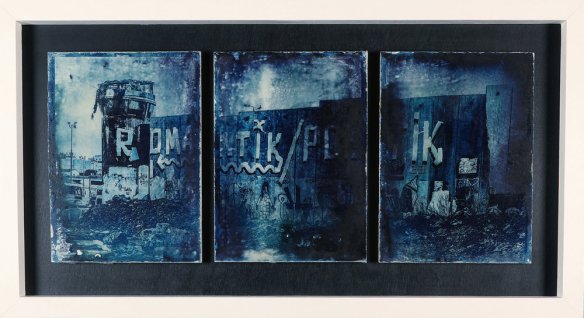
At the exhibition I saw the piece Zone A – A Palestinian View of Jerusalem which is a cyanotype triptych on concrete.  This piece was created in collaboration with concrete sculptor Noel Brennan.  The work depicts the wall separating West Bank Palestine from Israel, an unusually stark subject for a cyanotype, a method traditionally artistically associated with flora and fauna and commercially with the crisp, perfect lines of a blueprint.  In contrast, Pearson’s work enters the war zone, the concrete base a sculptural reference to the wall itself.

Zone A - A Palestinian view of Jerusalem    Cyanotype Triptych on Concrete, 122cm x 65cm    A chemical experiment and collaboration project in photochemistry and concrete. Cyanotype triptych on concrete panels, with a digital image I shot in Palestine that is chemically embedded onto the surface of the concrete, 2018.

The monotone approach works well with the graphic, angular lines of the subject matter.  The textural surface of the concrete adds a hard, grittiness that reflects the harsh nature of the events happening in this environment.

http://www.markpearson.co.uk [Accessed 26 December 2019]