Research – Aliki Braine

Aliki Braine is a Paris-born artist currently working in London.  Her work investigates the photograph as material object – a theme I became interested in during the Digital Image and Culture module.  She sees various methods to achieve this, including punching holes, applying stickers and drawing with ink directly onto negatives.

Many of her works study Old Mater paintings.  For example, her work The Hunt is based on Paolo Ucello’s The Hunt In The Forest.  Ucello’s huntsmen and animals in their bright colours are replaced in Braine’s work by a series of black, punched holes of varying sizes.  The viewer is left feeling uncertain as to what should be where the holes are, and to fill in the blank spaces from their imagination.

Image result for aliki braine the hunt"

The Hunt (2006)

In other works, the main subject is obliterated almost completely, leaving the viewer to complete the recognisable symbol in their own imagination.  By obscuring familiarities in this way, Braine raises questions about the viewer’s assumptions and whether a visible trunk and black shape in a field can be experienced and interpreted in different ways.

Image result for aliki braine"

Draw Me a Tree… (Black Out) (2006)


References:

http://www.alikibraine.com [Accessed 5 January 2020]

Shore, R. (2014) Post-Pohotography The Artist with a Camera. London: Laurence King Publishing Ltd

Exercise 1.9: Visual Research and Analysis – Social Contrasts

his exercise asks us to find different social perspectives of the same place.

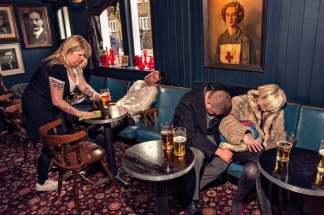
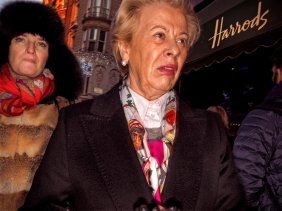
Dougie Wallace is a British street photographer who has lived in Blackpool and Shoreditch.  His images of London show contrasting sections of society.  His images are brash and bold; his subjects grotesque and larger than life.  His project Harrodsburg focuses on the mega-rich of Kensington, a freak-show of bad facelifts and lurid sartorial tastes.  His objective is to focus on ‘the one per cent’ in an effort to highlight the disparity in society.  It is not a sympathetic portrait of the wealthy elite but personification of the monstrousness of the vast wealth of some in modern society while others are living in abject poverty.

        made in chelsea- gauguin.jpg           made in chelsea-versace twins.jpg

        made in chelsea-Messerschmitt.jpg          made in chelsea-2784.jpg

In contrast the subjects of Wallace’s Shoreditch Wild Life seem less glossy, less shiny, even if they can be just as gaudy.  Any softness in their faces is the result of a life well-lived rather than of artificial fillers and they seem somehow more authentically  human.  This is not a contrast of rich versus poor although wealth or lack of is an obvious factor, but more a contrast of class.

shoreditch exhibition-the royal oak.jpg        shoreditch_new_2012-cabby hot salt beef.jpg

shoreditch brick lane-greedy toy granny.jpg        sleep shoreditch exhibition.jpg


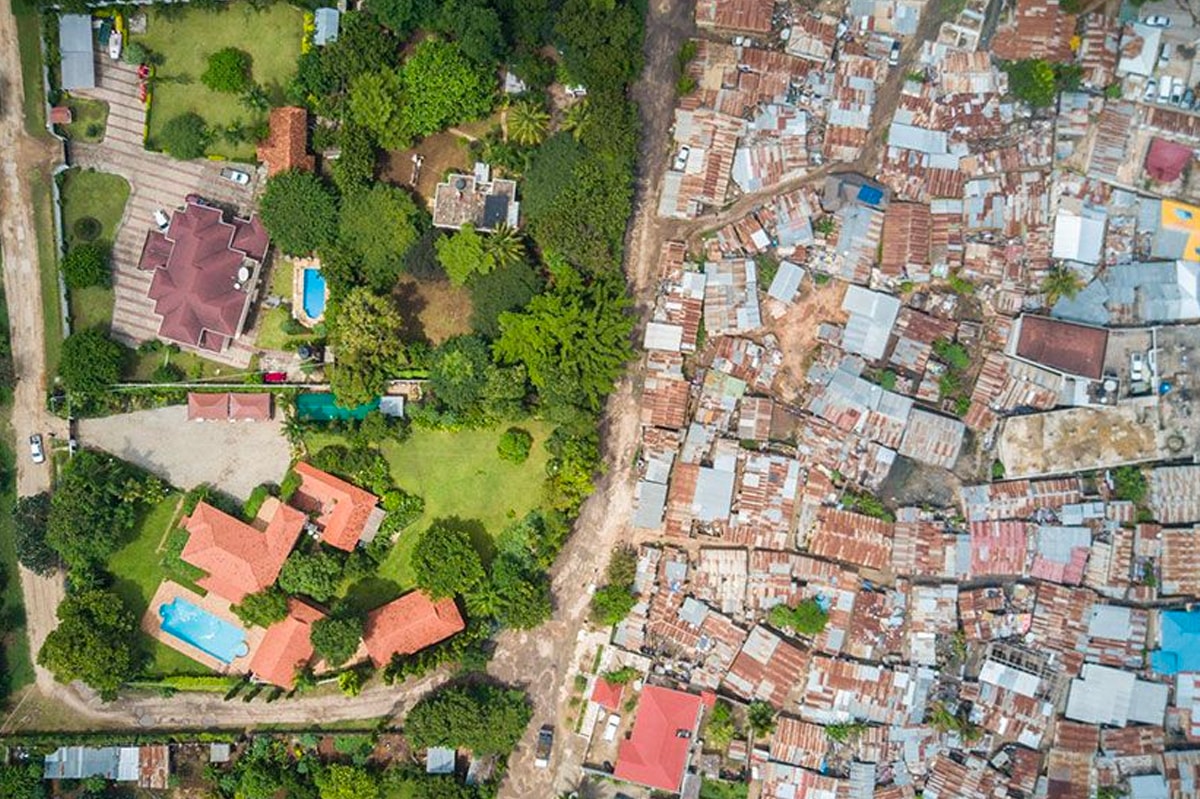
Johnny Miller is a documentary photographer based in South Africa.  His work addresses issues of human inequality including social and cultural perspectives.  His drone-photographed project Unequal Scenes depicts urban scenes from above, highlighting the stark contrast in living conditions for the rich and poor in countries such as Mexico, South Africa and the United States. Using a single image to depict the close proximity in which extreme poverty is placed to the privileged few is a shocking reminder of the unequal distribution of wealth in global society.


Mexico City                                                   Vukuzenzele


Johnny Miller 'Unequal Scenes' Drone Photography   Johnny Miller 'Unequal Scenes' Drone Photography

Nairobi                                                           Tanzania


References:

http://www.dougiewallace.com [Accessed 4 January 2020]

unequalscenes.com [Accessed 4 January 2020]

http://www.millefoto.com [Accessed 4 January 2020]

http://www.lensculture.com/millejoh [Accessed 4 January 2020]


Exercise 1.8: Zone System in Practice

The Zone system was formulated by Ansel Adams and Fred Archer as a way of determining exposure.  The tonal scale is divided into eleven segments as shown below.  given that in photography we do not want pure black or pure white (under- and over-exposure), for practical purposes there are nine zones.

The zone system as invented by Ansel Adams. A helpful way of reading the contrast in a black and white photo. But is it still usable in the digital world. I think it does, with a little tweaking. But you have to change the base rule of Adams concerning ex

Whilst I don’t specifically follow the Zone System, I do follow its principles instinctively, viewing a scene and adjusting exposure in camera depending on the overall tone.

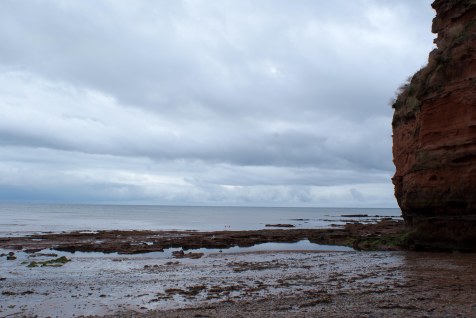
In the image below I was conscious of maintaining exposure in both the rocks and sky.  To maintain a dynamic range within my camera’s capabilities I used the rock to shield the sun and kept the exposure as dark as I could without underexposing the rock.

DSC07495

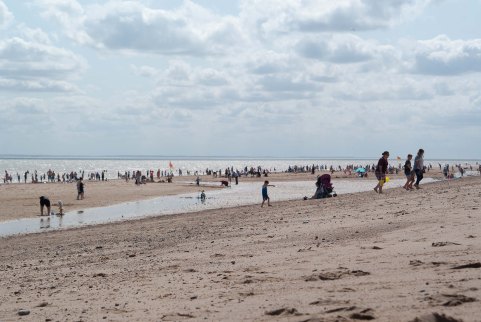
In the below image of a beach on a sunny day I had to prevent the people from becoming silhouettes whilst being careful not to overexpose the sky.

DSC07127-2

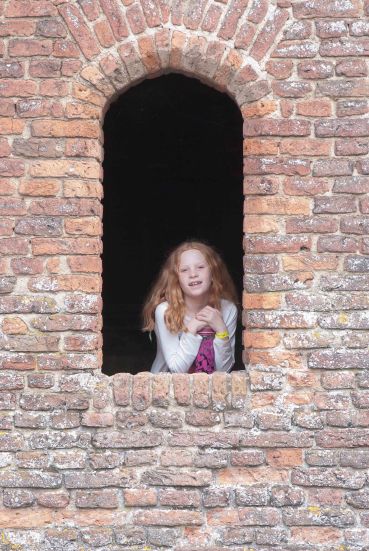
In the portrait image below I kept some definition in the shadows whilst ensuring the girl’s white top did not overexpose.  On the high resolution version of this image, enough detail is kept in the shadows to see a cobweb in the window.

DSC07284


fstoppers.com/education/how-use-ansel-adams-zone-system-digital-world-417047