I attended the online talk Photography in the Age of Catastrophe which was a discussion which was part of Riga Photomonth, an international photography festival that takes place in Latvia. The talk was hosted by photographer Karolina Gembara from the Archive of Public Protests, Poland, in discussion with trauma photographer Nina Berman and journalist Tanvi Mishra from Caravan Magazine, India.
The talk opened by explaining that catastrophe in the photographic realm covers many events including:
COVID 19
war
conflict
activism
climate change
social unrest
Karoline explained that catastrophe events are not just those immediately apparent, but also include those occurring on a longer term trajectory such as the rise of the far right, climate change and fake news.
The discussion was engaging and interesting and stressed the expectations of photography to be involved in such issues because documenting being present carries a certain authenticity. The panel discussed how there is value embedded in the act of being present at such events when certain slices of society have ‘checked out;’ an act of privilege. In contrast, photographs confront and challenge viewers to act and take responsibility.
There was an interesting discussion on how dialogue around activism often talks of changing the world but sweeping change on such a large scale is usually unlikely and it is enough to make changes small enough to only affect one person. This echoes my approach to landscape photography; whilst there are numerous photographers currently addressing climate change as one large subject, I am more interested in picking out small changes and highlighting those.
An interesting point made was that the driving force behind activism is often that which is important but which cannot depicted in a photograph. Indeed, the issue being protested often becomes secondary to the battle over ‘territory’ (the streets) with the activists claiming space but the police trying to recover it. It is important for photography to teach, to help others learn via a number of images, rather than the photographer striving to create one iconic image.
A further point for me to bring to my own practice was that photography is not done when the picture has been taken. The photographer must then use the image to communicate further, and choose the method of doing so, whether that be in photobooks or some other medium. However, if photographers want their images to have more impact than merely sitting within the art world they must practice public speaking (as many photographers do not feel comfortable in this) and take their images into the community setting.
Contemporary discourse surrounding Landscape photography considers how landscape photographers can move beyond mere observation of the land and become more deeply immersed in what surrounds them. In his book Camera Lucida, Roland Barthes questions whether landscape is ‘itself only a kind of loan made by the owner of the terrain’, thus suggesting ownership of the photographic subject. If Barthes’ statement is true, can we establish a greater and more direct connection with the land; to remove that level of distance that he suggests?
Land Art moves beyond representation as the artists strive to work with the land, often nature, rather than being a step further removed, looking at the land. A stone is not a representation of a stone in the form of a drawing, or a human-crafted sculpture made from representative materials; it is an actual stone, thus the land becomes the artwork. If, as John Ruskin states in Modern Painters: Of Mountain Beauty, ‘a stone, when it is examined, will be found a mountain in miniature’, then the scope for Land Artists is immense. However, if the land is the artwork, what does the viewer who visits a gallery see when they look at photographs of the artwork? Are they merely viewing reproductions, like visiting the Louvre to see a poster of the Mona Lisa rather than the painting itself? What does the photograph bring to Land Art? And what can Land Art bring to landscape photography?
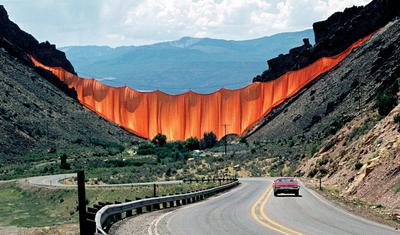
At first glance, photography’s role in Land Art is straightforward; unable to bring a piece of work that spans several miles to the gallery, Land Artists rely heavily on photography to bring their work to a wider audience and engage with the art market. For example, the large-scale works of Christo and Jeanne-Claude rely heavily on photography to be brought to a wider audience: works such as Valley Curtain in Coloarado; a 381m wide gigantic orange-red coloured curtain in the Rocky Mountains.
With nothing physically to sell, the land artist subverts the art market by preventing the traditional big money sales of objects to be displayed in a multi-millionaire collector’s home. The Christos’ hugely expensive projects are largely self-funded by the sale of drawings with the occasional top up from grants.
Bringing these works into the gallery setting in some way is also necessary for some of the Land Artists who work in remote and inaccessible places to get their work seen,. Without a viewer, the art is arguably an expression of the artist’s ideas that no-one else sees; akin to a diary, or an artist’s sketchbook piece, a private musing for the protagonist’s own artistic progress (of course this is only one point of view as the discourse around ‘what is art’ is varied and lengthy). Thus, the photograph also serves as a tool for the communication and conveyance of the artist’s idea, a means of engaging the viewer, a method of transforming the work from sketchbook piece to ‘art’. The gallery in such instances becomes the artists’ forum for communication; the photograph the medium of that communication. Thus the photograph becomes the replacement for the original art piece, that is to say its tangible or visible form, an extension of the original. In his book In Land, Ben Tufnel defines Land Art as ‘a form of Conceptual art that engaged with earth and landscape’. Tate.org.uk describes Conceptual Art as ‘art for which the idea (or concept) behind the work is more important than the finished art object’. Thus the idea is key; the format (or existence) of the physical artwork itself is secondary. Gombrich in A World History of Art reinforces this perspective by stating that the photograph in Conceptual Art was ‘not thought of as another category of art to be placed alongside painting and sculpture, it was a carrier of ideas and cultural messages’. Gombrich goes on to state that the photograph of Conceptual Art was not an ‘art object’ in itself ‘to be appreciated for its formal, expressive or other aesthetic qualities’.
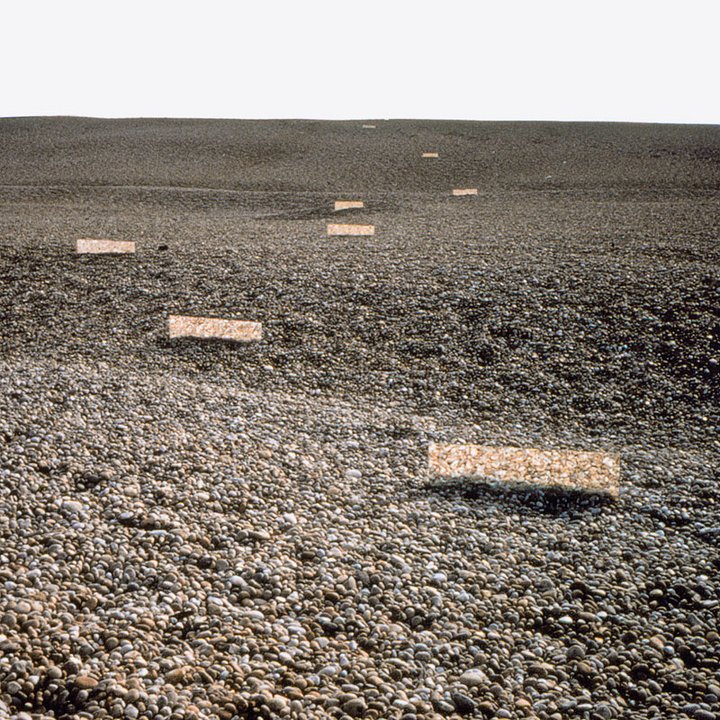
However, Nancy Holt’s view of the photograph’s role in Land Art is in contrast with that of Gombrich as discussed during a conversation about Robert Smithson’s mirror work Mirror Displacement at Chesil Beach Dorset in a 2019 interview with Simon Grant for Tate Etc: ‘It is interesting to think about the fact that an artist takes his material with him into the landscape, sets it up, makes a sculpture and then photographs it, and the photograph becomes the art. The landscape and the art can shrink to the size of something you can put in your pocket – the size of a slide’.
Holt’s view that the photograph becomes the art is reinforced further when considering how artists have photographed the works. The composition is often carefully considered; in the example above, the image has been captured to show the mirrors reflecting the stones arranged in a line that meanders from side to side and ultimately leads the eye through the full depth of the image. The sky is included but featureless and pale grey; similarly there are no landmarks such as the concrete walls that flank Chesil Beach to be seen. The image is cropped so that the beach appears to be a wilderness; there is nothing to give a sense of scale to the viewer and one imagines the furthest mirror to be far in the distance. There is no hint of the nearby sea. By careful composition and omission of unwanted elements, the artist can construct a landscape that they want the viewer to see and create a photograph that goes beyond simple reproduction and can become an artwork in itself.
Similarly, in his book Land Art and Land Artists, William Malpas notes that ‘Andy Goldsworthy photographs his sculptures often looking down on them, so the surrounding landscape is not seen. He edits out unsightly buildings or roads’. The Land Art photograph is sometimes not merely a reproduction, then, but, on a simplistic level, a work in its own right that has been edited in some way by the artist or their collaborator. I think the full truth lies somewhere between Holt’s view that the photograph becomes the art and Gombrich’s that it is merely a carrier of messages; that the photograph is a bridge to the real artwork for the viewer and that an element of participation and imagination is required from the viewer to connect and complete the whole artwork. Indeed, Malpas reports that Goldsworthy himself has said ‘that it is important for the viewer of his art to fill in the gap between the photograph of the sculpture and the real sculpture that he made someplace else.’ Thus a level of interpretation and interaction is required by the viewer.
In contrast, walking artist Richard Long claims to want to make photographs of his work as simple and straightforward as possible. In Michael Lailach’s book Land Art, he quotes Long as having said ‘the photograph should be as simple as possible…because my art is very simple and straightforward, I think the photographs have got to be fairly simple and straightforward.’ Long’s locations are often anonymous, his walks solitary; the viewer is never expected to be able to view the work in the traditional sense but can only know his work through photographs, text and maps. What the viewer experiences is his memory, what he saw whilst making the walk. As Liz Wells states in her book Land Matters, ‘they record something of that which was experienced … for the audience this is a story recounted, in word and image, … an account that testifies to the experience of the walker but cannot replicate it.’ Long’s photographs bring to the viewer’s mind their own recollections of similar walks and thus the viewer’s own reaction to Long’s images is influenced by their own experiences and preconceptions of walking. In a way, this is linked to the family holiday photograph; upon seeing someone else’s family album we can recognise and identify with their experiences and, on examining our own thoughts further, can imagine events and settings beyond the actual image itself. in the same way, the viewer must metaphorically place themselves in the shoes of the artist walker to fully gain an affinity with the ‘art’, that is the experience of walking itself.
For all of Land Art’s revolutionary nature, the eschewing of the traditional arts markets and materials, and Long’s claims that his photographs are purely documentary, a look on Long’s website at photographs of his ‘sculptures’ reveals a reasonably traditional, picturesque approach to landscape photography. With a penchant for dramatic landscapes, his images carry a touch of the sublime and follow conventional rules on composition, horizon lines, leading lines, depth of field and so on.
Of course, once many of Long’s walks are complete, the photographs are the only thing that remains as evidence that they actually happened. There can never truly be proof that events such as Long’s solitary walk actually did happen; he could be making it up. As Malpas states: ‘How does one know something is ‘the real thing’, when all one knows of it is through images’. And yet, throughout the history of photography we see images repeatedly trusted as document to an incontrovertible truth. In Land Art, stones may get moved or be so arranged that they do not register with a passerby as a deliberate act; lines in the grass are even more ephemeral, lasting mere hours. This is the case with the work of many Land Artists and indeed some works lasted only minutes or even seconds: Hans Haacke’s Sky Line, for instance, was a performance staged in Central Park, New York whereby he released a number of white balloons affixed to fishing wire into the sky, to be taken up and away by wind energy. As the Phaidon-published book Hans Hacke states, ‘Hacke’s works with air relied totally on the artwork’s functioning in time.’ Photography thus becomes the essential medium for recording the event, Roland Barthes’ That-has-been’; documentary evidence that it really happened.
Transition and transformation are key attributes of Land Art; after all its media, the land and landscape are in a continual state of flux. Robert Smithson’s Partially Buried Woodshed had twenty truckloads of earth loaded onto it until its central roof beam cracked. The work was designed to slowly break up under the weight of the earth and be gradually taken over by nature. On land owned by Kent State University, Ohio, the work was graffitied upon with an anti-war slogan by protesting students, before being mysteriously cleared away over a decade later. The photograph becomes evidence of the changes in such artworks, where even the artist cannot witness every subtle development without living on site and the viewer may only see it once in person, if at all. The photograph becomes a marker of history, capturing a moment in time. In a way the photograph becomes the opposite of the Land Art, recording, preserving, freezing while the art is constantly evolving, unfixed, changing, impermanent. The photograph becomes the supplementary story of the work’s development over time.
One of the enduring attractions of photography is its ability to perform so many different functions in a succinct form and its use in Land Art is a prime example of this. The photograph as document, a piece of history, record, conduit for ideas, autobiographical statement, evidence of existence, or a piece of art in its own right; photography and Land Art form a symbiotic relationship where each feeds and enhances the other. Photography is a vehicle which traverses the barriers to bring Land Art to the majority of its viewers: those who cannot view it in situ. And perhaps Land Art, particularly that by the more subtle practitioners like Richard Long and Andy Goldsworthy, can act as a guide to the landscape photographer, for if we take the cue of artists like Long who consider the process to be of more importance than a physical object, maybe landscape photographers could alter their mindset to incorporate the process of making images as part of the work itself rather than solely concentrating on the end result, and thus can surely become closer to the land by engaging more holistically than merely viewing and photographing.
References:
Barthes, R. (1982) Camera Lucida: reflections of photography. London: Jonathan Cape
christojeanneclaude.net [Accessed 10 January 2021]
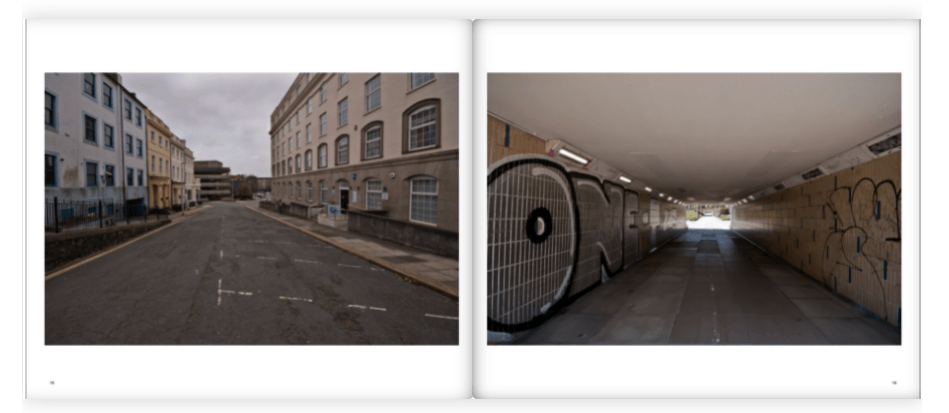
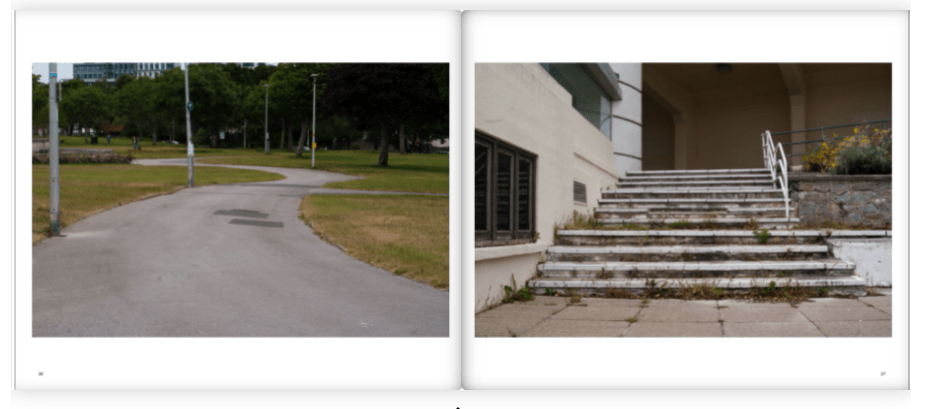
One November’s day few years ago, we took our then toddler daughter to her favourite local theme park. In contrast to the usual summer throng of visitors with their picnics and ice creams, and long queues for rides whilst under attack from children and wasps fuelled by a combination of sugar and sun, the park in the week before its annual winter shutdown was virtually empty, with just a scattering of families wandering between rides. No jostling, no hubbub, no frayed tempers, no children giddy with pent-up excitement; just an eerie silence punctuated by occasional subdued conversation. In theory, the thought of a theme park to oneself seems inviting, even preferable: more ride time; somewhere to sit down; no excess noise. However, the visit was not a success. The operator of my daughter’s favourite carousel had to stop the ride when she, the lone participant, became distressed at being repeatedly flung around in circles in silence. With barely anyone else there, the theme park had become an empty space, lost of its context and association with fun.
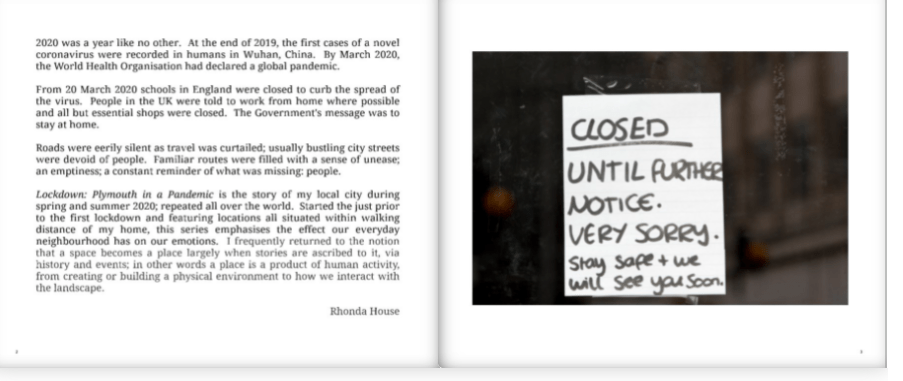
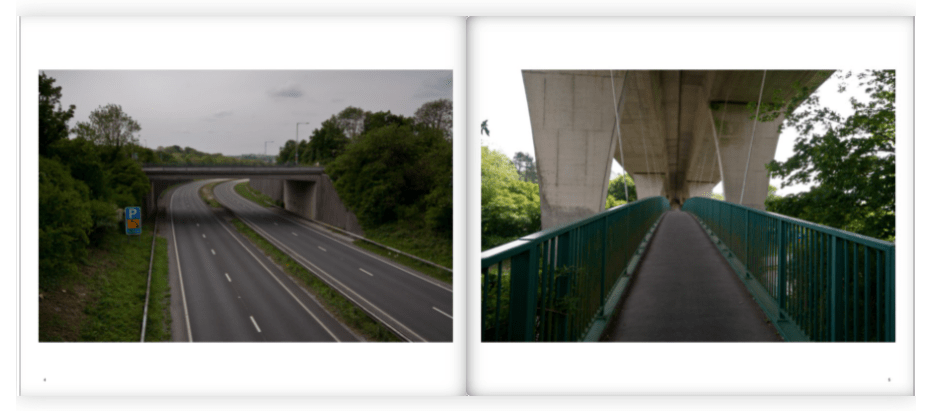
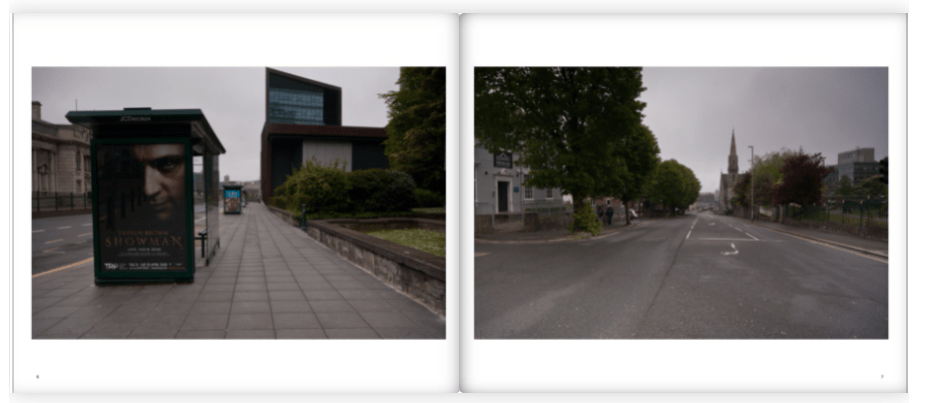
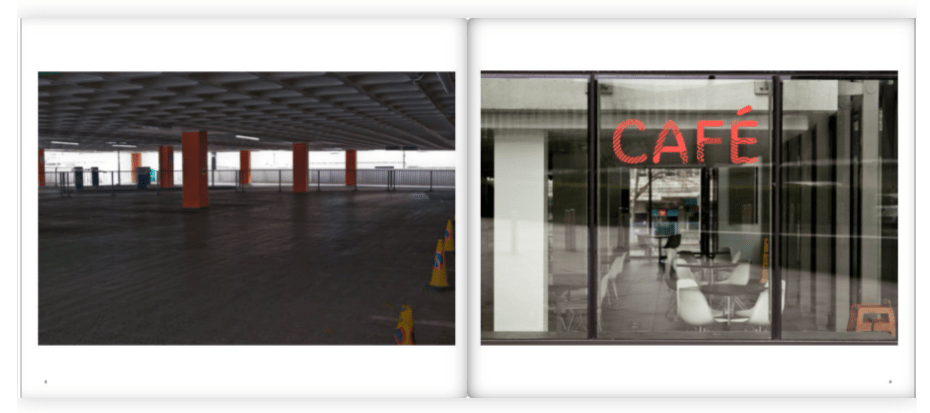
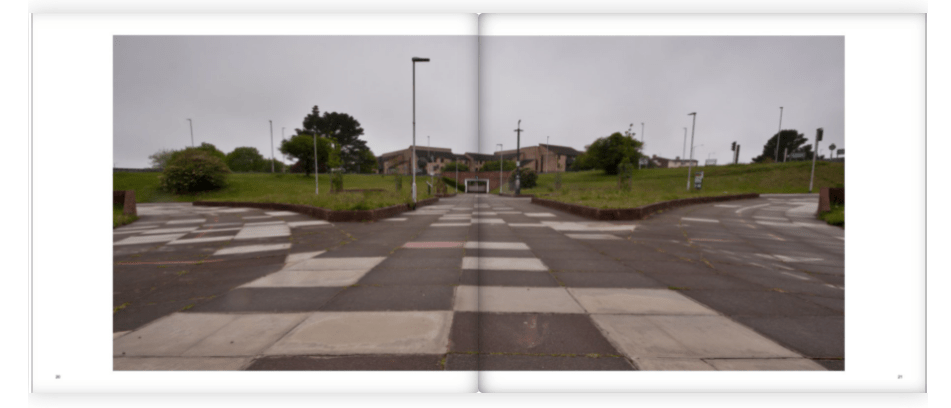
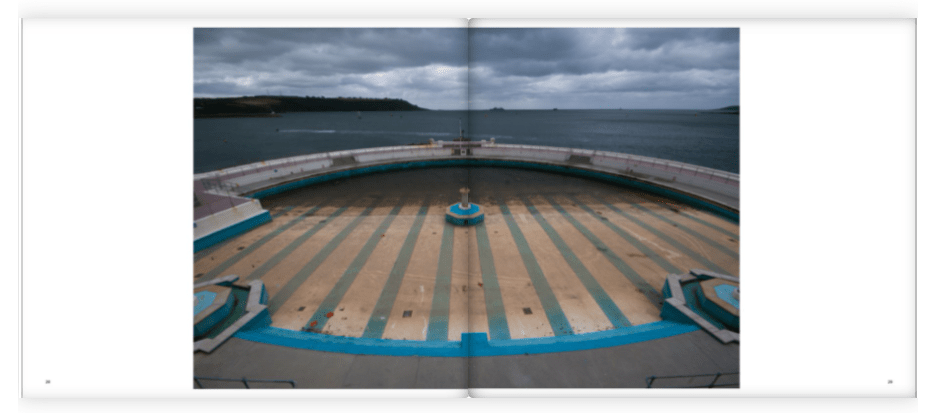
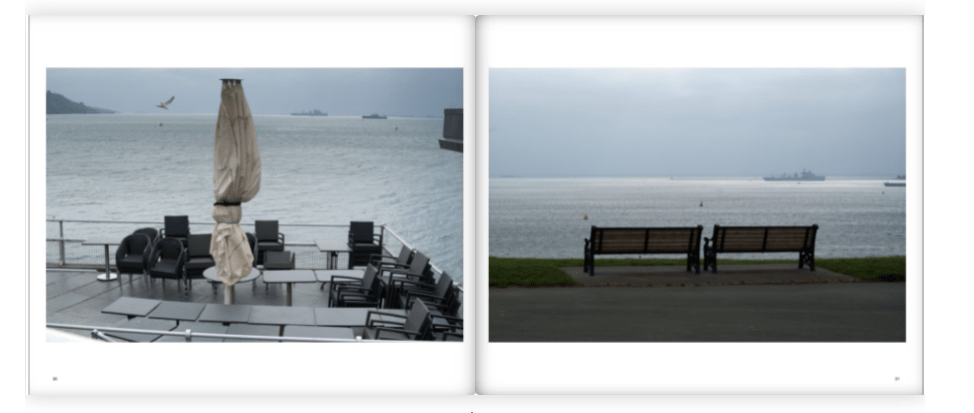
This scenario perhaps helps to explain, in 2020, the sense of unease experienced in cities all over the world at the height of lockdown restrictions imposed by governments in response to the Coronavirus pandemic. In considering this assignment, I frequently returned to the notion that a space becomes a place largely when stories are ascribed to it, via history and events; in other words a place is a product of human activity, from creating or building a physical environment to how we interact with the landscape. In the theme park example above, when normal human activity ceases to occur, the sense of place is lost.
In his book Places of the Heart: The Phsychogeography of Everyday Life, cognitive neuro-scientist Colin Ellard describes a 2012 study he conducted in New York. He took visitors to two sites and recorded their reactions, both physical and emotional: one site was a ‘long, blank façade’ of a supermarket; the other a lively area with restaurants, shops with open doors and windows and a ‘pleasantly meandering mob of pedestrians’. The results were, perhaps with hindsight, predictable: those people stood in front of the blank supermarket recorded low states of arousal and happiness; those at the lively site themselves felt engaged and positive and recorded high levels of arousal. Returning to the 2020 lockdown scenarios across the globe, this evidence raises concerns about what effect taking our daily exercise in an empty urban area is having on the collective mental health of city dwellers and is a subject that has been ignored in the media during the pandemic. Media reports of near-empty city centres focus entirely on the economic impact and make no mention of the psychological impact on those who are still frequenting the city streets; shop and hospitality workers, for instance.
I also looked at the work of Mat Hennek in my research for this assignment. Although not depicting lockdown but in fact representing the finding of pockets of quietness in otherwise bustling urban areas, his series Silent Cities shows beauty in stillness and gives a sense of holding one’s breath, waiting for the action to begin again.
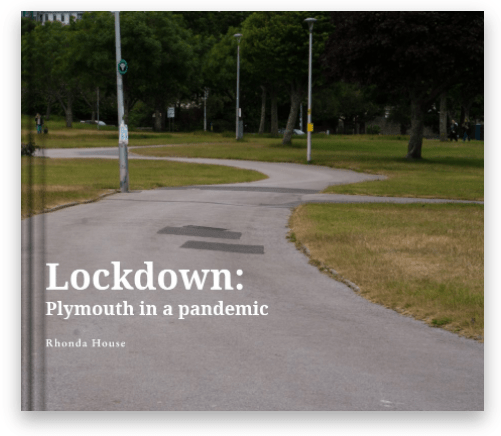
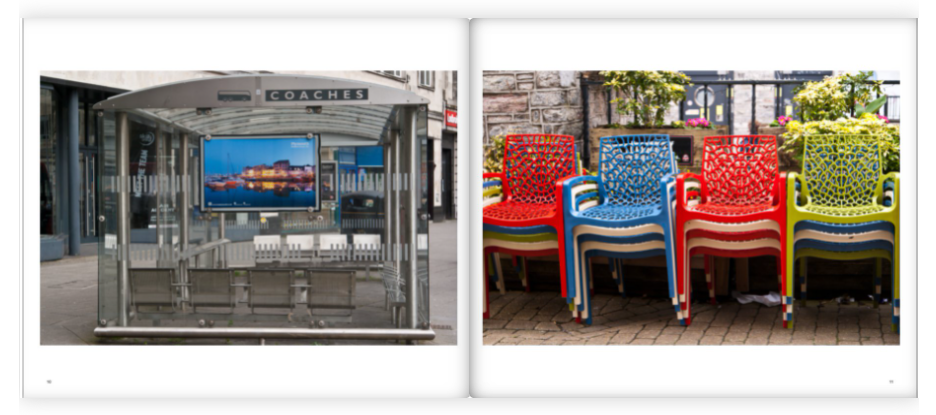
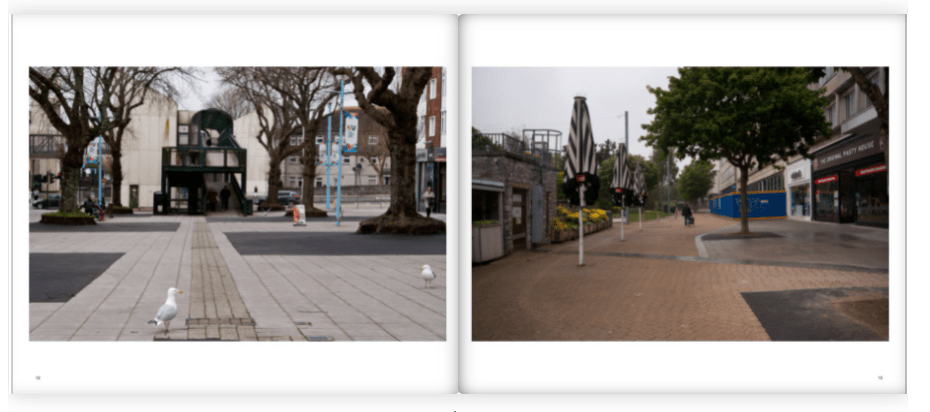
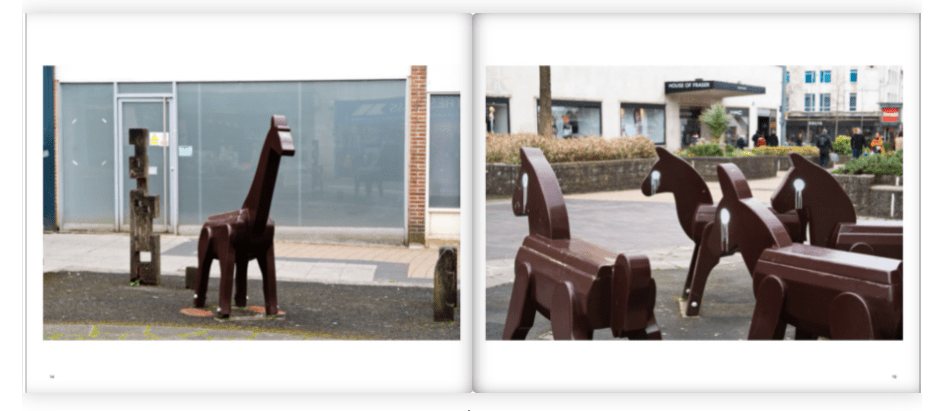
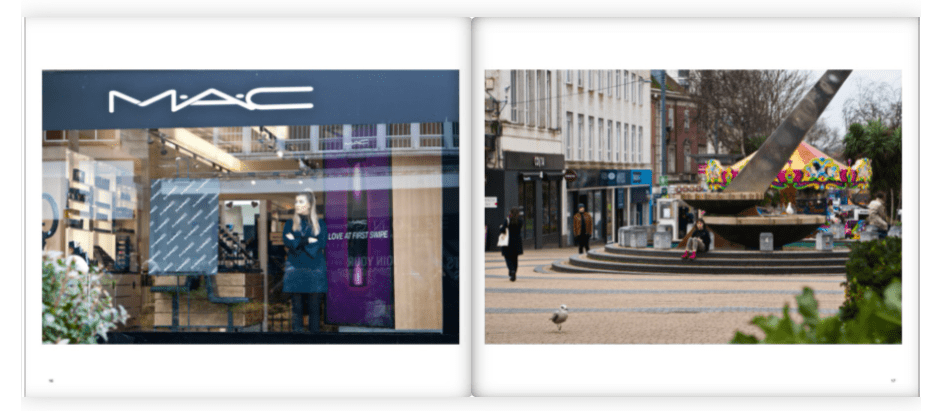
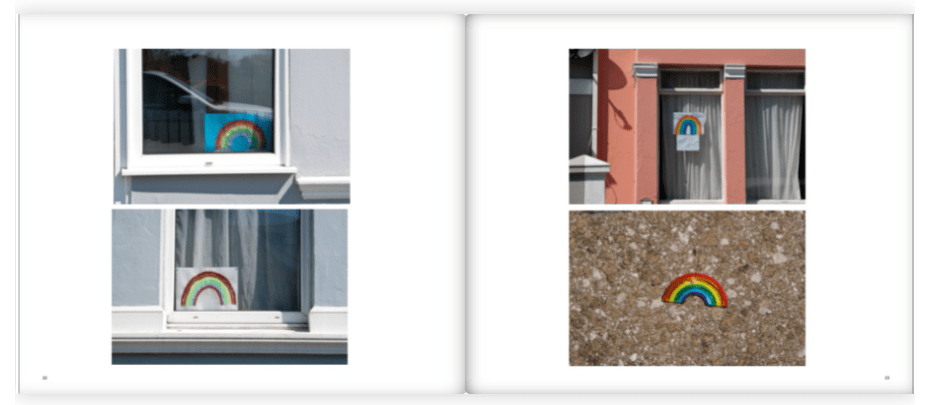
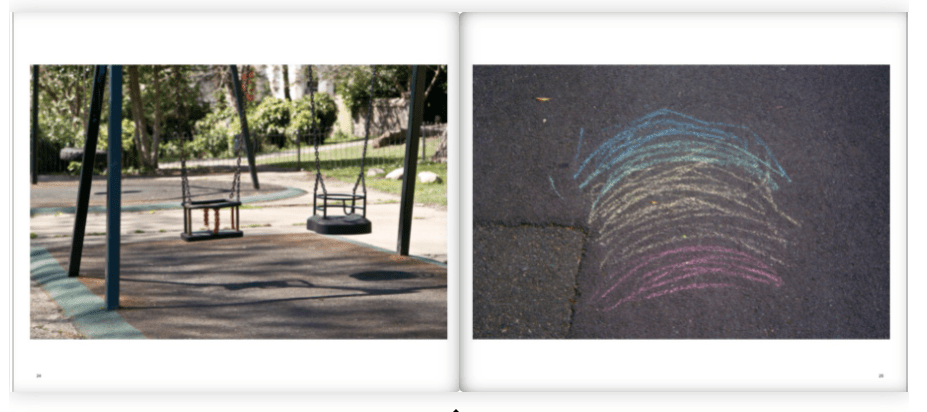
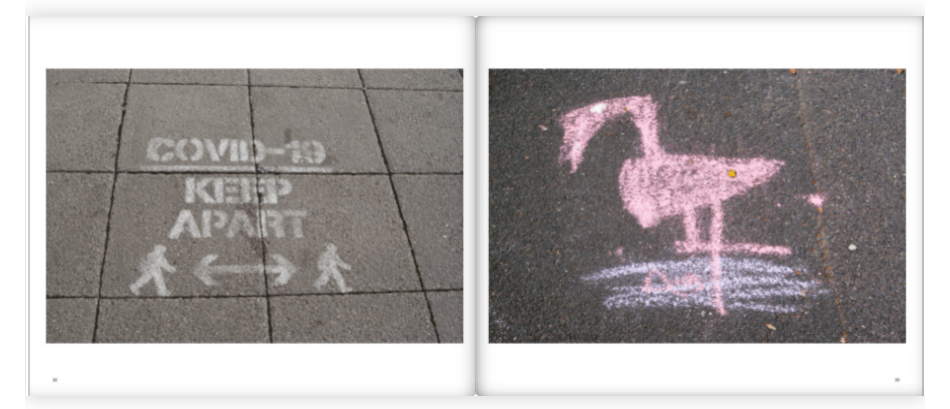
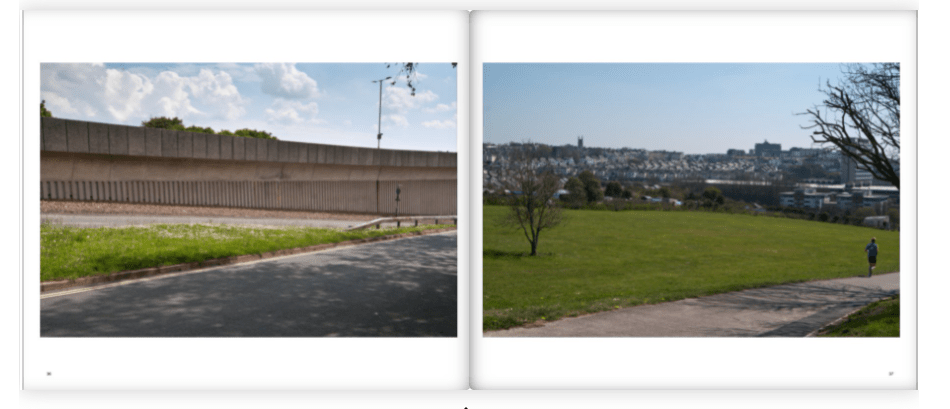
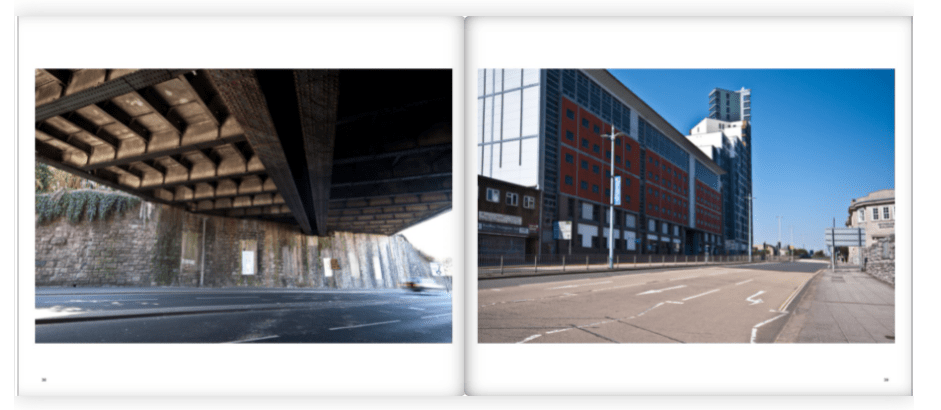
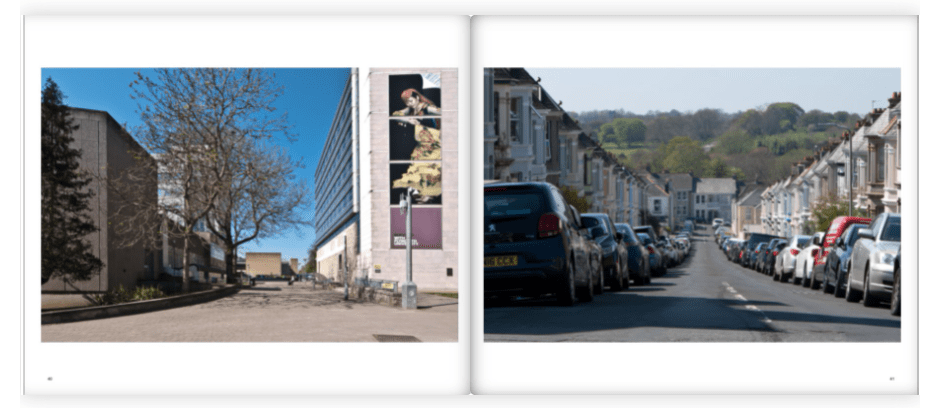
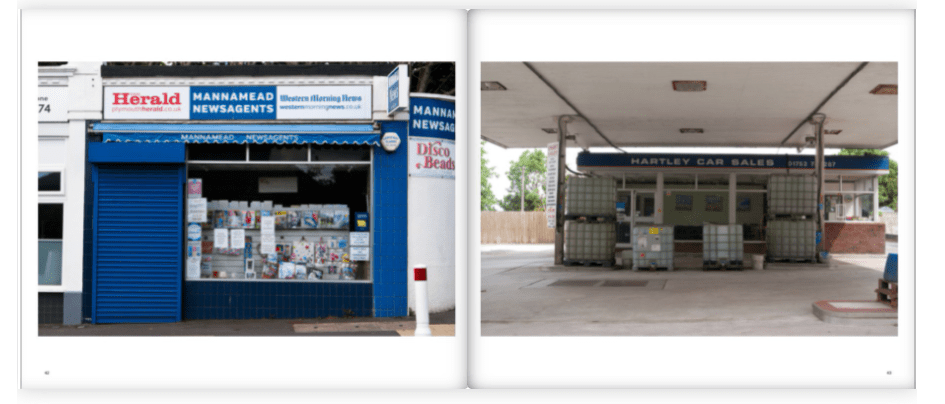
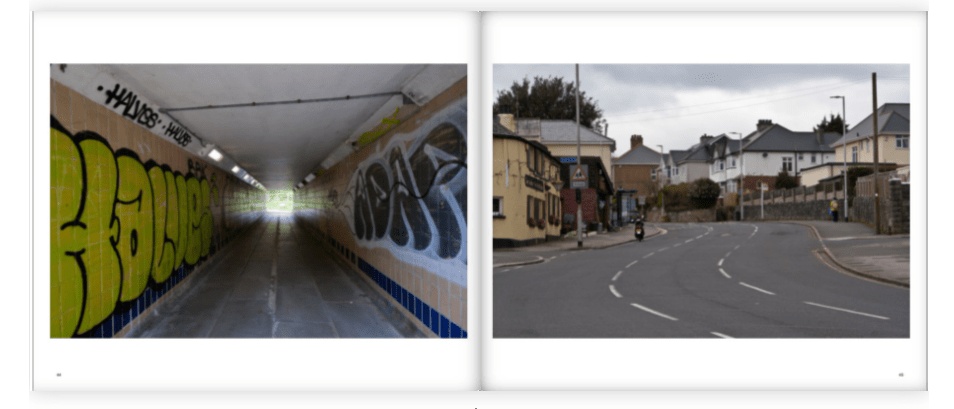
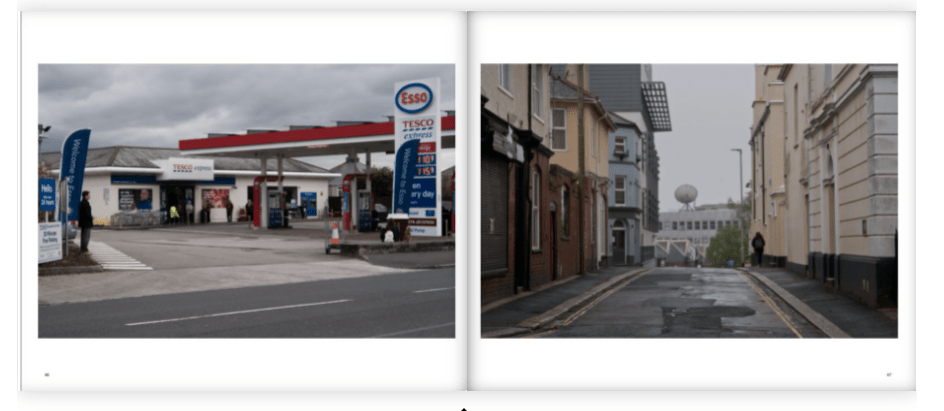
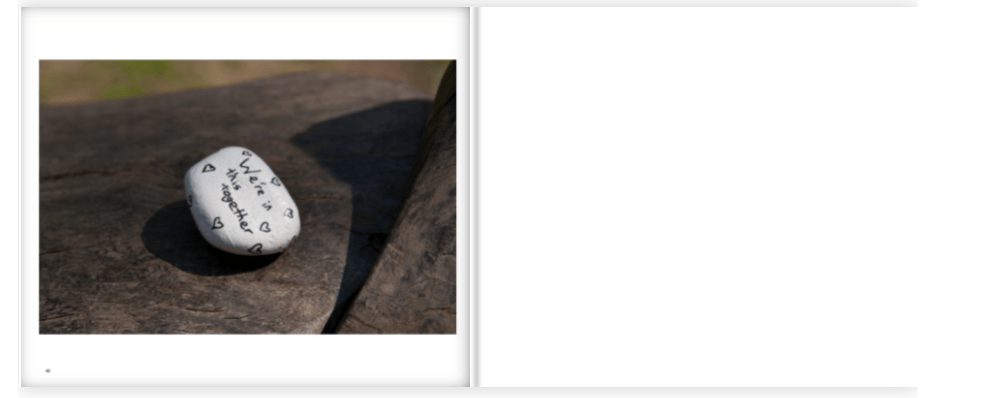
I decided to make my final shortlist of images into a slideshow as this is an unexplored area for me and I felt that adding accompanying music would enhance the atmosphere. I also created a book of the full series of images in response to tutor feedback as he felt that there were also strong images on my contact sheets.
The finished piece is intended to convey a sense of the melancholy coupled with a touch of the uncanny – but also a small injection of humour created by the birds that have entered some of the images.
References:
Hennek, M. (2020) Silent Cities. Göttingen: Steidl
I had laboured somewhat over Assignment 4, finding it difficult to pull together the various threads and concepts required to construct a major essay whilst job hunting through necessity and still working full time pending my imminent redundancy. However, I think I overcame the challenges to create a piece of writing that successfully conveys my ponderings around the crossovers between Land Art and photography.
My tutor feedback via Zoom was that the essay could stand as it is, should I choose to submit it unaltered. However, he also returned an annotated version of my essay with suggestions for my consideration. I had written in the first person for a personal perspective and he has suggested that I change to the third person. I can see that this makes for a more ‘academic’ piece of writing and intend to take up this suggestion. There are also suggestions on a couple of the opinions I raised, giving a different perspective. I will definitely review these and incorporate other viewpoints and considerations as well as looking at some of the suggested texts.
Annette Kuhn’s book Family Secrets Acts of memory and Imagination was recommended to me by my tutor. It is an accessible, semi-autobiographical look through both through her own family photograph album and those images that help to form collective memory; both memoir and cultural analysis through photographs.
A though-provoking read, the book speaks of the editing out from the family photograph album of events that do not fit the unspoken family narrative, of how the album is an edited ‘public face’ of the family that conceals secrets and undesirable events. The family album, she says, is not or the purpose of showing that one was once there but how we once were; an evocation of memory. I wonder if this is true today in the digital age? I feel that, in a world of social media and digitisation, the family photograph is intended more to promote the digital self, to create a self-centred ‘public face’ that is more about the individual than a family.
In her chapter on the Queen’s Coronation Kuhn notes the ‘vulgar’ rituals around public ceremonial events, of how collective memory and British culture is formed by these shared moments. I remember vividly the Queen’s silver jubilee of 1977, of dressing up, of garden parties, bunting and three legged races. These memories are part of the collective national culture but also part of my family’s narrative; the memory of my four year old sister biting a chunk out of a drinking glass triggered by photographs of the day but of course not recorded itself.
Kuhn notes sociologists Edward Shils and Michael Yound describing the ‘widespread adornment of houses and public places ….. a sacrificial offering’ and counters with her own, simpler explanation of the opportunity to forget one’s worries and ‘transform routine dullness and drabness into something special.’ It is an interesting discussion that makes me consider the way people hang England flags during a football World Cup, a subject I am interested in photographically.
Primarily, though, Kuhn’s book prompts the reader to think about their own family photograph album and question the meanings and motives behind the images. For me, it has prompted a deeper interest in my late mother’s old albums: the seemingly random order in which photographs are stuck in; the strong emphasis on her school days; why she kept photographs of old friends she had long lost touch with; the special outfits her daughters (myself and my sister) were dressed in. The stories behind he photographs are certainly more complex than I had previously considered and contain many more layers of meaning and lost memories. Since reading Family Secrets I shall spend some time going back through the albums and thinking about the hidden meanings behind some of the images, the cultural background, some of the people involved including the photographer, and the significance of what may have been omitted from the picture.
Kuhn, A. (2002). Family secrets: acts of memory and imagination. London; New York: Verso.
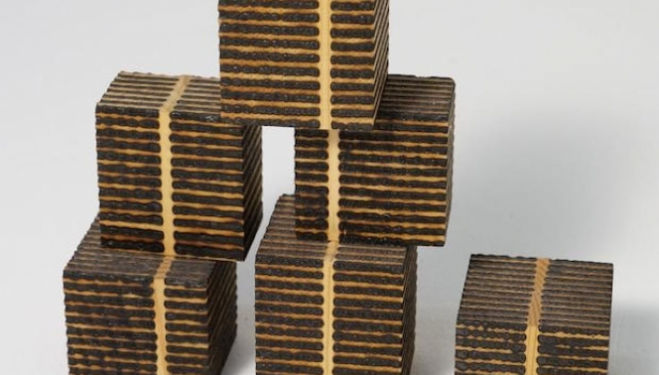
Roger Ackling was a British artist who was a close friend and collaborator of Land Artists Richard Long and Hamish Fulton. He is best known for his works made by using a hand-held magnifying glass to concentrate sunlight into scorch marks on found detritus and driftwood.
Voewood, 2013Weybourne, 1992
The end result is primitive and deliberately ambiguous, simple yet meticulous in its creation; a very basic form of photography. Ackling’s work explores both time and place and is the result of the two coming together on a particular occasion. Yet they also give the impression of being something created in another era, carrying a sense of alchemy and ancient mysticism. In addition, I think there is something of the event of creating the work here, similar to that of the creation of Land Art, despite Ackling’s protestations that this is not what his work is.
For me, it is both the method of using the sun directly as a method of creating the ‘image’ and the act of creating the works in the field which draws me to Ackling’s work, along with the use of an object from the land itself as the starting point for the work. It is the subtlety of humankind using nature on a very modest level, of being immersed in nature and using the Earth itself as a method of creating art. I find it fascinating how such modest and understated creations can possess such profundity and mystery, and contain layers of hidden narrative about the landscape, both in the history of the object itself and in the creation of lines ‘written’ from left to right on a sunny day.
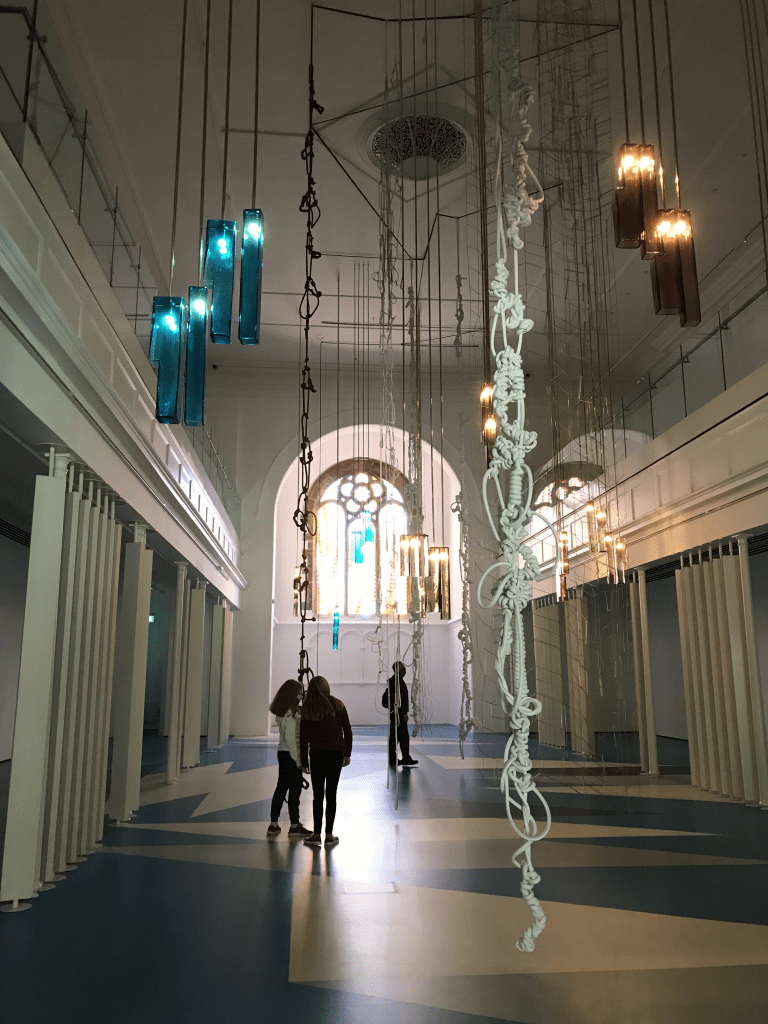
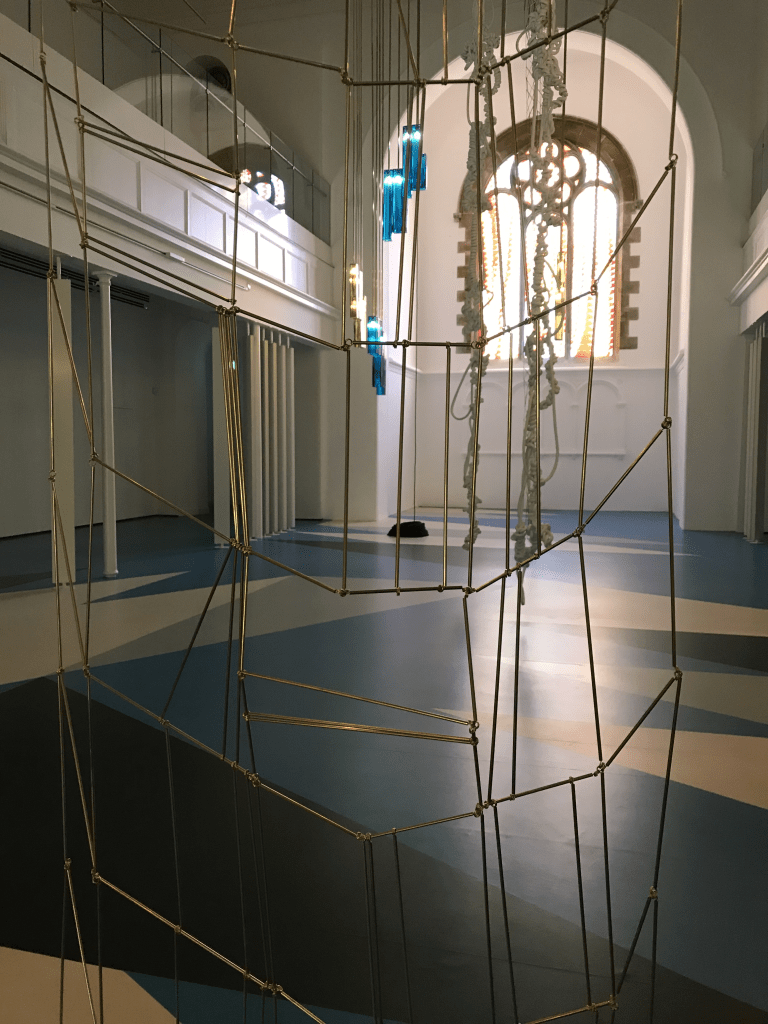
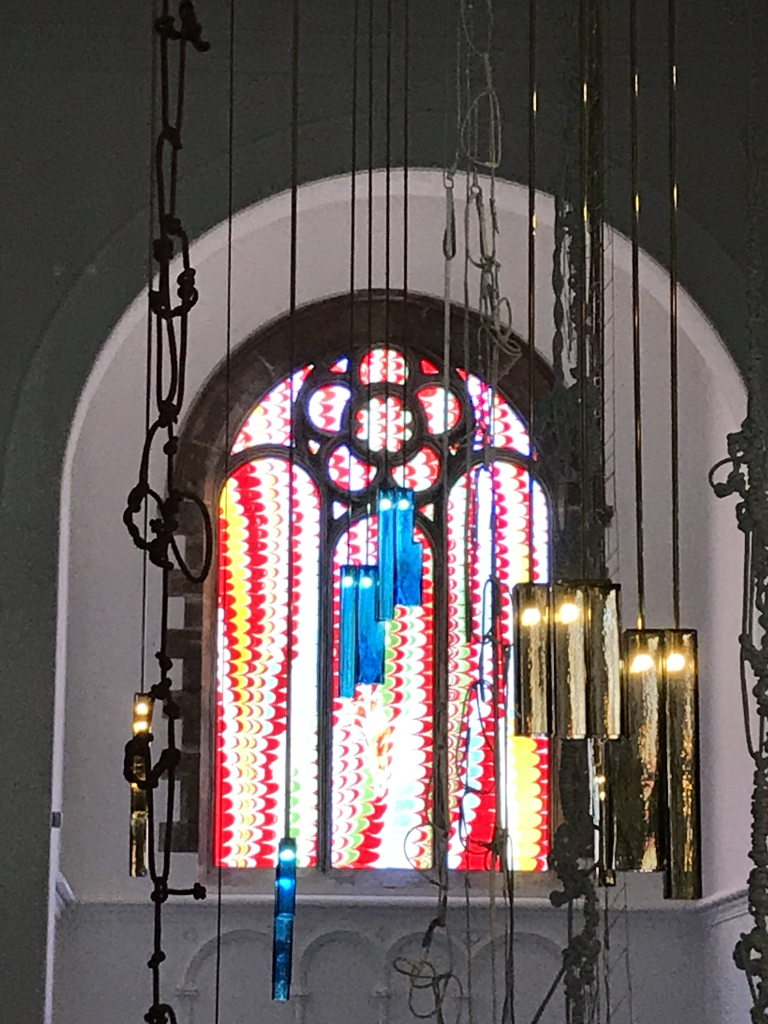
Leonor Antunes is a Portuguese artist whose work Sequences, Inversions and Permutations is currently showing in St Luke’s church, Plymouth.
Antunes uses the physical building as an extension of her sculptures; they have been created specifically to exist in this space and it is clear that there is a dynamic tension between the two. Ropes, leather and Murano glass lighting hang from the ceiling, echoing the vertical lines of the columnar architectures, while metal netting mirrors the pattern on the floor, which she also designed along with the stained glass window. Knotted ropes provide a nod to Plymouth’s maritime identity and its historical ropemaking tradition. Each piece uses traditional materials in a nod to historic methods of production and as a foil to our ever-advancing digital world.
The overall result is serene and reverent, blurring the lines between art and architecture by using carefully chosen materials, movement, space, pattern, light and shadow to create interaction between the two.
Deborah Bright is an American artist, photographer, writer and professor. Her work on the settlement of the Pilgrim Fathers on America’s East Coast in the 1600s interests me, both in its execution and the historic links to my home town, Plymouth.
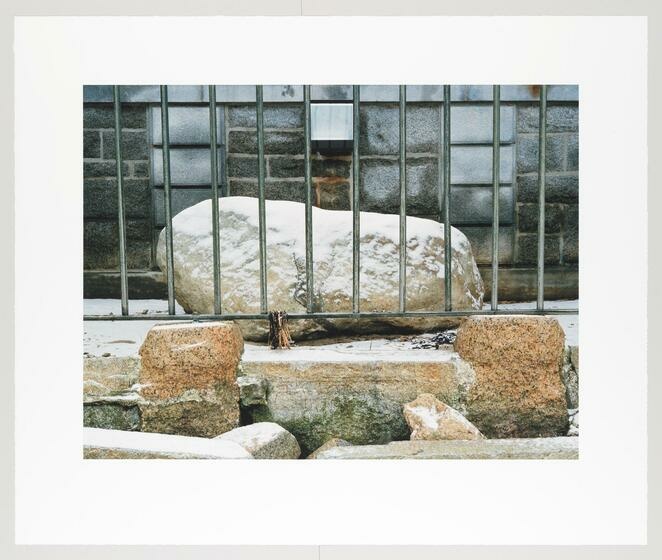
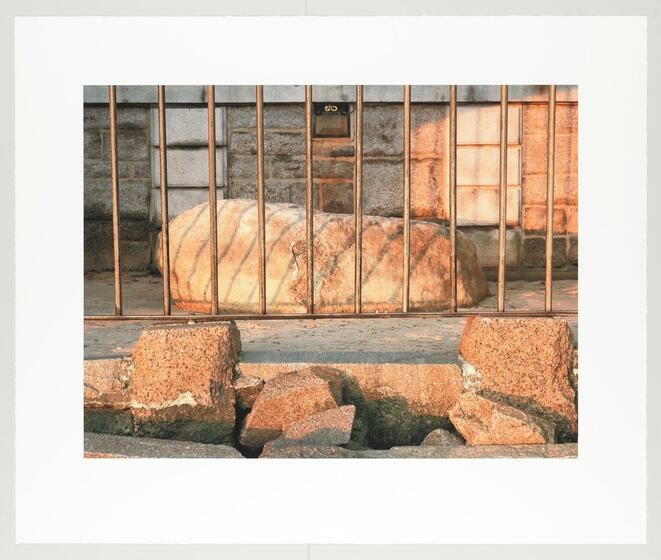
Glacial Erratic (2000-03) depicts the tourist attraction Plymouth Rock in Massachusetts. According to legend, the rock is where the Pilgrims landed when they first set foot on American soil.
Bright produced nine images of the rock taken at different times of the day and year. The rock itself appears to be insignificant, yet Bright manages to instil her works with meaning and symbolism. The title Glacial Erratic is a term for an Ice Age rock that was deposited during the glacial retreat into a non-native region, effectively a stranger amongst the surrounding rocks; different in composition, shape and colour. The link with the Pilgrim immigrants is therefore immediately evident.
2020 was the 400th anniversary of the Pilgrims’ ship the Mayflower’s sailing, and there has been a lot of discussion here in Plymouth about the consequences of their colonisation of the area, naming it New England in a claim to the territory. The history has previously been portrayed from a mainly one-dimensional perspective, largely ignoring the consequences on the Wampanoag Nation who ultimately lost their lands and homes despite initially working together with the Pilgrims.
Bright’s work reflects on the portrayals of the Pilgrims as founders of America by depicting the rock behind bars, thus questioning the ‘freedom’ assigned to them by historical records and questions the narrow white, male origin of America’s mythical foundation. The rock is paraded as a national symbol of liberty, discovery and adventure, yet Bright turns this around by enslaving it in a confined cell, thus questioning the motifs behind America’s ideological depiction of its past.
Due to an unforeseen change of tutor part-way through the module, some months passed between completion of Assignment 3 and receiving feedback for it. However, I am pleased with the positive feedback I have received, and my tutor’s assurance that the video I produced worked well and the music I chose was appropriate to the content and did help to evoke an emotive atmosphere as I had intended. I had considered the slideshow content and the music very carefully and spent some time deliberating over its composition as it was the first I have created so I am happy that the tutor has recognised what I was trying to achieve.
The tutor also recognised that I spent some time researching this assignment, reading two books on phsychogeography, in my bid to understand and elucidate the feelings of unease experienced when walking around my home city, Plymouth, during national lockdown in the COVID|-19 pandemic during 2020. He also noted that my learning log is progressing well.
During our video chat, he also commented on the strength of the remaining images on my contact sheet, and indeed this formed part of the dilemma I had in choosing the ‘right’ images for the slideshow; there were at least two different contextual directions I could have taken in the presentation. He therefore suggested that I produce a book containing the full, wider project that I conducted and this is something I intend to do as part of the final submission for assessment.
Overall, I am very pleased with the feedback for this Assignment.
Zoe Leonard is an American artist working mainly with sculpture and photography. Based in New York, her work explores themes such as loss, the passing of time, displacement and repetition.
For her 1995 work Strange Fruit, in response to the death of a close friend, she sewed the skins of fruit such as oranges, lemons and grapefruit together with wire, thread and zips, in a nod to vanitas still life paintings of the 16th and 17th centuries, suggesting the fleeting and finite nature of life. The work evolves and decays as time passes until eventually it is gone, a theme which I am very interested in and which is reflected in my work depicting the imprints left by human activity on grass.
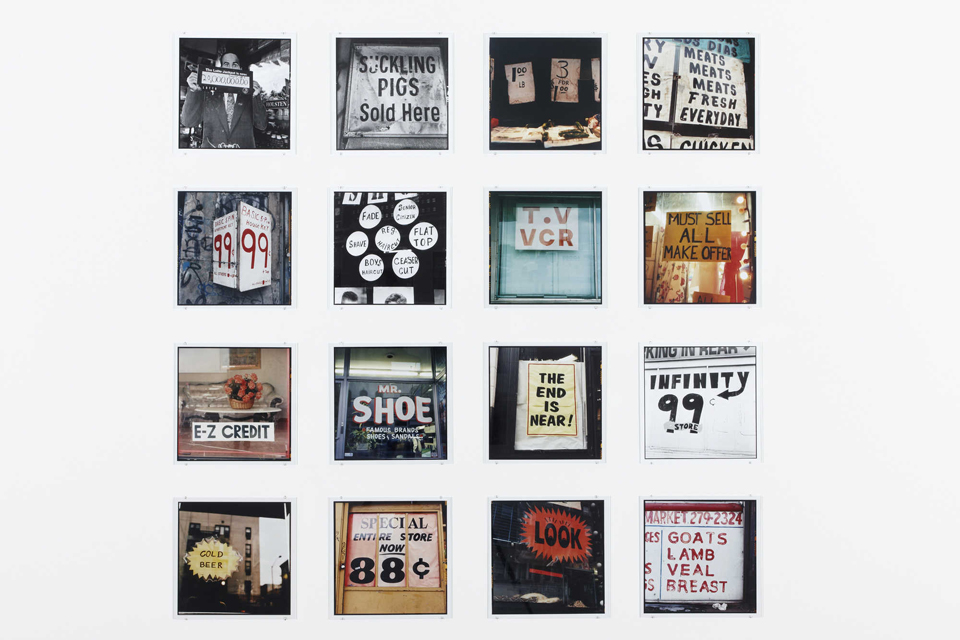
She continues her interest in the passage of time in her series Analogue, this time investigating the disappearing landscape of 20th century urban life with photographs of shop fronts, taken on a vintage 1940s Rollaiflex camera to reflect the nature of obsolescence in an increasingly globalised economy. Tracing the circulation of recycled merchandise, Leonard visited roadside markets in locations such as Cuba, Africa and the Middle East and presented the resulting images in a series of repetitive grids.
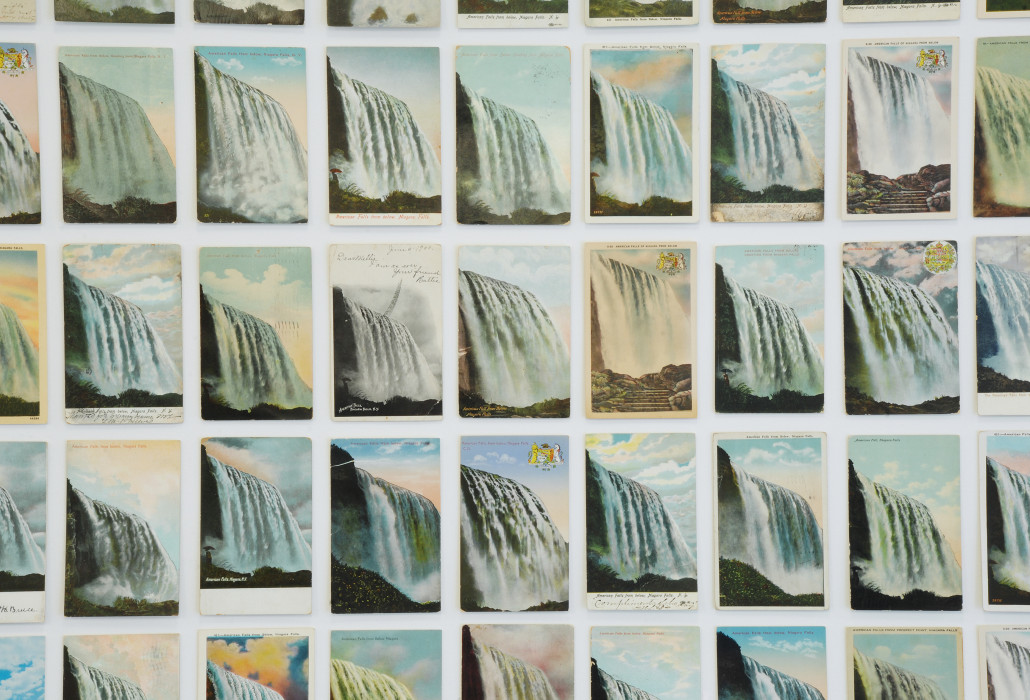
For her 2008 work You See I Am Here After All, she takes a different view on the passage of time, this time presenting thousands of postcards she has collected of Niagara Falls, dating from the early 1900s to the 1050s. This work is a commentary on the commoditising of nature by the tourist industry, showing how repetitive depictions of famous landmarks were used by the industry to infiltrate iconic symbols from nature into mass culture, and on the generic depictions of the picturesque.
This blog shows continuing progress of my coursework for the module "Digital Image and Culture" in the photography degree for the Open College of the Arts.



 Rhonda's Landscape blog