Roger Ackling was a British artist who was a close friend and collaborator of Land Artists Richard Long and Hamish Fulton. He is best known for his works made by using a hand-held magnifying glass to concentrate sunlight into scorch marks on found detritus and driftwood.
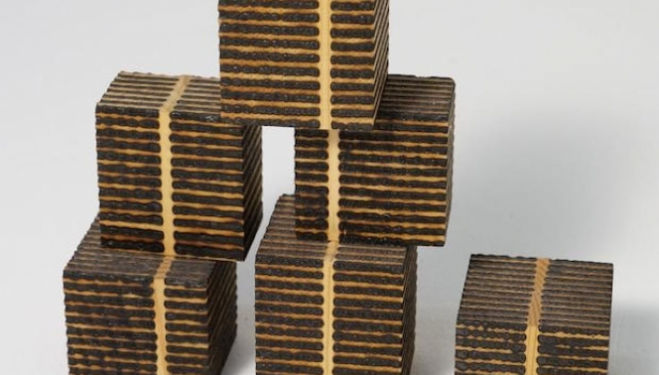

The end result is primitive and deliberately ambiguous, simple yet meticulous in its creation; a very basic form of photography. Ackling’s work explores both time and place and is the result of the two coming together on a particular occasion. Yet they also give the impression of being something created in another era, carrying a sense of alchemy and ancient mysticism. In addition, I think there is something of the event of creating the work here, similar to that of the creation of Land Art, despite Ackling’s protestations that this is not what his work is.
For me, it is both the method of using the sun directly as a method of creating the ‘image’ and the act of creating the works in the field which draws me to Ackling’s work, along with the use of an object from the land itself as the starting point for the work. It is the subtlety of humankind using nature on a very modest level, of being immersed in nature and using the Earth itself as a method of creating art. I find it fascinating how such modest and understated creations can possess such profundity and mystery, and contain layers of hidden narrative about the landscape, both in the history of the object itself and in the creation of lines ‘written’ from left to right on a sunny day.
Weybourne, 1992 by Roger Ackling :: | Art Gallery of NSW [Accessed 1 May 2021]
Roger Ackling: Simple Gifts, Annely Juda Fine Art | Culture Whisper [Accessed 1 May 2021]
 Rhonda's Landscape blog