This book was recommended to me by my original tutor for this course, Andrew Langford. It explores the work and practices of five artists working with camera-less photography and presents a brief history of the methods of working within this genre, from William Henry Fox Talbot to the modern day via the the likes of Man Ray and Frederick Sommer.
The techniques featured include cyanotypes, photo grams, chemical grams and dye destruction prints. What strikes me in particular about each of these methods is that the process is as much a part of the work as the finished piece itself, much like some of the other practitioners I have researched earlier in the course, particularly in Land Art. There is very much a sense of performance in the life-sized human photograms by Floris Neusüss, for instance.
I was particularly interested in the work of Susan Derges. Based in Dartmoor, she spends time in the field and in her studio creating ethereal landscapes that feature plant photograms, images taken by placing photographic paper in the River Taw at night and creating an image with flashlight. The result is a sublime collection of landscapes that seem not quite real, but equally not completely fictional. In her series Arch, she depicts the four seasons, each framed by a black arch with a silhouetted foreground, giving the viewer the impression of looking through to a new space, like some magical secret garden.
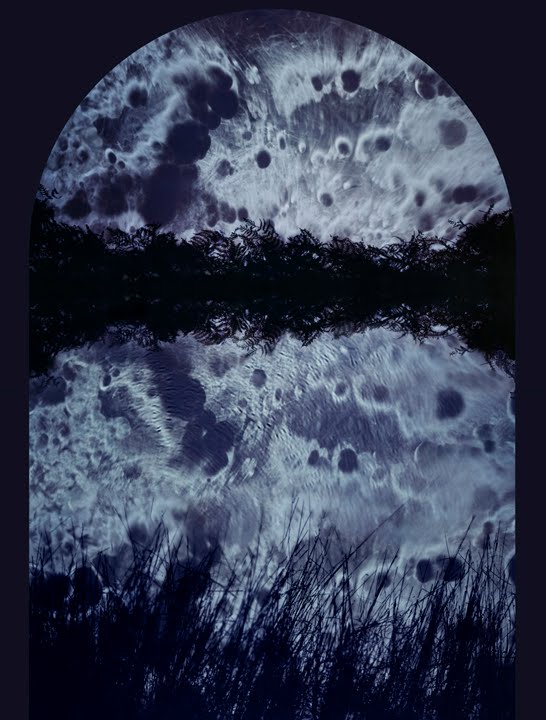
Barnes, M. (2012) Shadow Catchers Camera-Less Photography (2nd ed.). London: Merrell Publishing
 Rhonda's Landscape blog