Liz Wells: Land Matters

This is one of the books on the recommended reading list for the course and was an engaging and interesting read. There are many points to take away from this book and I am sure I will return to it as I progress with my studies.

I found her discussion on space and place particularly thought provoking, and the concept of landscape resulting from human action is one I hadn’t previously considered. She says that ‘Assumptions may …. be made about social uses of designed places (parks, gardens, picnic spots…). Plans are predicated on imagining types of land use, landscape and social environment that might be constructed. Whether industrial, agricultural or domestic, urban, suburban or rural, space is (trans-)formed into place through such interventions.’ This is interesting to me when considering the caravan park which was the subject of my Assignment five,/especially as this is a very specific space which has a unique pre-determined purpose.

Wells herself directly discusses the places we holiday: ‘Current emphasis on rural ‘boutique’ hotels, country cottage holidays, caravan parks and campsites, as well as the expanding network of Center Parcs, testifies to a continuation of a pastoral idyll.’ Like Wells, living in Devon, I see examples of this idealisation frequently, most recently in a company selling coastal air in a bottle for £75 (and labelling it Cornish when it is actually from Devon, Cornwall presumably being more marketable).

Wells steers away from the photographic canon to include lesser known practitioners, including a chapter on Scandinavia, and also includes Land Art as within the photographic remit which I found relevant to my critical essay. Overall, I found this a very worthwhile read that will no doubt continue to be relevant as I move onto Level 3.

Research: Jem Southam

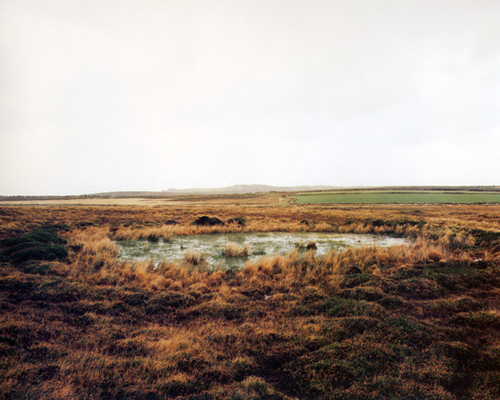
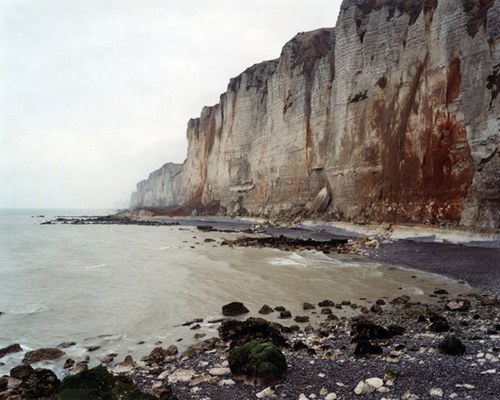
Jem Southam is a British landscape photographer whose works largely focuses around the theme of change at a certain location, sometimes over many years. His work seems to me to possess a quiet calmness with colours reminiscent of Northern European painters such as Casper Friedrich.

Hi work contains a high level of detail that allows the viewer to contemplate what may have happened; a rockfall, a strange indentation; there is a sense of the sublime but his work also invites contemplation of the changes that have occurred between depictions of the same location.

Southam is of particular interest to me because of his investigations into humankind’s relationship with the landscape, both in terms of our impact through habitation and the actions we take in the environment, but also there is a strong sense of the psychological impact the landscape has on us as people, yet he does not feature people in his work.

His work is also particularly relevant to me because he is also based in the South West, and his work is a prime example of how it is not necessary to travel far to achieve interesting, accomplished photography work.

Jem Southam

Senneville-sur-Fecamp (2006)

Jem Southam

Penwith Moors, Bosporthennis Common (1998)

Two Books on Psychogeography

As part of my research for Assignment Three I read two books on Psychogeography.

In his book Psychogeography, Merlin Coverley gives its definition as the “study of the specific effects of the geographical environment, consciously organised or not, on the emotions and behaviour of individuals”. The book takes us through a history of psychogeography, noting its predominantly white male perspective, following mostly literary traditions of Paris and London from Daniel Defoe to Peter Ackroyd and into the modern era and the rural wanderings of Will Self.

There are some interesting ideas in this book, for instance the thought that landscape is permeated with traces of previous inhabitants and events and that there is a sense of place beneath the surface of everyday activity.  Coverley refers to Peter Ackroyd’s observations of how certain areas of London ‘resonate with ideas, activities and the occupants of earlier inhabitants’ and how histories of certain areas are endlessly replayed in a distortion of time, which Ackroyd termed ‘chronological resonance’.  This is something I have explored in previous photographic work within the realms of the family construct and following this thread to a landscape setting would be an interesting avenue for my work. 

The book is also an inspiring starting point for finding new ways of looking at our surroundings, from the dérive, through ley lines and methods for random wanderings. The  COVID-19 lockdown under encouragement by the government to take local daily walks was a serendipitous time to discover this volume and as a result I discovered much about my local area that I had not previously known in twenty years living at my current address.

Colin Ellard’s Places of the Heart: The Psychogeography of Everyday Life Investigates the effect that physical spaces have on human behaviour and emotional state, delving into history, scientific experiment and the future of virtual reality.

It is well known that supermarkets and department stores lay out their wares in carefully researched locations designed to incite shoppers to part with as much money as possible but I had not considered how the architecture of a bank or even a theme park could be designed to evoke a specific human response. It makes sense that if views of nature can reduce stress and aid recovery from illness in humans, then man-made environments can also impact our wellbeing.

From the construction of the first walls and introduction of private bedrooms to homes, human behaviour has long been shaped by the structures around us.  Both revolutionised concepts of inner and outer space and private and public behaviour.  However, despite our living and working spaces being ever adapted to promote productivity and maximum efficiency, human environmental and spatial preferences are subconsciously underpinned by biological and evolutionary behaviour.  For example in an open space such as a public square, people will gravitate towards the edges first following the primitive geometry of ‘prospect and refuge’ or seeing without being seen.

The concept of place as an influence on human activity and emotion is an interesting one for the photographer as it raises questions of how to capture this in one’s work and, I think, places the onus on the photographer to not simply depict a landscape in a factual manner, devoid of any sign of human interaction but should consider carefully not only how the landscape is shaped by humans but the effect that landscape has on humans.  

References:

Coverley, M. (2018 ed.) Psychogeography. Harpenden: Oldcastle Books

Ellard, C. (2015) Places of the Heart: The Psychogeography of Everyday Life. New York: Bellevue Literary Press
Research: Mat Hennek

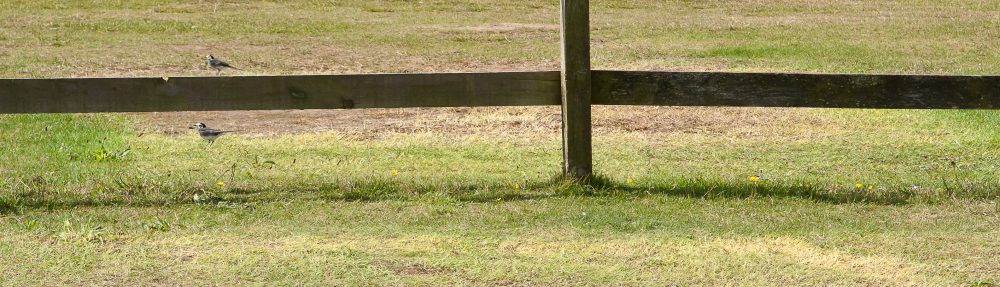
Mat Hennek is a German photographer who had a successful career in commercial portrait and product photography before moving into the art genre.

His recently released book Silent Cities coincidentally came out during the 2020 Coronavirus pandemic lockdown across Europe but in fact the images were all made over the last seven years during normal human social and economic activity.  Hennek visited several cities worldwide for this series, including Tokyo, Dallas, Shanghai and Paris, making unplanned walks through the cities whilst consciously avoiding the usual tourist areas.

The urban landscapes are almost devoid of people, save for the occasional exception: a lone cyclist; a group of half concealed travellers.  Perspective is most often flattened, frequently cutting out the sky and sometimes the foreground too, creating a barrier to the viewer, preventing them from feeling a part of this landscape.  In some images the pattern of the architecture removes all sense of perspective, leaving the viewer disorientated and confused.

Prior to this series, Hennek produced a series entitled Woodlands, which are images of groups of trees completely filling the frame, silent, almost monochromatic, flattened in perspective.  I think Hennek has approached the urban environment in the same way; his colours are subdued, often feature greenery, and there is a sensitivity to texture and material and their juxtapositions.  Forms in both series are often pared down to simple compositional elements.

The result of Hennek’s approach is the impression that the cities are waiting for people to appear and carry out their usual business, as if they are on hold.  There is a sense of the uncanny, of time having stopped.  The overall sense is of beauty in the simplicity of being able to view these structures unobstructed but also of silence and stillness, like holding one’s breath.

References:

Hennek, M. (2020) Silent Cities. Göttingen: Steidl

mathennek.com/works/silent-cities/ [Accessed 15 August 2020]

Assignment One: Tutor Feedback and Response

I am very pleased with the feedback I received from my tutor for Assignment One.  My tutor said I write very well and am able to communicate my ideas, influences and creative ambitions.

The cyanotype colour works well as an emotive aid, evoking a sense of melancholy and turning everyday landscape scenes into something uncertain.  It also adds drama to the optical distortion and diffusion created in the cyanotype process which in turn adds to the sense of the uncanny and uncertainty.   The black graphics disturb the notion of the photograph depicting something that was once in front of the camera as well as offering a psychological gateway.

I am pleased to have achieved a balance between descriptive and analytical writing as feedback from previous modules has indicated that my content is a little light on the analytical aspect and this is something I have been consciously working on in response.

I have a list of follow up actions to work through:

  • Include details of the creative process leading to submitted assignments
  • Develop this assignment further by making physical cuts in the cyanotype prints rather than adding the black shapes digitally (due to time constraints I will carry this out at the end of the module prior to assessment)
  • Investigate Ackroyd and Harvey who developed grass seed that could retain photographic impressions for a long time.  I have heard of this before and I have an idea surrounding grass for a later assignment so this will be useful research
  • Look at Freund’s paper on the uncanny with a view to developing assignment one further
  • Look at John Balldessari’s work using coloured dots
  • Tidy up missing references and spelling in my learning log.  I have started to go through this and it is part of my standard workflow prior to assessment so I will continue to read back through previous submissions and amend as required.

Research: Richard Wentworth

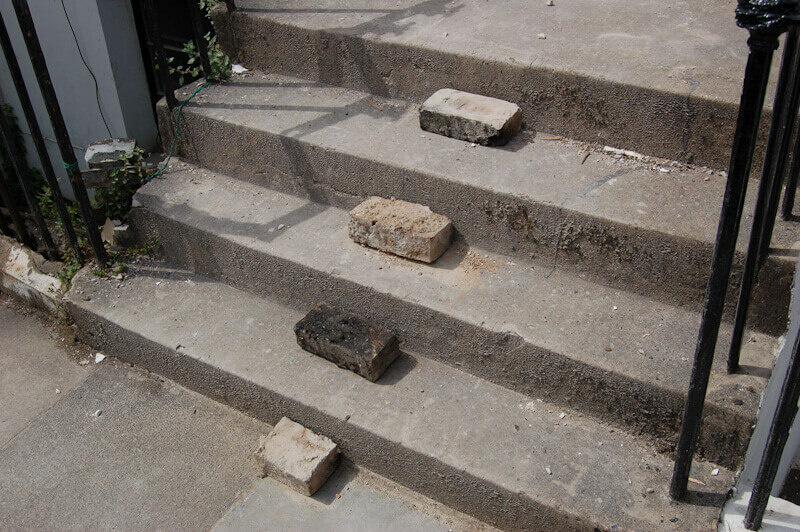
Richard Wentworth has been a pioneer of New British Sculpture since the late 1970s.  His interest lies in the items we use every day, using found objects, often in unusual juxtapositions, to create his sculptures.

He has always used photography as an observation tool but only started to exhibit those images in the mid-1980s.  I find this interesting as putting them into the gallery space has changed their context; the addition of an external viewer has altered the discourse from personal note to art and raises the question of whether art without a viewer can be considered art at all.

Wentworth’s photography work takes in the detritus of human existence: the result of mundane acts carried out; repurposed and abandoned objects.  As he explains “…what is a television that is sitting on the roadside miles away from an electricity supply?  Is it still a television?  It’s something to do with being dead yet alive.  It’s the small human acts that reach out to my way of seeing.”

Incorporating humour and a sense of the bizarre, Wentworth uses his sculptor’s eye to spot the geometries and quirkiness within found scenarios and uses them to raise questions in the viewer’s mind about the minute human acts that would otherwise have gone unnoticed.

Susan Bright- Art Photography Now | Contemporary art photography ...

Genoa, Italy, 2004


Caledonian Road, London, 2007

Caledonian Road, London, 2007

References:

www.lissongallery.com/artists/richard-wentworth [Accessed 12 April 2020]

Bright, S. (2005) Art Photography Now. London: Thames and Hudson


Research: Naomi White

Naomi White is a Los Angeles-based photographer whose work addresses themes such as feminism, consumerism and ecology.

Her series Time Capsules from the Anthropocene juxtaposes objects and scenes from nature with elements of the man made world, presented as still life compositions in a nod to seventeenth century Dutch still life paintings.  Like the vanitas, her works use animal skulls as a symbol of mortality, alongside other signifiers of nature such as flowers and photographs of picturesque landscapes.  Placed next to symbols of modern consumerism, such as plastic bags and wash baskets, we are reminded of the impact humans are having on our natural world and of the delicate balance as we find ourselves at the tipping point of irreversibly devastating our planet’s natural ecosystem.

Time Capsules from the Anthropocene - Naomi White Photography

In her series Plastic Currents, she investigates the form of the plastic bag.  Used to carry our purchases, the carrier bag is a symbol of our consumerist greed, and therefore of capitalism.  In White’s work, the bag is no longer a cheap throwaway object in which to transport the material objects we seem to be unable to stop buying in vast quantities, but becomes the material object itself, taking on a new form of undulating, flowing form, appearing almost organic.


Plastic Currents - Naomi White Photography

References:

www.naomiwhite.com  [Accessed 5 April 2020]

Research – Aliki Braine

Aliki Braine is a Paris-born artist currently working in London.  Her work investigates the photograph as material object – a theme I became interested in during the Digital Image and Culture module.  She sees various methods to achieve this, including punching holes, applying stickers and drawing with ink directly onto negatives.

Many of her works study Old Mater paintings.  For example, her work The Hunt is based on Paolo Ucello’s The Hunt In The Forest.  Ucello’s huntsmen and animals in their bright colours are replaced in Braine’s work by a series of black, punched holes of varying sizes.  The viewer is left feeling uncertain as to what should be where the holes are, and to fill in the blank spaces from their imagination.

Image result for aliki braine the hunt"

The Hunt (2006)

In other works, the main subject is obliterated almost completely, leaving the viewer to complete the recognisable symbol in their own imagination.  By obscuring familiarities in this way, Braine raises questions about the viewer’s assumptions and whether a visible trunk and black shape in a field can be experienced and interpreted in different ways.

Image result for aliki braine"

Draw Me a Tree… (Black Out) (2006)


References:

http://www.alikibraine.com [Accessed 5 January 2020]

Shore, R. (2014) Post-Pohotography The Artist with a Camera. London: Laurence King Publishing Ltd

Exhibition: Mariner

I recently visited the exhibition Mariner a painted ship upon a painted ocean at Plymouth’s Lewinsky Gallery.  Timed to coincide with the 400th anniversary of the Mayflower’s launch for the United States, the exhibition takes as its starting point the Samuel Taylor Coleridge poem The Rime of the Ancient Mariner and interprets it for modern times.  In this context, the exhibition covers such themes as marine pollution, climate change, overseas human migration and human vulnerability.

The work of two artists seemed to be particularly relevant to this point in my studies.  Nadav Kander is a British photographer born in Israel who won the Prix Pictet award in 2009 for his work Yangtze – The Long River.  The two works on display, Water II and Water XVIII are both taken from Shoeburyness as part of his studies of the Thames Estuary, studying the transition between river and sea.  The result are atmospheric black and white works of the churning waters and distant horizons.

Kander’s works are long and tall, positioned very low on the gallery wall, giving the viewer the sense that they can step into the image, as I have previously observed in Mark Rothko’s work.  The large scale swirling water appears sculptural, almost solid as if it were made of plaster, giving a sense of three dimensionality and uncertainty which, along with the minimal composition and distant horizon creates the feeling of the sublime.


Tacita Dean is a British artist working mainly in the medium of film.  Her work Disappearance at Sea was based on the story of British businessman and amateur sailor David Crowhurst (1932-1969) who died at sea attempting a single handed, around the world yacht race after falsifying records of his whereabouts in an attempt to appear as though he had completed circumnavigation.

The work is an excellent example of modern interpretation of the sublime, with the viewer initially walking into a black room, so dark as to be disorientating.  Although the screen is running the film, the room is still so dark that the eyes never adjust fully.  In the meantime,  the screen alternates between following a lighthouse bulb on its rotation and looking out to sea.  As the lighthouse bulb rotates the viewer becomes more disorientated until the view shifts to the sea, where the light from the bulb can be seen crossing the landscape as though searching for the missing yachtsman as dusk descends into night.

References:

www.nadavkander.com [Accessed 27 December 2019]

www.tate.org.uk/art/artworks/dean-disappearance-at-sea-t0745 [Accessed 28 December 2019}


Mark Pearson

I discovered Mark Pearson’s work at a Plymouth University alumni show.  Pearson is a Scottish photographer specialising in photojournalism, covering conflict and natural disasters.  His work has taken him to places such as Pakistan and Israel and he has covered the after-effects of tsunamis and earthquakes.  He is particularly interested in man-made physical boundaries.

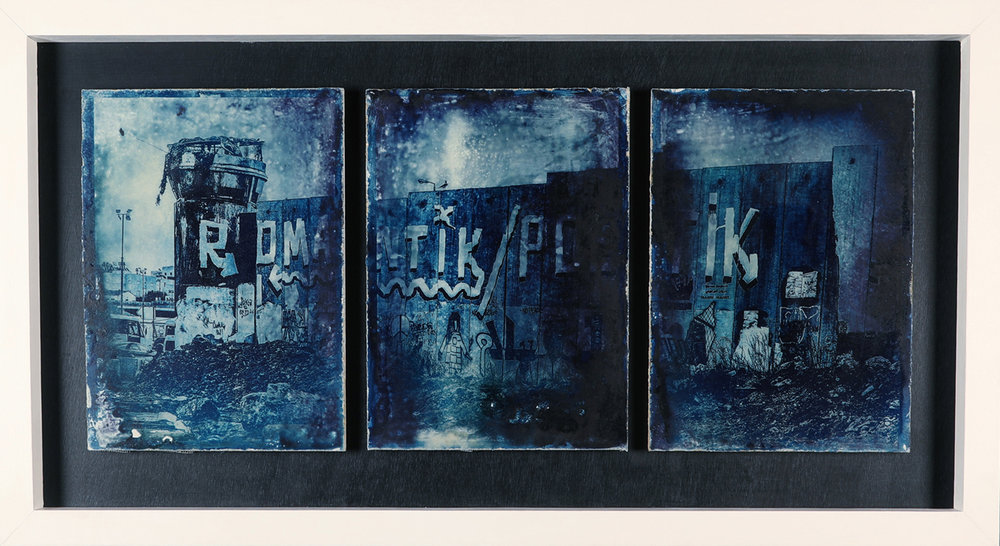
At the exhibition I saw the piece Zone A – A Palestinian View of Jerusalem which is a cyanotype triptych on concrete.  This piece was created in collaboration with concrete sculptor Noel Brennan.  The work depicts the wall separating West Bank Palestine from Israel, an unusually stark subject for a cyanotype, a method traditionally artistically associated with flora and fauna and commercially with the crisp, perfect lines of a blueprint.  In contrast, Pearson’s work enters the war zone, the concrete base a sculptural reference to the wall itself.

Zone A - A Palestinian view of Jerusalem    Cyanotype Triptych on Concrete, 122cm x 65cm    A chemical experiment and collaboration project in photochemistry and concrete. Cyanotype triptych on concrete panels, with a digital image I shot in Palestine that is chemically embedded onto the surface of the concrete, 2018.

The monotone approach works well with the graphic, angular lines of the subject matter.  The textural surface of the concrete adds a hard, grittiness that reflects the harsh nature of the events happening in this environment.

http://www.markpearson.co.uk [Accessed 26 December 2019]