Exercise 4.1: Critical Review proposal

Due to unforeseen circumstances, I have had to switch tutor. As part of our online introductory we discussed my critical review proposal.

During this module I have become interested in considering how landscape photographers can move beyond mere observation of the land and become more deeply immersed in what is around us. Land Art moves beyond representation as the artists strive to work with the land, often nature, rather than being a step further removed, looking at the land. Land Artists also rely heavily on photography to bring their work to a wider audience and engage with the art market.

My proposal for my critical review is to consider the role of photography in Land Art, both in practical and conceptual terms; its purpose, meaning and validity as a work of art in its own right, and with considerations around the term ‘landscape’. I will take into consideration the intentions of the Land Artist in making such photographs and how these photographs sit within and alongside the wider landscape photography genre.

Assignment Three: Spaces to Places

One November’s day few years ago, we took our then toddler daughter to her favourite local theme park.  In contrast to the usual summer throng of visitors with their picnics and ice creams, and long queues for rides whilst under attack from children and wasps fuelled by a combination of sugar and sun, the park in the week before its annual winter shutdown was virtually empty, with just a scattering of families wandering between rides.  No jostling, no hubbub, no frayed tempers, no children giddy with pent-up excitement; just an eerie silence punctuated by occasional subdued conversation.  In theory,  the thought of a theme park to oneself seems inviting, even preferable: more ride time; somewhere to sit down; no excess noise.  However, the visit was not a success.  The operator of my daughter’s favourite carousel had to stop the ride when she, the lone participant, became distressed at being repeatedly flung around in circles in silence.  With barely anyone else there, the theme park had become an empty space, lost of its context and association with fun.

This scenario perhaps helps to explain, in 2020, the sense of unease experienced in cities all over the world at the height of lockdown restrictions imposed by governments in response to the Coronavirus pandemic.  In considering this assignment, I frequently returned to the notion that a space becomes a place largely when stories are ascribed to it, via history and events; in other words a place is a product of human activity, from creating or building a physical environment to how we interact with the landscape.  In the theme park example above, when normal human activity ceases to occur, the sense of place is lost.

In his book Places of the Heart: The Phsychogeography of Everyday Life, cognitive neuro-scientist Colin Ellard describes a 2012 study he conducted in New York.  He took visitors to two sites and recorded their reactions, both physical and emotional: one site was a ‘long, blank façade’ of a supermarket; the other a lively area with restaurants, shops with open doors and windows and a ‘pleasantly meandering mob of pedestrians’.  The results were, perhaps with hindsight, predictable: those people stood in front of the blank supermarket recorded low states of arousal and happiness; those at the lively site themselves felt engaged and positive and recorded high levels of arousal.  Returning to the 2020 lockdown scenarios across the globe, this evidence raises concerns about what effect taking our daily exercise in an empty urban area is having on the collective mental health of city dwellers and is a subject that has been ignored in the media during the pandemic.  Media reports of near-empty city centres focus entirely on the economic impact and make no mention of the psychological impact on those who are still frequenting the city streets; shop and hospitality workers, for instance.

I also looked at the work of Mat Hennek in my research for this assignment.  Although not depicting lockdown but in fact representing the finding of pockets of quietness in otherwise bustling urban areas, his series Silent Cities shows beauty in stillness and gives a sense of holding one’s breath, waiting for the action to begin again.

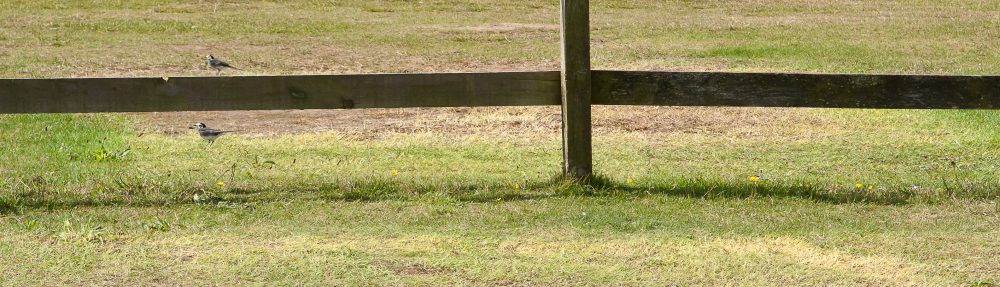
I decided to make my images into a slideshow as this is an unexplored area for me and I felt that adding accompanying music would enhance the atmosphere.  The finished piece is intended to convey a sense of the melancholy coupled with a touch of the uncanny – but also a small injection of humour created by the birds that have entered some of the images.

References:

Hennek, M. (2020) Silent Cities. Göttingen: Steidl

mathennek.com/works/silent-cities/ [Accessed 15 August 2020]

Ellard, C. (2015) Places of the Heart: The Phsychogeography of Everyday Life. New York: Bellevue Literary Press

Music: https://www.bensound.com/royalty-free-music
Two Books on Psychogeography

As part of my research for Assignment Three I read two books on Psychogeography.

In his book Psychogeography, Merlin Coverley gives its definition as the “study of the specific effects of the geographical environment, consciously organised or not, on the emotions and behaviour of individuals”. The book takes us through a history of psychogeography, noting its predominantly white male perspective, following mostly literary traditions of Paris and London from Daniel Defoe to Peter Ackroyd and into the modern era and the rural wanderings of Will Self.

There are some interesting ideas in this book, for instance the thought that landscape is permeated with traces of previous inhabitants and events and that there is a sense of place beneath the surface of everyday activity.  Coverley refers to Peter Ackroyd’s observations of how certain areas of London ‘resonate with ideas, activities and the occupants of earlier inhabitants’ and how histories of certain areas are endlessly replayed in a distortion of time, which Ackroyd termed ‘chronological resonance’.  This is something I have explored in previous photographic work within the realms of the family construct and following this thread to a landscape setting would be an interesting avenue for my work. 

The book is also an inspiring starting point for finding new ways of looking at our surroundings, from the dérive, through ley lines and methods for random wanderings. The  COVID-19 lockdown under encouragement by the government to take local daily walks was a serendipitous time to discover this volume and as a result I discovered much about my local area that I had not previously known in twenty years living at my current address.

Colin Ellard’s Places of the Heart: The Psychogeography of Everyday Life Investigates the effect that physical spaces have on human behaviour and emotional state, delving into history, scientific experiment and the future of virtual reality.

It is well known that supermarkets and department stores lay out their wares in carefully researched locations designed to incite shoppers to part with as much money as possible but I had not considered how the architecture of a bank or even a theme park could be designed to evoke a specific human response. It makes sense that if views of nature can reduce stress and aid recovery from illness in humans, then man-made environments can also impact our wellbeing.

From the construction of the first walls and introduction of private bedrooms to homes, human behaviour has long been shaped by the structures around us.  Both revolutionised concepts of inner and outer space and private and public behaviour.  However, despite our living and working spaces being ever adapted to promote productivity and maximum efficiency, human environmental and spatial preferences are subconsciously underpinned by biological and evolutionary behaviour.  For example in an open space such as a public square, people will gravitate towards the edges first following the primitive geometry of ‘prospect and refuge’ or seeing without being seen.

The concept of place as an influence on human activity and emotion is an interesting one for the photographer as it raises questions of how to capture this in one’s work and, I think, places the onus on the photographer to not simply depict a landscape in a factual manner, devoid of any sign of human interaction but should consider carefully not only how the landscape is shaped by humans but the effect that landscape has on humans.  

References:

Coverley, M. (2018 ed.) Psychogeography. Harpenden: Oldcastle Books

Ellard, C. (2015) Places of the Heart: The Psychogeography of Everyday Life. New York: Bellevue Literary Press

Assignment Three Preparation

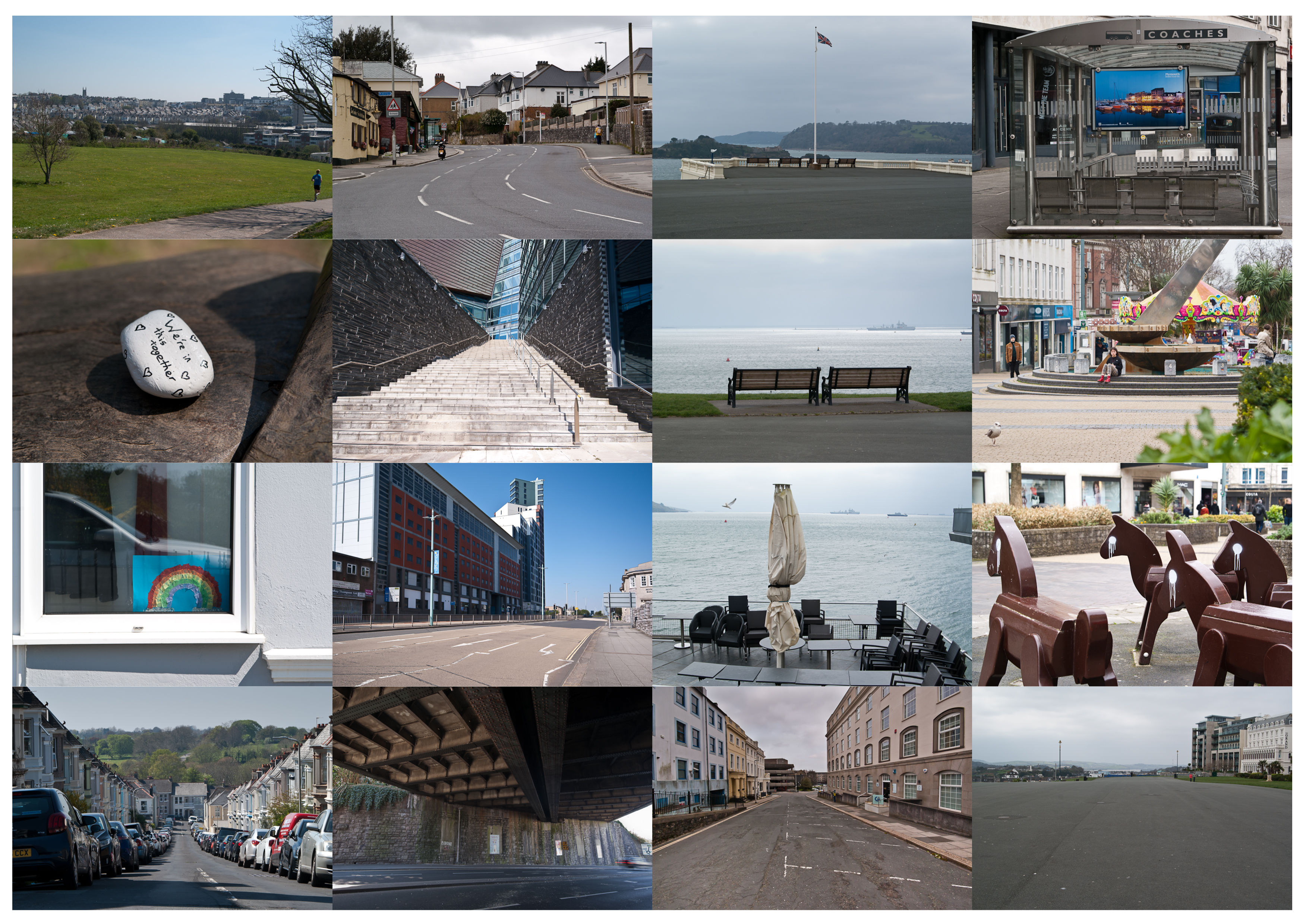
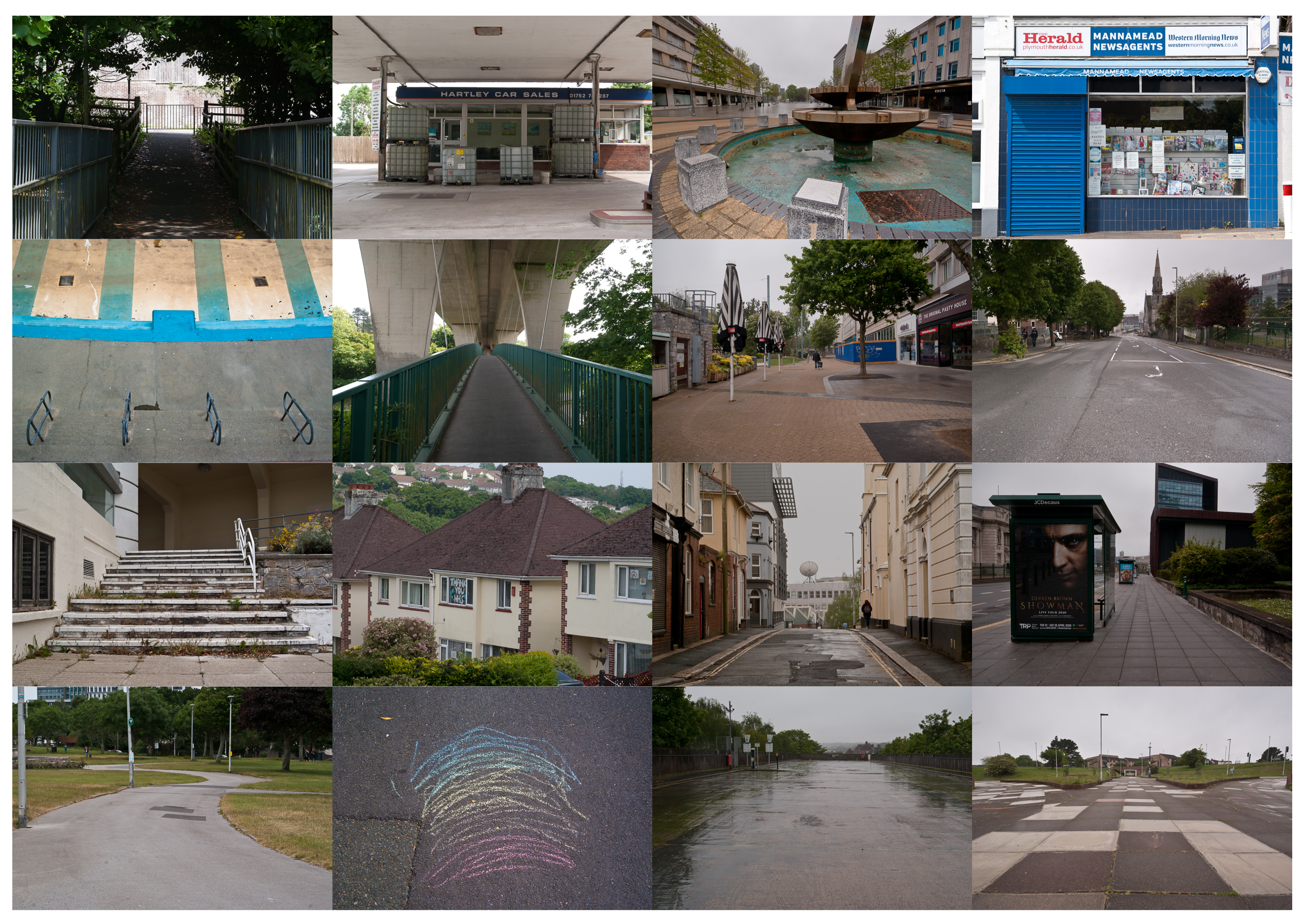
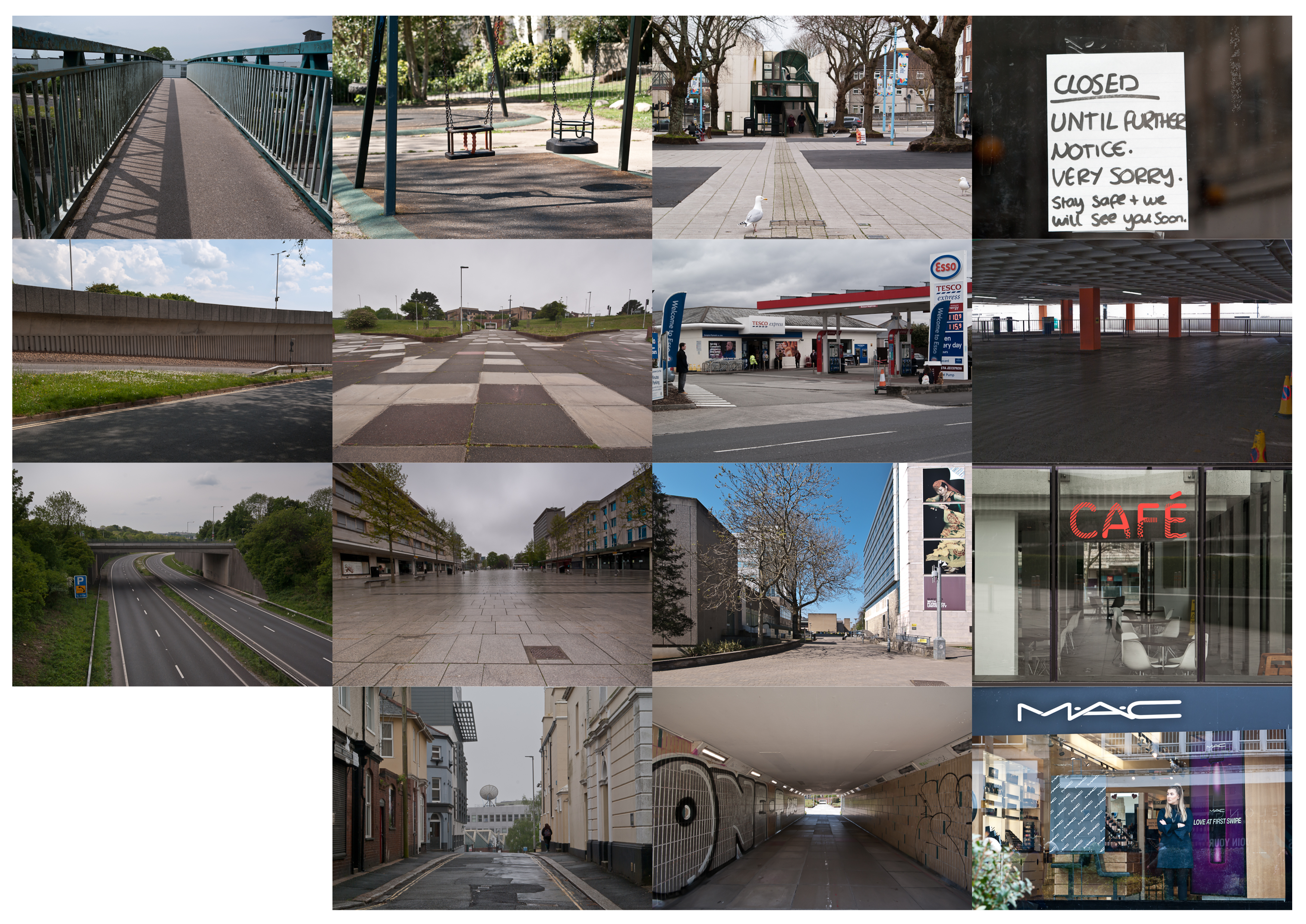
My working method for assignment three was straightforward compared with the previous two assignments; these are simple observations made on my frequent walks during lockdown. I was acutely aware of the effect walking around an empty city has on the psyche and the number of examples available to record were numerous. The main challenge I found, then, during this assignment was choosing which images to use. I assembled what I thought was the final collection several times and the next day changed my mind. even now in front of me is an image that didn’t make it into the final assignment and I am wondering whether I should have included it. However, a final decision has to be reached and so I am continuing with the most recent selection I made. I am, however, planning on making an alternative version to post on social media. Below are my contact sheets showing all the images that were part of my final decision making process.

Exercise 3.6:‘The Memory of Photography’

David Bates’ essay The Memory of Photography addresses the contribution photography has made to the ‘relation of memory and history’.  Photography is traditionally viewed as a ‘time machine, a place for remembering’ but it’s purpose is constantly changing, particularly in the digital age, and perhaps this is why those traditional considerations are so pertinent now.

Freud identified the distinction between ‘Natural Memory’, the normal human ability to recollect, and ‘Artificial Memory’, devices created by humans to extend and aid human memory.   Kracauer compared  photography to historiography as they both rely on historical narrative.  Le Goff wrote of the collective cultural remembrance devices introduced by kings such as archives, libraries and museums.

Le Goff investigated how photography’s role is seen to be helping to trigger specific common visualised memory, referencing Bordieu’s discussion of family albums.  The photographs in the album serve as an aide-memoire to share collective memories through the family.  Bates investigates whether this application as collective memory aide can be applied to other social and cultural groups too?  Does photography help these groups to form or at least recognise ‘acquired characteristics’?  Examples of such areas which could be included are: police; media; arts; and independent social group photographs, each contributing to establishing a ‘truth of social remembrance’.

Foucoult discussed how ‘popular memory’ was being obstructed; that popular literature, what we are taught in school and cheap books giving popular memory no way of expressing itself.  In other words, people are shown not memories of who they were but what they must remember having been.  In a world of social media and ‘fake news’ this argument seems to me more relevant than ever in modern times.  As we move forward into an ever more uncertain future, what memories will be instigated by the photographs we are making and seeing today?  Will the collective memory remember how things really were or will it be distorted by our media and ourselves presenting a selective public face to the world or at least the internet)?

I think the concerns around memory being altered by misleading objects, including photographs, are valid.  An experiment in 2002 found that half of the participants were tricked into believing they remembered a hot air balloon ride as a child from fake photographic evidence. It is easy to imagine this process being recreated through the media or schooling and influencing collective memory.

References:

www.tandfonline.com/doi/full/10.1080/17540763.2010.499609 [Accessed 20 August 2020]

www.bbc.co.uk/news/science-environment-24286258 [Accessed 20 August 2020]

Research: Mat Hennek

Mat Hennek is a German photographer who had a successful career in commercial portrait and product photography before moving into the art genre.

His recently released book Silent Cities coincidentally came out during the 2020 Coronavirus pandemic lockdown across Europe but in fact the images were all made over the last seven years during normal human social and economic activity.  Hennek visited several cities worldwide for this series, including Tokyo, Dallas, Shanghai and Paris, making unplanned walks through the cities whilst consciously avoiding the usual tourist areas.

The urban landscapes are almost devoid of people, save for the occasional exception: a lone cyclist; a group of half concealed travellers.  Perspective is most often flattened, frequently cutting out the sky and sometimes the foreground too, creating a barrier to the viewer, preventing them from feeling a part of this landscape.  In some images the pattern of the architecture removes all sense of perspective, leaving the viewer disorientated and confused.

Prior to this series, Hennek produced a series entitled Woodlands, which are images of groups of trees completely filling the frame, silent, almost monochromatic, flattened in perspective.  I think Hennek has approached the urban environment in the same way; his colours are subdued, often feature greenery, and there is a sensitivity to texture and material and their juxtapositions.  Forms in both series are often pared down to simple compositional elements.

The result of Hennek’s approach is the impression that the cities are waiting for people to appear and carry out their usual business, as if they are on hold.  There is a sense of the uncanny, of time having stopped.  The overall sense is of beauty in the simplicity of being able to view these structures unobstructed but also of silence and stillness, like holding one’s breath.

References:

Hennek, M. (2020) Silent Cities. Göttingen: Steidl

mathennek.com/works/silent-cities/ [Accessed 15 August 2020]

Exercise 3.5: Local History

Plymouth is a city rich in history, and it is impossible to live here without absorbing some of the many famous stories whilst noticing where the past overlaps with the present day city.  This year marks the 400th anniversary of the Mayflower sailings of the pilgrims from Plymouth to America and many events were planned across the city, including the much anticipated opening of a new art gallery and the installation of an Antony Gormley sculpture on the seafront, all of which have been put on hold due to the COVID 19 pandemic lockdown.

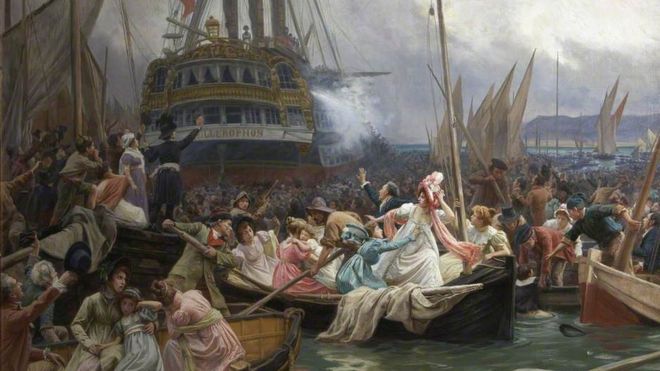
However, although I have resided here for over two decades and have heard many of the famous stories, it was not until recently that I learned of Napoleon Bonaparte’s brief stay as a prisoner of war in Plymouth Sound.

DSC07903

Having surrendered a few days before in South-West France, Napoleon had planned to flee to the United States before his imprisonment.  Brought to Plymouth aboard the Bellerophon, Napoleon was not allowed ashore and no-one but authorised personnel were permitted to board.  News had reached the mainland of the famed folk hero’s presence and people travelled from as far as Glasgow to catch a glimpse of Napoleon.  Plymouth was crammed with visitors.  Boat trips were organised into the Sound and spectators took to the water in their thousands.  Napoleon played to the attention, taking to walking the deck at around 6pm daily for the benefit of the sightseers.

Napoleon in Plymouth Sound, August 1815 (Napoleon on Board the Bellerophon at Plymouth)

Napoleon in Plymouth Sound, August 1818 –  Jules Girardet

Such was the chaos that boats inevitably collided and lives were lost, including that of John Boynes, a local stonemason, who boat capsized in the commotion.  His wife and three children were saved but he drowned.  His headstone remains in a Plymouth cemetary.

The headstone of John Boynes who died in the Sound

Image from Plymouth Herald, reference below

I think this story demonstrates well how the most interesting parts of history are the stories about people and were I to create a piece of art inspired by this particular story it would focus on the relationship between the sea and people at all levels of society from the celebrated to the lowly.

References:

https://www.bbc.co.uk/news/uk-england-34342061 [accessed 7 June 2020]

https://www.waterlooassociation.org.uk/2018/09/11/napoleon-at-plymouth/ [accessed 7 June 2020]

https://www.plymouthherald.co.uk/news/history/dark-story-behind-plymouths-forgotten-4110018 [accessed 7 June 2020]

Exercise 3.4 – A Persuasive Image

British photographer Paul Graham’s series American Nights highlights ‘social fracture’ in a genre-defying part-portrait, part-landscape, part-documentary portrayal of the imbalance in American society.

Forty-six of the images are washed-out, almost white images depicting African-Americans, solitary figures set in drab urban landscapes, barely visible in their faded worlds.  The figures are wandering or waiting in wide, empty concrete vistas, and to me it seems that their lack of purpose is a signifier of their lives; waiting to be noticed, to be included, in society.

In ten images, African-Americans, some physically disabled, are depicted in a low-key, underexposed manner.  The backgrounds signify inner city or poorer neighbourhoods: boarded up shops; graffiti; queuing traffic.  These images perpetuate the clichés around photographing the underprivileged: urban; poor; black; underexposed; shadowy.  In choosing to adopt this stereotype in juxtaposition with the faded images, Graham is challenging the viewer’s own ingrained assumptions about the marginalised in society.

A further seven images show large, middle class suburban houses with wide driveways and leafy plots.  All are fully saturated, with bright blue skies.  We are not given any details of the affluent occupants of these dwellings, but the assumption is that there is a  contrast following the differences in the physical appearance of the images and in the affluence versus the poverty, and thus they are white.

Thus Graham uses the saturation levels of his images to tell of the differences between the haves and have nots, rich and poor, black and white.  African-Americans are shown so faded as to be almost invisible or shadowy, defined by gritty poverty.  Against these depictions, the houses of the affluent stand out garishly, their wealthy gaudy and tasteless, ostentatious in their saturation.  The series is also a demonstration of how landscape photography can be blurred with portraiture to make comment on aspects of human society.

An issue that I would like to make an image about would be food miles and provenance.  I have been always been fascinated when travelling overseas with how different other countries look from the air even in Continental Europe the vegetation and colour of  the ground can be quite contrastive to our own.  Now we have Google Earth we can readily view this even more extensively.  My idea would be to spend some time researching the origin of different food, particularly fruit and vegetables, and produce some images by photomontage or layering of the kind of environment that food was grown in.  In the UK if we imagine where our food is grown at all it would be an idealised pastoral view of idyllic fields and orchards and I think that showing an entirely different type of landscape would encourage people to think about their food in a way that glancing at the name of a country on a food label perhaps does not.

References:

https://www.paulgrahamarchive.com/americannight.html [accessed 1 June 2020]

Bright, S. (2005) Art Photography Now. London: Thames and Hudson

https://www.tate.org.uk/art/artists/paul-graham-2337/blinding-white [accesses 1 June 2020]

Exercise 3.3: Late Photography

David Campany’s essay Safety in Numbness discusses his issues with the genre of ‘late photography’ – the practice of photographing the site of a significant newsworthy event after a period of time has elapsed.

Campany is quite disparaging of aftermath photography and in particular discusses a television programme Reflections of Ground Zero which followed Joel Meyerowitz as he made images of Ground Zero in the days following the World Trade Center terror attacks of 2001.  Campany argues that in putting the emphasis on Meyerowitz’s work the programme classes photography as culturally superior to moving images.

Campany argues that photography after the event is too far removed from what has happened and describes the resulting images as ‘particularly static, often sombre and quite ‘straight’ kinds of pictures’ and likens them to forensic photography rather than photojournalism.

He goes on to discuss photography’s well-documented connection between photography and memory to the extent that the former is often thought of as only a signifier of the latter to the exclusion of other meaning.  In fact, he argues, the connection between photography and the past is more because photography is at the rear of contemporary culture.

Returning to Meyerovitz’s images he refers to ‘epic scenes’ and the mastery of light, plus the formal approach blended with Meyerovitz’s sense of what ‘a ruin should look like’.

Whilst I agree that Meyerovitz’ images do appear to be presenting a ‘glossy’ side to Ground Zero – perfectly lit, iconic monuments rising from the rubble like a great ancient ruin, I do think that late photography has a role to play in photojournalism and certainly in the wider art sphere.

It is worth remembering that Mayerovitz’s series was produced primarily for New Yorkers.  In this context the style of the images makes more sense; the iconic ruin representing a beacon of hope and a monument of remembrance for the city devastated by terrible tragedy.

We also have a new perspective on the late photography debate – that provided by the 2017 fire at Grenfell Tower in London.  Personally I don’t remember much of the footage from the event as it was happening; distant views of a burning building that did not reflect the horror of witnessing such an event in reality, perhaps because of compassion fatigue, perhaps because images of a fire, whether moving or still, cannot adequately convey the terror of witnessing such an event first hand.  For me, the most memorable and horrifying images that truly showed the extent of the event were the photographs taken once the building was opened to investigators. The images of what little remained of the insides of people’s homes truly emphasised how utterly consuming the fire had been and the sheer impossibility of escape for those trapped inside.

References:

davidcampany.com/safety-in-numbness/ [Accessed 3 May 2020]

www.itv.com/news/2017-06-15/inside-grenfell-tower-the-horrific-scenes-facing-firefighters/ [accessed 3 May 2020]

Exercise 3.2: Postcard Views

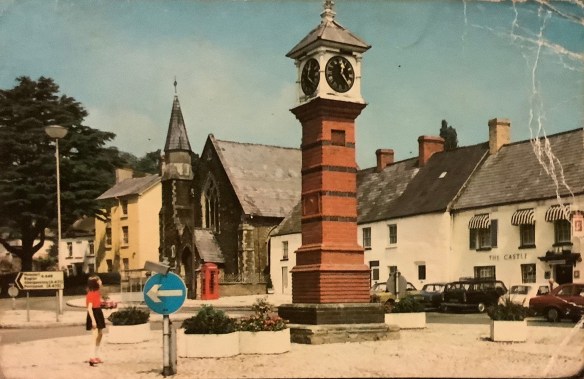
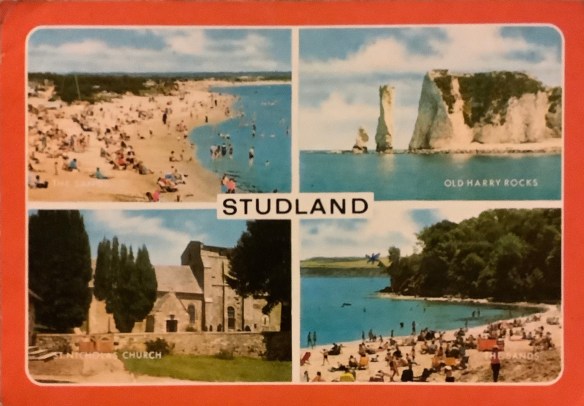
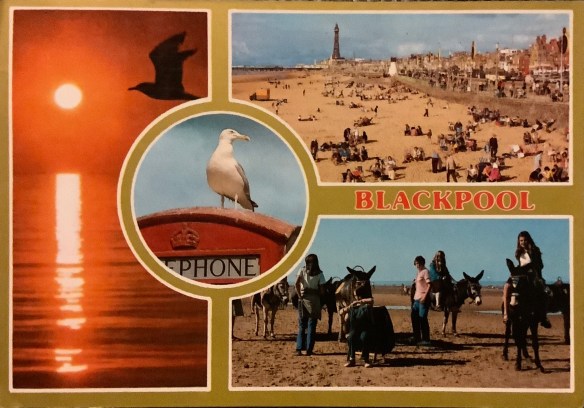
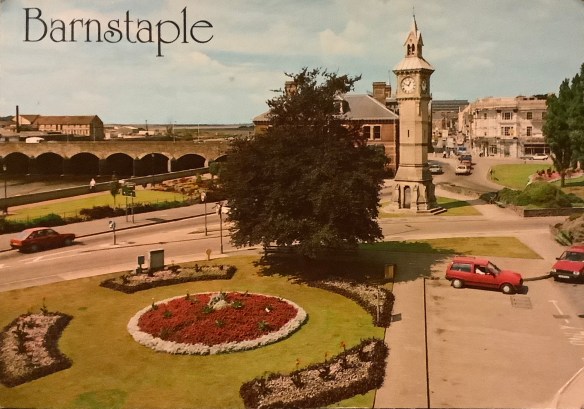
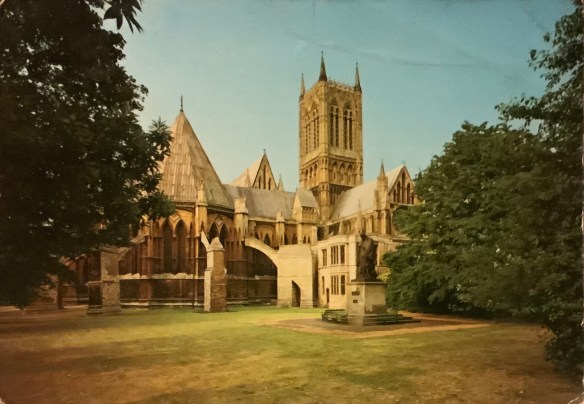
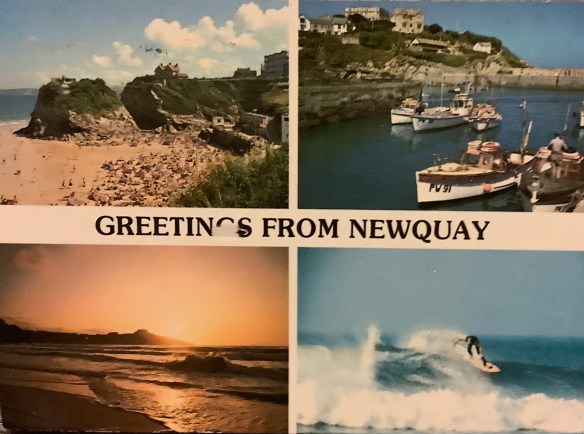
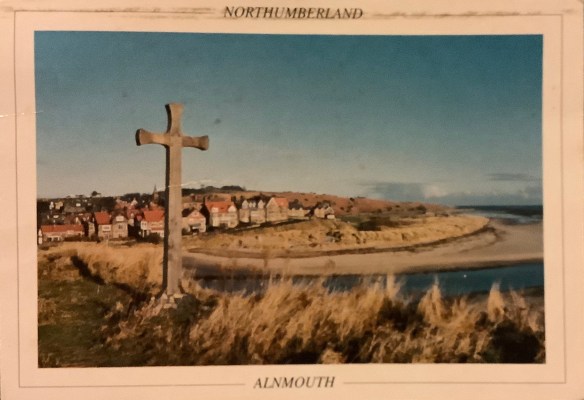
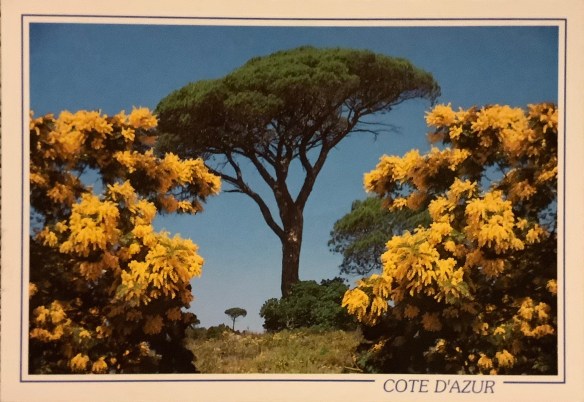
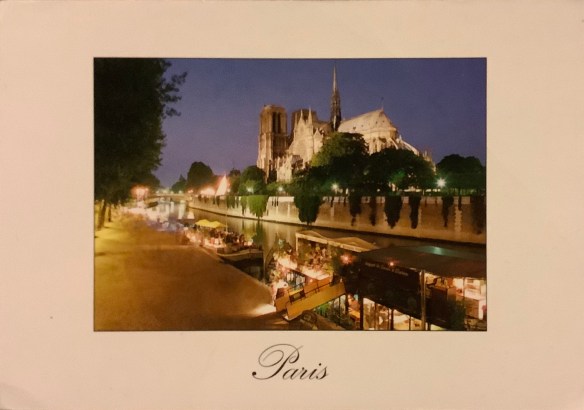
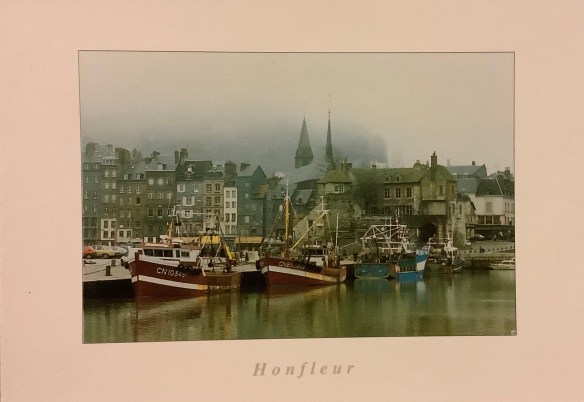
I have quite a few postcards, mostly sent to me from holidaying friends and family, that I have collected through the 80s, 90s and 00s.  It is a shame that the most recent one I have is dated 2003; it seems that people post their own holiday photographs online instead by traditional mail since the advent of social media.  The small selection below are displayed in chronological order.

Whilst there are some exceptions, the vast majority follow picture postcard stereotypes.  Skies are overwhelmingly blue and bad weather seems to never occur in the land of postcards.  Streets must always be empty but beaches must be crowded.  Only one postcard in my wider collection is in portrait format.  The exceptions are interesting.  Alnmouth is permitted a deserted beach because it enhances the air of rugged, historic mystery created by the ancient stone cross and the wild grass in the foreground.  Honfleur is shrouded in heavy mist, a curious choice as the town is known for being picturesque and is worthy of a traditional picture postcard viewpoint.   Both of these cards are in the later part of my collection and it would appear that some differing styles have crept into the postcard genre over more recent years with a little more freedom for the photographer to create an alternative atmosphere.

Though styles may have diversified over the decades, I would agree with Fay Godwin that the postcards mostly bear no relation to the actual experience of visiting the places depicted, mostly because of the lack of human presence.  I have never seen Lincoln Cathedral’s lawns empty, and the empty lunchtime streets of Usk in the first image and Barnstaple (as signified by the times on the clock towers) create an unintended sense of the uncanny that would put any prospective visitor off.  The only honest depictions are those of the crowded beaches.


Graham Clark wrote “… the landscape  photograph implies the act of looking as a privileged observer so that, in one sense, the photographer of landscapes is always the tourist, and invariably the outsider.  Francis Frith’s images of Egypt, for example, for all their concern with foreign lands, retain the perspective/ of an Englishman looking out over the land.  Above all, landscape photography insists on the land as spectacle ad involves an element of pleasure.”

The issue of insider versus outsider has been raised by several photography theorists, including Susan Sontag, Martha Rosler and Abigail Solomon-Godeau.  It is perhaps easier to see how a portrait photograph made by an ‘outsider’ can be seen to be as detached from the subject, perhaps even exploitative, versus that of an ‘insider’ which displays a more intimate version of the subject.  This translates to landscape in examples such as Ed Ruscha’s Every Building on the Sunset Strip (1966), which spends a detached ‘outsider’ view devoid of emotion and embracing the banal.  In contrast, Paul Seawright’s 1988 series Sectarian Murder is a poignant ‘insider’ perspective revisiting the sites of 1970s sectarian violence in the area close to where he grew up.

I think both approaches are fine as long as the photographer is mindful of what they are trying to achieve and is not simply doing so out of ignorance.  I think most serious landscape photographers today do research their chosen location, even if they are not from the area compared to the days of early landscape photography where research of unchartered lands was often impossible when each new landscape was a curiosity, a spectacle to be paraded to viewers who had never seen such scenery before.

References:

la Grange, A. (2005) Basic Critical Theory for Photographers. Oxford: Focal Press

blogs.getty.edu/pacificstandardtime/explore-the-era/worksofart/every-building-on-the-sunset-strip/ [Accessed 8 May 2020]

www.paulseawright.com/sectarian [Accessed 8 May 2020]